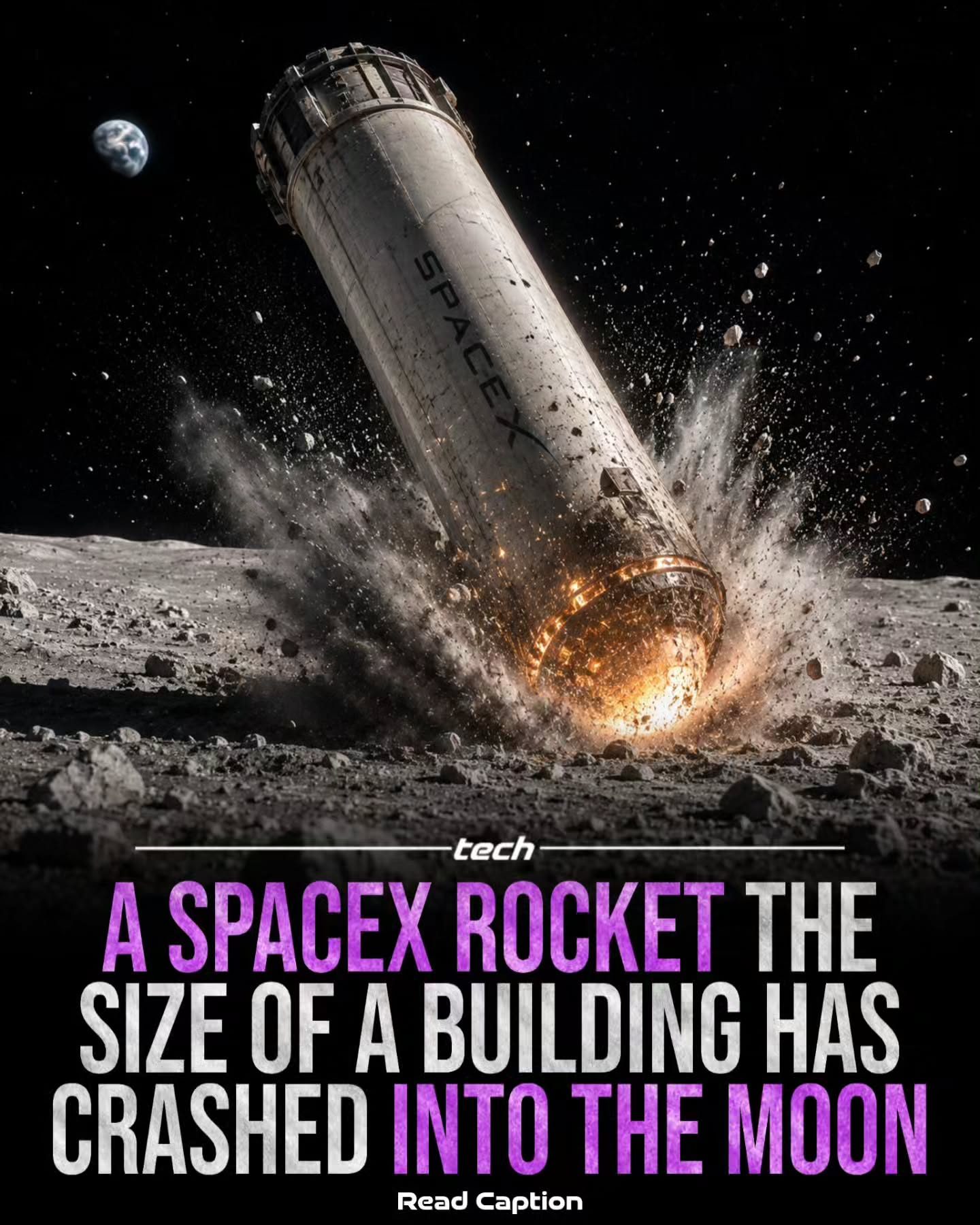
SpaceX Rocket Stage Impact on the Moon
In January 2025, a four-tonne upper stage of a SpaceX Falcon 9 rocket unintentionally crashed into the Moon. This dramatic event, which occurred after the rocket stage drifted through cislunar space for more than a year, has provided scientists with a rare opportunity to study the effects of human-made impacts on the lunar surface. This impact has also sparked discussions about managing space debris beyond Earth orbit.
The Impact and Its Aftermath
The rocket stage, part of the SpaceX Falcon 9 launch that sent Firefly Aerospace's Blue Ghost and ispace's Hakuto-R Mission 2 lunar landers toward the Moon, struck the lunar surface at an impressive velocity of about 5,400 mph (8,700 km/h). The impact was powerful enough to create a crater estimated to be around 20 meters (65 feet) in diameter. Observatories detected a plume containing elements such as sodium from lunar soil and lithium, believed to have originated from the rocket stage.
Scientific Observations
The event has given astronomers a unique chance to study the effects of such high-velocity impacts on the Moon. South Korea's Danuri lunar orbiter captured before-and-after images of the impact site, providing valuable data for analysis. Additionally, NASA's Lunar Reconnaissance Orbiter is expected to conduct further observations, which will help scientists better understand the composition and behavior of the lunar soil under extreme conditions.
Why This Matters
The collision posed no danger to Earth, but it has raised important questions about the management of space debris. The Moon, unlike Earth, has virtually no atmosphere, which means that abandoned spacecraft can remain in unstable orbits for years. As more governments and private companies launch missions to the Moon, it is essential to develop better tracking and disposal strategies to mitigate the risks posed by abandoned spacecraft.
The Evolution of the Rocket's Trajectory
Astronomers have noted that the rocket's trajectory changed gradually due to gravitational interactions and solar effects. These factors eventually sent the rocket stage onto a collision course with the Moon. This event underscores the importance of monitoring space debris, as even small changes in trajectory can have significant long-term impacts.
Managing Space Debris
As lunar exploration continues to grow, the management of space debris becomes increasingly critical. The SpaceX rocket stage impact highlights the need for more robust tracking systems and effective disposal methods. Without proper management, the risk of collisions with future missions or existing lunar infrastructure could rise, potentially hindering scientific progress and exploration efforts.
Practical Tips for Tracking and Disposal
For space agencies and private companies, effective management of space debris involves several key steps:
-
Advanced Tracking Systems: Implementing more sophisticated tracking systems can help monitor the orbits of space debris, allowing for timely interventions when necessary. This includes using radar and optical sensors to keep tabs on objects as small as a few centimeters in size.
-
Rocket Design Improvements: Designing rockets with built-in disposal mechanisms can help mitigate the risk of debris. For example, engineered rockets can have fuel to guide the stage back to Earth’s atmosphere for controlled re-entry, thus reducing the risk of collisions.
-
Collaborative Efforts: Collaborating with international space agencies and private companies can lead to shared knowledge and best practices. Establishing global standards for space debris management and sharing data can enhance the overall effectiveness of tracking and disposal efforts.
-
Early Disposal: Where possible, deploying techniques to dispose of rocket stages and other debris soon after their mission is complete. This might include using propulsion systems to de-orbit the stages or storing them in designated "graveyard" orbits.
-
Public Awareness and Advocacy: Raising awareness among the public and policymakers about the importance of space debris management can drive more support and funding for critical research and technology development. Public advocacy can also push for regulations and policies that prioritize sustainable space exploration.
Important Takeaways
The recent SpaceX Falcon 9 rocket stage impact on the Moon serves as a stark reminder of the need for enhanced space debris management. As more missions head toward the Moon and beyond, the risks posed by abandoned spacecraft will only increase. Effective tracking, design improvements, and international collaboration are essential for mitigating these risks and ensuring the continued success of space exploration.
Conclusion
The impact of the SpaceX rocket stage on the Moon has provided a unique opportunity for scientific study and has underscored the importance of managing space debris. As lunar missions become more frequent, it is crucial to develop and implement better tracking and disposal strategies. By doing so, we can ensure that the future of space exploration remains safe and sustainable for all involved.
Watch the Reel
Questions readers ask
What specific SpaceX mission did the Falcon 9 rocket stage come from that crashed into the Moon?
The Falcon 9 rocket stage that crashed into the Moon was launched from the SpaceX mission that delivered payloads for Firefly Aerospace's Blue Ghost and ispace's Hakuto-R Mission 2 lunar landers.
How long did the rocket stage drift in cislunar space before impacting the Moon?
The rocket stage drifted in cislunar space, the region between Earth and the Moon, for over a year before it unintentionally crashed into the Moon in 2025.
What was the velocity of the rocket stage when it hit the lunar surface?
The rocket stage struck the lunar surface at a high velocity of approximately 5,400 mph (8,700 km/h).
What kind of discussions has the impact sparked among scientists and space organizations?
The impact has initiated conversations about the importance of managing space debris beyond Earth orbit, as well as the potential effects of human-made impacts on the Moon.
Why is the impact of the SpaceX rocket stage on the Moon significant for scientists?
The impact is significant because it provides scientists with a unique opportunity to study the effects of high-speed collisions on the lunar surface, which can offer insights into the Moon's composition and the behavior of debris in space.
What was the estimated size of the crater created by the impact?
The impact was powerful enough to create a crater, though the exact estimate of its size is not provided. It is expected to be significant given the size and velocity of the rocket stage.
Related deep dives
Similar reads based on topic and creator.


Recent articles
Fresh deep dives from the latest Reels we unpacked.




Comments
Be the first to comment.