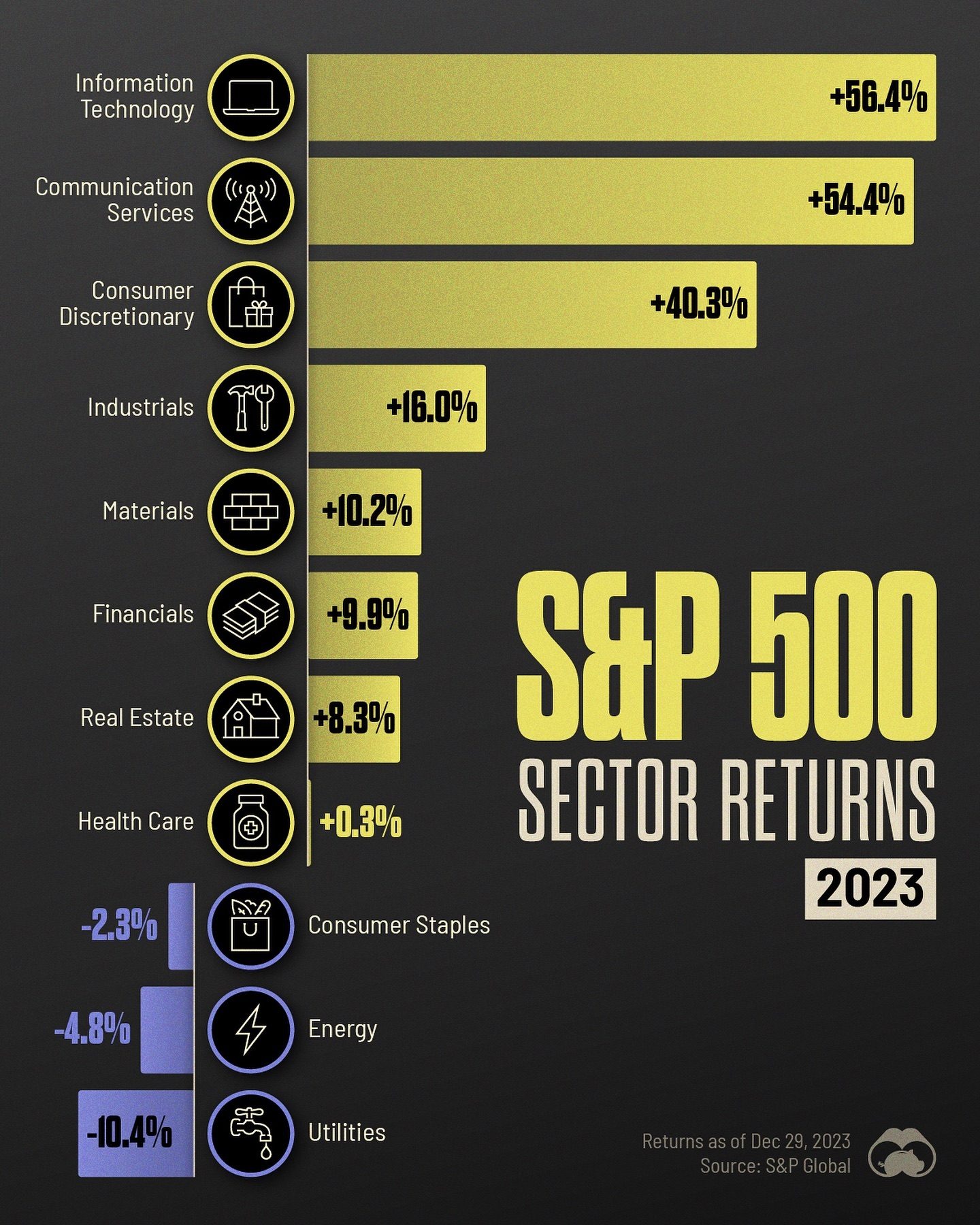
S&P 500 Sector Returns for 2023
The S&P 500 is a critical benchmark for investors, reflecting the performance of 500 leading companies across various sectors in the U.S. stock market. By examining sector returns, investors can gain insights into market trends and identify potential opportunities and risks. In 2023, Information Technology, Communication Services, and Consumer Discretionary sectors stood out as top performers, each gaining over 40% for the year. Understanding these dynamics is essential for making informed investment decisions.
Why This Matters
Sector performance analysis is crucial for several reasons. It helps investors:
-
Diversify Their Portfolios: By understanding which sectors are performing well and which are lagging, investors can allocate their assets more effectively to mitigate risks.
-
Identify Trends: Analyzing sector returns can reveal emerging trends and shifts in market sentiment, offering a glimpse into future opportunities.
-
Strategic Decisions: Investors can make strategic decisions such as buying, selling, or holding stocks based on sector performance.
The Top Performing Sectors in 2023
Information Technology
The Information Technology sector topped the charts with an impressive 56.4% return. This sector includes companies that provide technology hardware, software, and services. The strong performance can be attributed to several factors:
- Innovation and Growth: Tech companies continue to innovate, driving growth in areas like artificial intelligence, cloud computing, and cybersecurity.
- Global Demand: There is a consistent high demand for tech products and services, both from consumers and businesses.
- Investment: Significant investment in technology infrastructure and R&D has fueled growth in this sector.
Communication Services
Communication Services followed closely with a 54.4% return. This sector comprises companies that provide communication services, including telecommunications, media, and entertainment services. Key contributors to this growth include:
- Digital Transformation: The shift towards digital communication has increased the reliance on these services.
- Content Creation: The rise of streaming platforms and digital content has driven demand.
- Investment in Infrastructure: Significant investment in 5G networks and other communication technologies has boosted sector performance.
Consumer Discretionary
Consumer Discretionary rounded out the top three with a 40.3% return. This sector includes businesses that provide goods and services that are non-essential but desired, such as automobiles, luxury items, and entertainment. Factors contributing to this sector's success include:
- Consumer Confidence: High consumer confidence and disposable income have driven spending in this sector.
- E-commerce Boom: The rise of online shopping has benefited many companies in this sector.
- Innovative Products: New and innovative products have attracted consumers, driving sales and growth.
Other Notable Performances
While Information Technology, Communication Services, and Consumer Discretionary led the pack, other sectors also showed varying degrees of performance:
Energy
The Energy sector saw a 16.0% return. This sector includes companies involved in the production and supply of energy. The performance was driven by:
- Global Energy Demand: The ongoing demand for energy, particularly in emerging markets, has sustained sector growth.
- Renewable Energy: Investment in renewable energy sources has also contributed to sector performance.
Utilities
Utilities, which include companies that provide essential services such as electricity, water, and natural gas, posted a 10.2% return. This sector’s performance can be attributed to:
- Consistent Demand: Essential services have a consistent and stable demand.
- Regulatory Support: Government policies and regulations support the growth and stability of the utilities sector.
Industrials
The Industrials sector, which includes companies that produce goods used in construction and manufacturing, returned 9.9%. Factors influencing this performance include:
- Infrastructure Projects: Investment in infrastructure projects has driven demand for industrial goods.
- Manufacturing Growth: Increased manufacturing activities have boosted the demand for industrial products.
Sectors That Faced Challenges
Not all sectors thrived in 2023. Some faced notable challenges:
Consumer Staples
Consumer Staples, which include companies that produce essential goods like food, beverages, and household items, saw a -2.3% return. This decline can be attributed to:
- Inflation: High inflation rates have increased production costs, impacting profit margins.
- Changing Consumer Preferences: Shifts in consumer preferences and buying habits have affected demand.
Financials
The Financials sector, which includes banks, investment funds, and insurance companies, posted a -4.8% return. Factors contributing to this performance include:
- Interest Rates: Fluctuations in interest rates have impacted the profitability of financial institutions.
- Regulatory Changes: Changes in regulations and compliance requirements have increased operational costs.
Real Estate
Real Estate, which includes companies involved in the development and management of properties, saw a -10.4% return. This decline was influenced by:
- Economic Uncertainty: Economic uncertainty has affected real estate investments and property values.
- Interest Rates: Rising interest rates have increased borrowing costs, making real estate investments less attractive.
Practical Tips for Investors
When evaluating S&P 500 sector returns, consider the following practical tips:
-
Understanding Sector Drivers: Identify the key drivers of performance for each sector. This can help you understand how external factors might impact future returns.
-
Diversification: Ensure your portfolio is diversified across various sectors to mitigate risks. This approach can help you balance potential losses in one sector with gains in another.
-
Long-Term Perspective: Maintain a long-term perspective when investing. Short-term volatility is common, and focusing on long-term trends can help you make more informed decisions.
-
Monitor Economic Indicators: Keep an eye on key economic indicators such as interest rates, inflation, and GDP growth. These factors can significantly impact sector performance.
-
Stay Informed: Regularly review sector performance data and market trends. This will help you stay informed and make timely investment decisions.
Important Takeaways
-
Sector Performance and Market Trends: Understanding sector performance can provide valuable insights into market trends, helping investors make informed decisions.
-
Key Drivers of Sector Returns: Identifying the key drivers of performance for each sector is crucial for understanding how external factors might impact future returns.
-
Diversification and Risk Management: Diversifying your portfolio across various sectors can help mitigate risks and balance potential losses with gains.
-
Long-Term Perspective: Maintaining a long-term perspective can help investors navigate short-term volatility and make more informed investment decisions.
-
Importance of Economic Indicators: Economic indicators such as interest rates, inflation, and GDP growth significantly impact sector performance and should be closely monitored.
Conclusion
The 2023 performance of the S&P 500 sectors highlights the dynamic nature of the market. Information Technology, Communication Services, and Consumer Discretionary emerged as top performers, while Consumer Staples, Financials, and Real Estate faced challenges. Understanding these trends and their underlying drivers is essential for investors looking to make informed decisions. By staying informed, diversifying portfolios, and maintaining a long-term perspective, investors can navigate the complexities of the market and position themselves for success.
Watch the Reel
Questions readers ask
What are the top performing sectors of the S&P 500 in 2023?
The top performing sectors of the S&P 500 in 2023 are Information Technology, Communication Services, and Consumer Discretionary. These sectors each gained over 40% for the year, making them standout performers in the market.
Why is it important to analyze S&P 500 sector performance?
Analyzing S&P 500 sector performance is vital for investors as it helps identify market trends, potential opportunities, and risks. This analysis allows investors to make informed decisions about their portfolios, including diversification and asset allocation.
What insights can be gained from the top S&P 500 sectors of 2023?
The top S&P 500 sectors of 2023 provide insights into global market trends and consumer behaviors. The strong performance in Information Technology, Communication Services, and Consumer Discretionary indicates increased demand for technology products, communication services, and discretionary spending, helping investors anticipate future opportunities.
How can understanding sector dynamics help investors in the S&P 500?
Understanding sector dynamics in the S&P 500 can help investors strategically allocate their assets. By identifying which sectors are performing well, investors can make informed decisions about where to invest, ensuring they are involved in the most promising areas of the market.
What are the benefits of investing in the top S&P 500 sectors of 2023?
Investing in the top S&P 500 sectors of 2023, such as Information Technology, Communication Services, and Consumer Discretionary, can offer significant returns. By focusing on these sectors, investors can take advantage of current trends and potentially capitalize on future growth opportunities in these areas of the market.
Related deep dives
Similar reads based on topic and creator.


Recent articles
Fresh deep dives from the latest Reels we unpacked.




Comments
Be the first to comment.