Sovereign Wealth Funds and the Shift to Sustainable Investments
Sovereign wealth funds (SWFs)—government-managed pools of capital often derived from surplus reserves or commodity exports—are making significant strides toward sustainable investments as the energy transition gains momentum. With a staggering $11.2 trillion in assets under management, these funds are increasingly looking to "green" assets to drive long-term growth and sustainability, while still maintaining a notable presence in "black" assets.
Context: Why This Matters
The energy transition—the global shift from fossil fuels to renewable energy sources—is reshaping the investment landscape. Sovereign wealth funds are at the forefront of this shift, leveraging their financial power to support sustainable initiatives. This trend is crucial for addressing climate change and promoting economic stability, as it encourages innovation and long-term resilience in the energy sector.
Main Discussion
The Rise of Green Investments
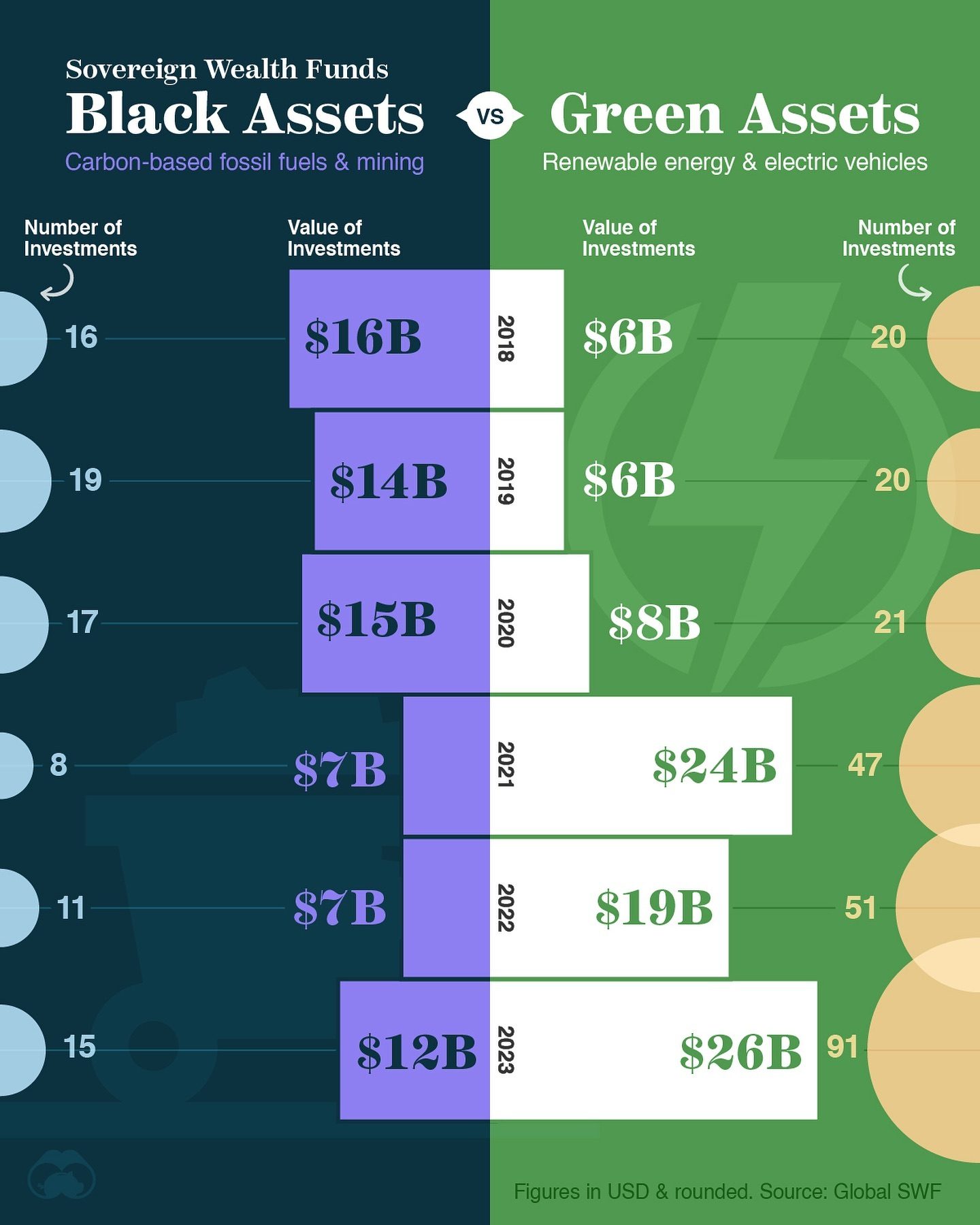
Over the past five years, investments in green assets—such as renewable energy and electric vehicles—have seen a dramatic increase. According to data from Global SWF, the value of green investments surged from $6 billion in 2018 to $26 billion in 2023. This surge reflects a growing global commitment to decarbonization and sustainable energy solutions.
The number of investments in green assets has also climbed significantly. In 2018, there were 20 green investments compared to 91 in 2023. This increase shows that sovereign wealth funds are not only increasing the value of their green investments but also diversifying their portfolios within this sector. This diversification can mitigate risks and capitalize on the growing opportunities in renewable energy and electric vehicles.
The Role of Black Assets
Black assets, which include carbon-based fossil fuels and mining, have seen fluctuations in both the number and value of investments over the years. Despite the growing focus on green assets, black assets remain an essential part of the investment portfolios of many sovereign wealth funds. In 2018, black asset investments were valued at $16 billion, reaching $19 billion in 2023. However, the data reveals a notable decline in the number of black asset investments over the same period, from 90 in 2018 to 72 in 2023.
This data underscores the complex nature of the energy transition. While the push toward sustainable energy is strong, black assets still play a crucial role in many economies, particularly those heavily reliant on fossil fuels. This dual approach allows sovereign wealth funds to support the energy transition while maintaining economic stability and infrastructure.
Geopolitical and Economic Factors Driving Sustainable Investments
The shift toward sustainable investments is driven by multiple factors, including regulatory pressures, market demand, and geopolitical considerations. Increasingly stringent environmental regulations and carbon pricing mechanisms are making it more economically viable for sovereign wealth funds to invest in green assets.
Market demand for sustainable energy solutions is also on the rise. Consumers, businesses, and governments are increasingly prioritizing environmental sustainability, creating a robust market for renewable energy and electric vehicles. This demand not only drives investment in green assets but also encourages innovation and technological advancements in the sector.
Geopolitical considerations also play a significant role. Nations with sovereign wealth funds are looking to secure their energy futures while minimizing their carbon footprints. Investing in renewable energy and other green assets helps these countries achieve energy independence, reduce reliance on volatile fossil fuel markets, and enhance their global standing as leaders in sustainability.
Practical Tips
For sovereign wealth funds looking to increase their green investments, several practical steps can be taken:
-
Conduct Thorough Due Diligence: Ensure that potential green investments align with long-term sustainability goals and regulatory requirements. This includes assessing the environmental impact, financial viability, and technological readiness of projects.
-
Diversify Green Investments: Spread investments across various renewable energy sources and technologies, such as solar, wind, hydro, and geothermal power. Diversification can help mitigate risks and capture new opportunities as they emerge.
-
Engage with Stakeholders: Collaborate with governments, private sector entities, and international organizations to promote sustainable energy initiatives. Partnerships can enhance the impact of investments and foster a supportive regulatory environment.
-
Monitor and Report Performance: Regularly track the performance of green investments and report on their environmental and financial impacts. Transparent reporting can build trust with stakeholders and demonstrate the value of sustainable investments.
-
Incorporate ESG Criteria: Integrate environmental, social, and governance (ESG) criteria into investment decisions. ESG considerations can help identify risks and opportunities, ensuring that investments contribute to long-term sustainability.
Important Takeaways
The increasing focus on sustainable investments among sovereign wealth funds is a significant development in the global energy transition. Key takeaways from this trend include:
- Growing Value and Number of Green Investments: The value and number of investments in green assets have surged, reflecting a strong commitment to renewable energy and electric vehicles.
- Fluctuating Black Asset Investments: While black asset investments remain significant, their value and number have fluctuated, indicating a complex relationship with the energy transition.
- Balanced Investment Strategy: Sovereign wealth funds are adopting a balanced approach, maintaining investments in traditional energy sources while increasing their green portfolios.
- Diversification and Innovation: Increasing diversification and innovation in green investments can help mitigate risks and capitalize on new opportunities.
Conclusion
The shift toward sustainable investments by sovereign wealth funds is a critical component of the global energy transition. By diversifying their portfolios and focusing on renewable energy and electric vehicles, these funds are not only addressing environmental concerns but also promoting economic stability and innovation. As the energy transition continues, the role of sovereign wealth funds in driving sustainable investments will become even more pronounced, shaping the future of global energy and finance.
Watch the Reel
Questions readers ask
What are sovereign wealth funds (SWFs) and how much capital do they hold?
Sovereign wealth funds (SWFs) are investment funds owned by governments, typically derived from surplus reserves or commodity exports. As of the latest data, SWFs manage a colossal $11.2 trillion in assets. This substantial capital allows them to influence global markets and investment trends.
What are 'green' and 'black' assets in the context of SWF investments?
Green assets in SWF investment portfolios refer to investments in sustainable and eco-friendly initiatives, such as renewable energy projects. Conversely, 'black' assets are investments tied to carbon-intensive or fossil fuel industries, like coal, oil, and gas.
Why are SWFs shifting towards green asset investments?
SWFs are moving towards green assets to align with the global energy transition and support long-term sustainability goals. This shift helps them mitigate risks associated with fossil fuel investments, such as price volatility and regulatory changes, while capitalizing on the growth of renewable energy markets.
How have SWF investments evolved from 2018 to 2023?
From 2018 to 2023, SWFs have been progressively increasing their allocation to green assets, reflecting a global push towards sustainability. During this period, they have also maintained significant investments in black assets, but the trajectory indicates a growing focus on renewable energy and other sustainable initiatives.
What role do SWFs play in the global energy transition?
SWFs play a pivotal role in the energy transition by leveraging their substantial financial resources to support the development of renewable energy projects and sustainable infrastructure. Their investments help drive innovation, create jobs, and foster economic resilience in a low-carbon future.
How do SWFs balance green and black asset investments in their portfolios?
SWFs balance green and black asset investments by carefully managing their portfolios to achieve both sustainability and financial stability. This often involves gradually increasing green investments while responsibly managing and eventually phasing out black assets, aligning with global environmental and economic trends.
What are some examples of green energy investments made by SWFs?
SWFs have invested in a variety of green energy projects, including solar and wind farms, hydroelectric power plants, and electric vehicle infrastructure. These investments not only support the transition to renewable energy but also contribute to the economic development and energy security of their respective countries.
Related deep dives
Similar reads based on topic and creator.

Recent articles
Fresh deep dives from the latest Reels we unpacked.




Comments
Be the first to comment.