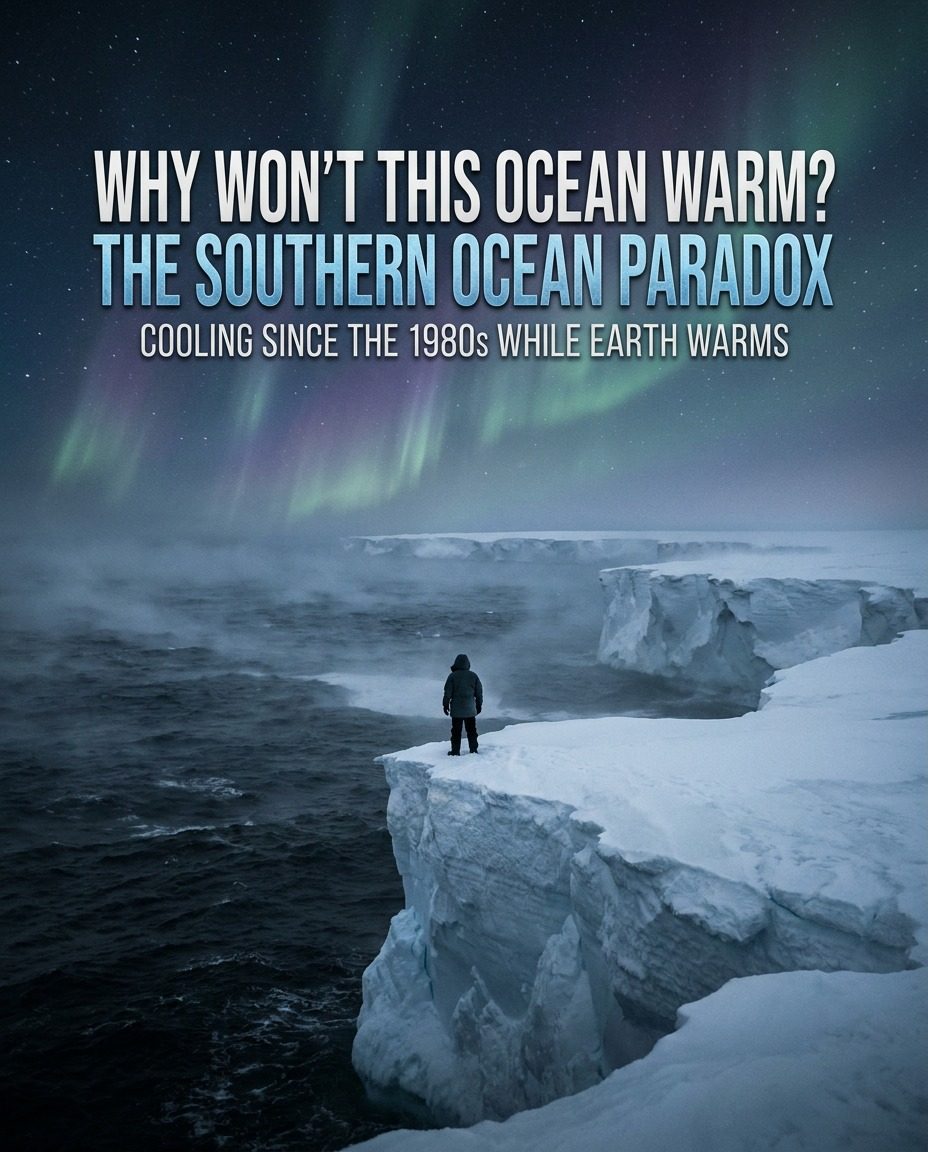
The Southern Ocean Paradox: A Chill Factor
The Southern Ocean, vast and remote, has bucked a global trend: it has been steadily cooling since the 1980s, a phenomenon that scientists refer to as the Southern Ocean Paradox. This occurs in a world where every other ocean basin is warming. This cooling of the Southern Ocean is not a local anomaly, but a global phenomenon. This region is the most affected by the ozone hole. This hole, created by the depletion of ozone gas, has led to significant changes in the temperature of the ocean. The ozone hole was once much larger and led to a distinct cooling trend in the Southern Ocean. Despite the cooling, this ocean also lies at the heart of the current climate crisis. It absorbs a large share of the excess heat generated by global warming, thus playing a crucial role in moderating the temperature of the planet. The Earth’s atmosphere depends on this.
The Role of Ozone Depletion
The ozone hole, first detected in the mid-1980s, has significantly affected the climate of the Southern Ocean. While the ozone layer above the Earth’s surface is essential for filtering harmful ultraviolet rays, its depletion has led to changes in the temperature of the Southern Ocean. The ozone layer over Antarctica is particularly vulnerable, and its depletion has significant consequences. This depletion of ozone gas has led to the formation of the ozone hole, an area where the ozone layer is so thin that it fails to protect the Earth from harmful ultraviolet rays. The ozone hole, which forms annually and can cover an area larger than the entire Antarctic continent, has been shrinking since the late 1990s due to a global ban on ozone-depleting substances. The still colder temperatures of the Southern Ocean could be attributed to the effects of the ozone hole. This ozone hole has caused changes in wind patterns, which in turn have led to changes in ocean currents. These changes have led to an increase in the upwelling of cold water from the depths of the ocean, further cooling the surface waters. This is why the Southern Ocean remains cooler than the rest of the planet.
Watch the Reel
Related deep dives
Similar reads based on topic and creator.




Recent articles
Fresh deep dives from the latest Reels we unpacked.



Comments
Be the first to comment.