Gender Pay Gap Across OECD Countries
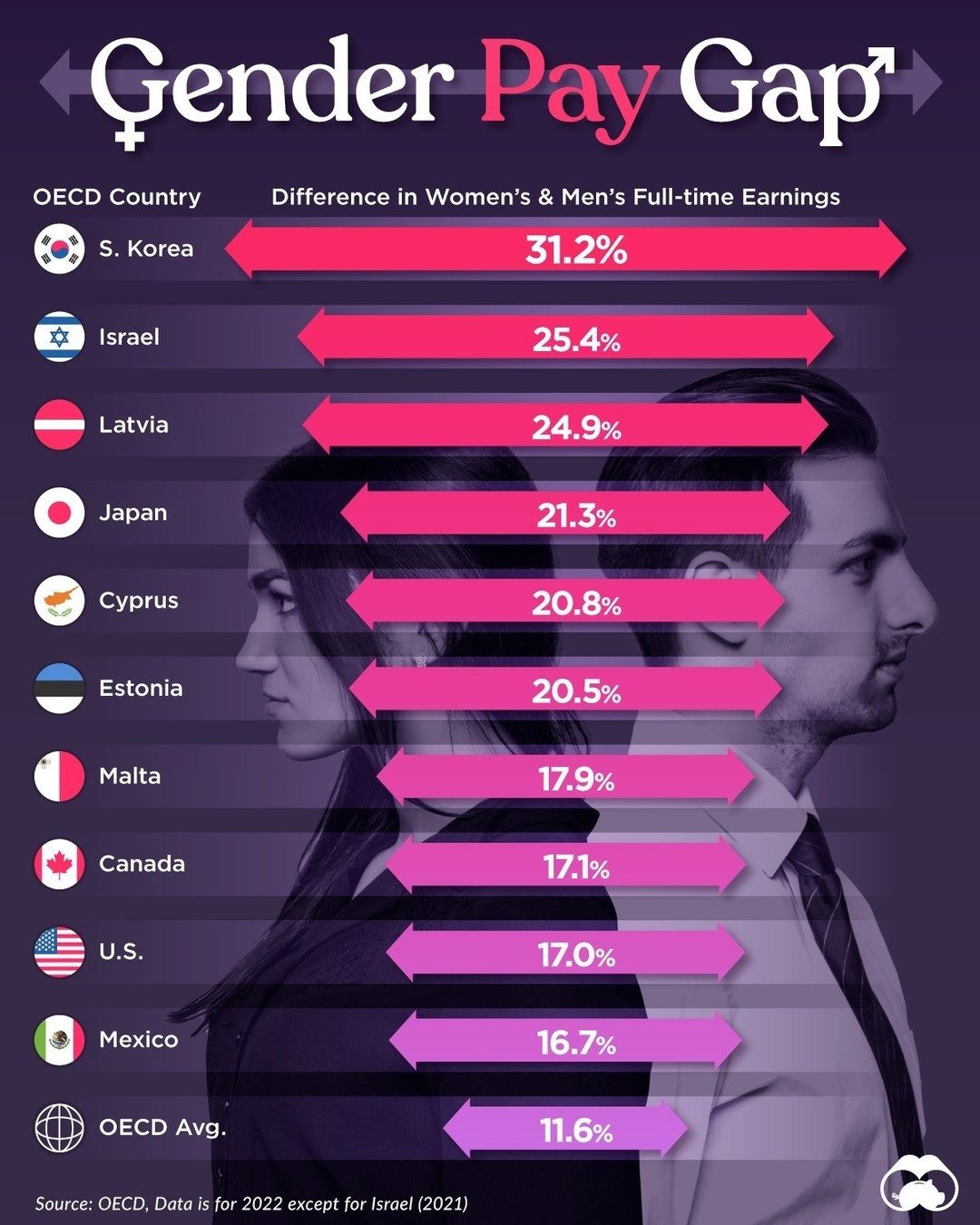
The gender pay gap is a persistent issue in many nations, and South Korea leads the list of countries with the most significant disparity. The gender pay gap is nearly three times higher in South Korea than the OECD average. Understand the extent of this inequality and explore the top 10 countries within the Organization for Economic Cooperation and Development (OECD) where the gap between men's and women's pay remains significant.
The Context of the Gender Pay Gap
The gender pay gap refers to the difference in earnings between men and women. This gap can be influenced by various factors, including occupational segregation, discrimination, and differences in work hours and career interruptions. The OECD, which comprises 38 member countries, provides a useful benchmark for comparing gender pay gaps globally. The average gender pay gap across OECD countries is 11.6%, with some nations faring significantly worse.
Top 10 Countries with the Highest Gender Pay Gaps
South Korea
South Korea tops the list with a gender pay gap of 31.2%. This means that, on average, women in South Korea earn 31.2% less than their male counterparts in full-time employment. The gap is influenced by several factors, including the country's traditional gender roles, a lack of women in leadership positions, and the prevalence of part-time and temporary work among women.
Israel
Israel follows closely with a gender pay gap of 25.4%. While Israel has made strides in gender equality, significant disparities persist, particularly in high-paying sectors. Women in Israel often face discrimination and barriers to advancement, which contributes to the earnings gap.
Latvia
Latvia has a gender pay gap of 24.9%. The gap is influenced by occupational segregation, with women predominantly working in lower-paying sectors. Latvia's labor market is also characterized by a high level of part-time work among women, which contributes to the disparity.
Japan
Japan's gender pay gap stands at 21.3%. Despite having one of the world's most advanced economies, Japan struggles with deep-seated gender stereotypes and a lack of women in leadership positions. The country's rigid labor market practices also contribute to the earnings gap.
Cyprus and Estonia
Cyprus and Estonia both have gender pay gaps of 20.8% and 20.5%, respectively. In these countries, the gap is influenced by a combination of factors, including occupational segregation, discrimination, and differences in work hours. Women in Cyprus and Estonia often work part-time or in temporary positions, which can lead to lower earnings.
Malta
Malta has a gender pay gap of 17.9%. The gap is influenced by occupational segregation, with women predominantly working in lower-paying sectors. Malta's labor market practices, including a lack of flexible work arrangements, also contribute to the disparity.
North America
Canada and the United States
Canada and the United States both have gender pay gaps of 17.1% and 17.0%, respectively. While these countries have made significant progress in gender equality, disparities persist, particularly in high-paying sectors. Women in North America often face discrimination and barriers to advancement, which contribute to the earnings gap.
Mexico
Mexico has a gender pay gap of 16.7%. The gap is influenced by a combination of factors, including occupational segregation, discrimination, and differences in work hours. Women in Mexico often work part-time or in temporary positions, which can lead to lower earnings.
Practical Tips for Addressing the Gender Pay Gap
Addressing the gender pay gap requires a multi-faceted approach. Here are some practical tips for individuals, employers, and policymakers:
For Individuals
-
Negotiate Salaries: Women should feel empowered to negotiate their salaries and benefits. Researching industry standards and being prepared to articulate your value can help close the gap.
-
Seek Advancement Opportunities: Look for opportunities to advance in your career, such as taking on leadership roles or pursuing additional education and training. Advancement can lead to higher earnings and more equitable pay.
-
Support Women in Leadership: Advocate for women in leadership positions and support policies that promote gender equality at work. This can help create a more inclusive workplace and reduce the pay gap.
For Employers
- Conduct Pay Audits: Regular pay audits can help identify and address pay disparities. Employers should ensure that pay structures are fair and transparent, and that any gaps are addressed promptly.
- Promote Inclusive Policies: Implement policies that support work-life balance, such as flexible work arrangements and paid parental leave. These policies can help reduce the gender pay gap by allowing women to stay in the workforce and advance in their careers.
For Policymakers
-
Strengthen Anti-Discrimination Laws: Policies that prohibit gender discrimination in employment can help address the pay gap. Strong enforcement mechanisms are essential to ensure that these laws are effective.
-
Invest in Education and Training: Investing in education and training programs for women can help them acquire the skills and qualifications needed to advance in their careers and earn higher wages.
Important Takeaways
The gender pay gap is a complex and multifaceted issue that requires a concerted effort from individuals, employers, and policymakers. By understanding the extent of the gap and the factors that contribute to it, we can take practical steps to address the disparity and create a more equitable society. Whether through salary negotiations, supportive workplace policies, or stronger anti-discrimination laws, there are many ways to tackle the gender pay gap and promote gender equality.
Conclusion
The gender pay gap is a significant issue in many countries, with South Korea leading the list of nations with the most substantial disparities. By examining the top 10 countries with the highest gender pay gaps, we can gain a better understanding of the factors that contribute to this inequality. Whether through individual actions, employer policies, or government initiatives, addressing the gender pay gap is essential for creating a more equitable society.
The data provides a stark reminder of the work that remains to be done. By taking practical steps and advocating for change, we can work towards closing the gender pay gap and ensuring that everyone has the opportunity to thrive.
Watch the Reel
Questions readers ask
Why does South Korea have the largest gender pay gap among OECD countries?
South Korea's significant gender pay gap is attributed to a combination of traditional gender roles, occupational segregation, and leadership structures that often disadvantage women. This results in women earning 31.2% less than men, which is nearly three times higher than the OECD average.
What is the gender pay gap, and why is it a concern?
The gender pay gap refers to the difference in average earnings between men and women. It is a concern because it reflects economic inequality and can indicate broader social issues, such as discrimination and unequal opportunities in the workforce.
Which countries, besides South Korea, have significant gender pay gaps within the OECD?
Besides South Korea, other countries with significant gender pay gaps include Japan, Israel, and Estonia. These countries also exhibit notable disparities in earnings between men and women, although the extent varies.
How does occupational segregation contribute to the gender pay gap?
Occupational segregation occurs when men and women are concentrated in different types of jobs, often with men in higher-paying roles. This segregation can lead to women being paid less on average, as they are more likely to be in lower-wage sectors or occupations.
What are some of the factors that influence the gender pay gap in South Korea?
Traditional gender roles, occupational segregation, and leadership structures are key factors influencing the gender pay gap in South Korea. These elements often limit women's access to high-paying jobs and leadership positions, contributing to the significant disparity in earnings.
How does the gender pay gap in South Korea compare to other OECD countries?
South Korea's gender pay gap is notably higher than the OECD average. With women earning 31.2% less than men, it stands out as the country with the most significant disparity among OECD members, nearly tripling the average gap seen across the organization.
What can be done to reduce the gender pay gap in countries like South Korea?
Addressing the gender pay gap involves implementing policies that promote equal opportunities, such as encouraging women's participation in high-paying sectors, advocating for equal pay legislation, and fostering inclusive leadership structures. Efforts to challenge traditional gender roles and reduce occupational segregation are also crucial.
Recent articles
Fresh deep dives from the latest Reels we unpacked.




Comments
Be the first to comment.