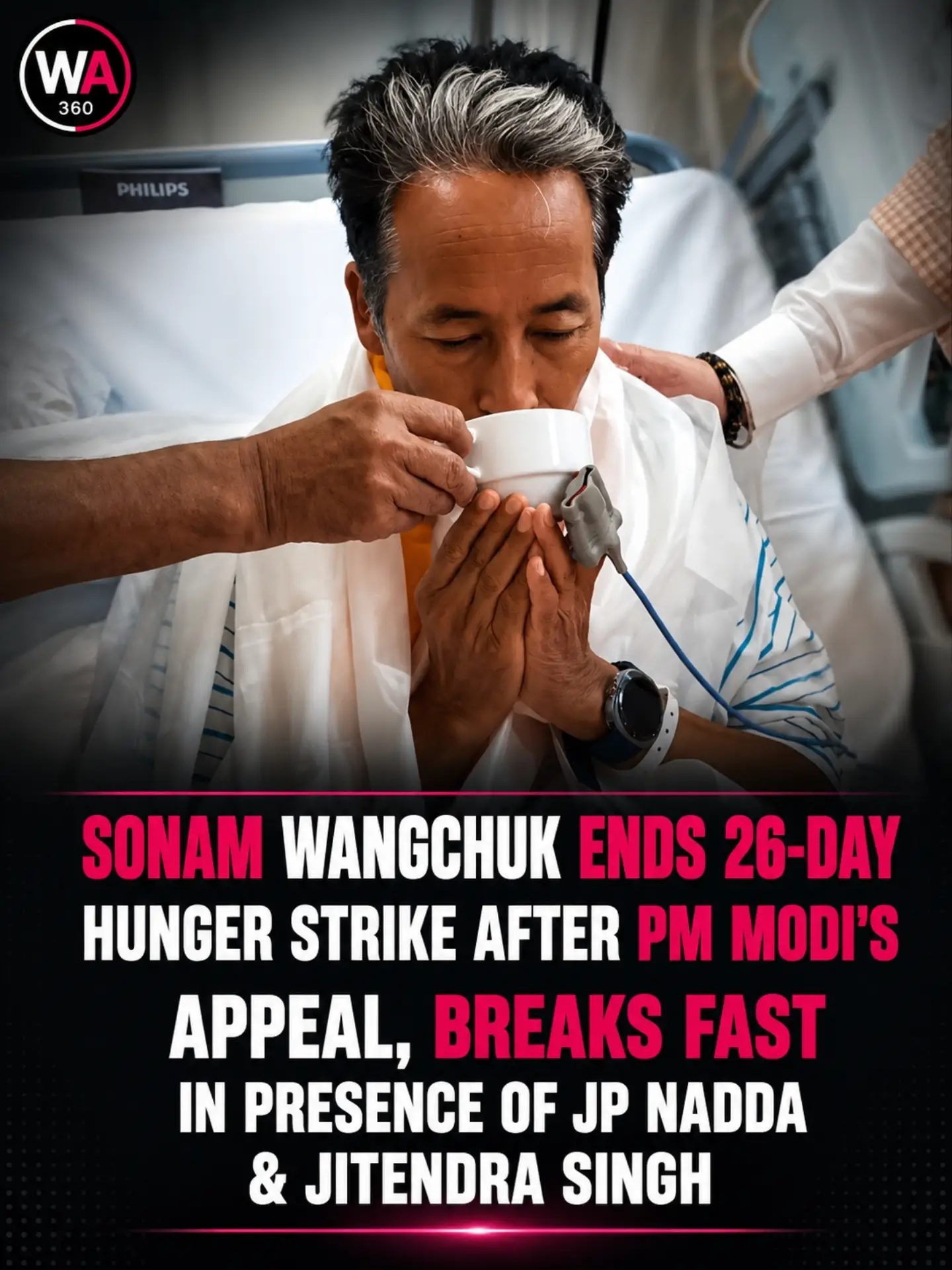
Sonam Wangchuk's 26-Day Hunger Strike Comes to an End
Social reformer and education innovator Sonam Wangchuk has concluded a 26-day hunger strike, marking a pivotal moment in his ongoing advocacy for various public issues. The strike, which began as a form of peaceful protest, ended on July 22, 2025, following an appeal from Indian Prime Minister Narendra Modi. The conclusion of the fast took place in the presence of Union Ministers JP Nadda and Jitendra Singh, highlighting the significance of this development in the broader national dialogue.
Why This Matters
Wangchuk's hunger strike was not just a personal endeavor; it was a call to action for the government and citizens alike. His 26-day fast brought to light several critical issues that he had been advocating for, including education reform and social justice. The strike drew nationwide attention, positioning it as an opportunity for constructive discussions and meaningful engagement on these concerns. The fact that it ended with a gesture from the highest levels of government underscores the potential for democratic dialogue and non-violent advocacy in addressing public issues.
The Path to Resolution
A Call to End the Fast
The decision to end the hunger strike was influenced by several factors, including the appeal from Prime Minister Narendra Modi. Modi took to social media to express his concerns and urge Wangchuk to follow his doctors' advice for a safe recovery. The Prime Minister's message, translated from Hindi, emphasized the importance of Wangchuk's health and well-being. He urged him to regain his strength and continue his work. This appeal was backed by the presence of Union Ministers JP Nadda and Jitendra Singh, adding weight to the significance of the moment.
The Role of Public Figures and Negotiations
The resolution of the hunger strike was not a unilateral decision. It involved extensive negotiations and the intervention of various public figures. According to Wangchuk, 65 members of parliament from different political parties had visited or signed letters urging him to end the fast. These negotiations highlighted the complexities of the issues at hand and the need for collaborative efforts to address them. The senior leaders of the Apex Body of Leh Ladakh were also present, emphasizing the local and national importance of the issues Wangchuk had been advocating for.
Potential for Violence
One of the critical factors that led to the end of the hunger strike was the concern over potential violence. The negotiations took into account the possibility of unrest in the country, which could have escalated the situation. Wangchuk’s decision to break his fast was a deliberate choice to avoid any further escalation and to allow for a more peaceful and constructive dialogue.
Ongoing Concerns and Next Steps
While the hunger strike has ended, the issues that sparked it remain unresolved. Wangchuk has promised to share the details of the conditions and negotiations in a separate video, which will provide more clarity on the commitments made and the next steps forward. Citizens across the country are closely watching how this important chapter unfolds, hoping for meaningful action and progress on the concerns raised during the protest.
Practical Tips for Advocacy and Dialogue
The successful resolution of Sonam Wangchuk's hunger strike offers valuable lessons for those engaged in advocacy and public dialogue.
Leveraging Social Media for Advocacy
Social media platforms have become crucial tools for advocacy, as seen in Wangchuk's case. The use of social media allowed him to reach a broader audience and garner support from various public figures and politicians. For advocates seeking to make an impact, leveraging social media can significantly amplify their voice and reach.
The Power of Non-Violent Protest
Wangchuk's approach to advocacy highlights the effectiveness of non-violent protest. His 26-day hunger strike was a peaceful demonstration of his commitment to the cause, which attracted nationwide attention and support. For those advocating for change, non-violent methods can be powerful tools for gaining public and political attention.
Engaging in Democratic Dialogue
The negotiations and interventions from public figures underscore the importance of democratic dialogue. Engaging with various stakeholders, including politicians, public figures, and community leaders, can help foster a more inclusive and collaborative approach to addressing public issues. This dialogue can lead to meaningful commitments and actions, as seen in Wangchuk's case.
Important Takeaways
The end of Sonam Wangchuk's 26-day hunger strike serves as a reminder of the power of peaceful advocacy and democratic dialogue. It highlights the importance of engaging with a broader audience and leveraging various platforms to amplify one's voice. The resolution of the strike also underscores the need for ongoing vigilance and action to address the concerns raised during the protest.
Conclusion
Sonam Wangchuk's 26-day hunger strike has come to an end, but the issues he advocated for remain at the forefront of public discourse. The resolution of the strike, with the appeal from Prime Minister Narendra Modi and the presence of Union Ministers, highlights the potential for constructive dialogue and meaningful engagement. As citizens continue to monitor the next steps, the importance of non-violent advocacy and democratic dialogue in addressing public issues remains paramount. The commitment to these principles will be crucial in shaping the future of social reform and education innovation in the country.
Watch the Reel
Questions readers ask
Who is Sonam Wangchuk and why is his hunger strike significant?
Sonam Wangchuk is a prominent social reformer and education innovator in India. His 26-day hunger strike, which ended on July 22, 2025, is significant because it brought national and international attention to various public issues, including social justice and public policy reforms.
What led to the end of Sonam Wangchuk's hunger strike?
The hunger strike concluded following an appeal from Indian Prime Minister Narendra Modi. This appeal, along with the presence of Union Ministers JP Nadda and Jitendra Singh, underscored the importance of the issues raised by Wangchuk and the effectiveness of non-violent advocacy.
What issues did Sonam Wangchuk's hunger strike highlight?
Wangchuk's protest brought to light a range of issues, including the need for improved public policies, better social justice mechanisms, and reform in the education sector. His advocacy has consistently aimed to address these concerns and promote systematic change.
How did the public and government respond to Sonam Wangchuk's activism?
The hunger strike garnered significant attention, both from the public and key government figures. The involvement of high-ranking officials, such as Narendra Modi, JP Nadda, and Jitendra Singh, demonstrated the government's recognition of the seriousness of the issues raised and the power of democratic dialogue in addressing them.
What role does non-violent advocacy play in social reform in India?
Non-violent advocacy, as exemplified by Wangchuk's hunger strike, plays a crucial role in social reform in India. It encourages open dialogue, raises awareness about critical issues, and pressures the government to take action. This form of protest has a long history of effectiveness in driving social and policy changes.
What steps can individuals take to support causes like those advocated by Sonam Wangchuk?
Individuals can support causes by staying informed about the issues, engaging in peaceful public demonstrations, and advocating for change through dialogue and awareness campaigns. Additionally, leveraging social media and community networks can amplify the message and garner broader support.
Recent articles
Fresh deep dives from the latest Reels we unpacked.




Comments
Be the first to comment.