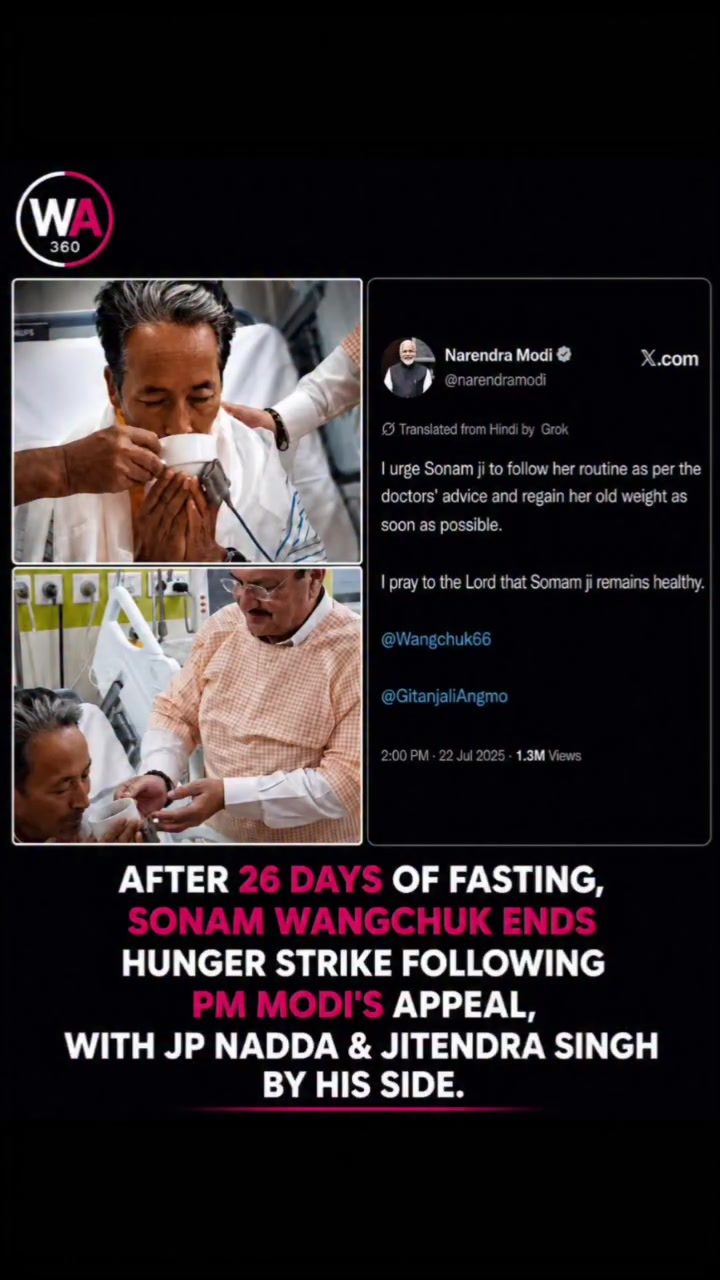
Sonam Wangchuk's 26-Day Hunger Strike Comes to an End
After 26 days of fasting, Sonam Wangchuk, a prominent social reformer, concluded his hunger strike following an appeal from Prime Minister Narendra Modi. This peaceful protest has sparked significant attention and brought to light several crucial issues affecting the people of Ladakh. Wangchuk's decision to end his fast underscores the power of non-violent activism and the importance of dialogue in addressing public concerns.
Context / Why This Matters
Sonam Wangchuk's hunger strike was a call to action, highlighting specific issues faced by the people of Ladakh. The region, known for its unique cultural and geographical landscape, has been grappling with a range of challenges, including political, environmental, and social concerns. The strike was not merely a personal act but a rallying cry for the broader community, raising awareness about the need for meaningful engagement and cooperation.
Main Discussion
The Power of Non-Violent Activism
Wangchuk's peaceful protest is a testament to the enduring power of non-violent activism. This form of protest, inspired by figures like Mahatma Gandhi, has historically been a powerful tool for social change. By choosing a hunger strike, Wangchuk leveraged his personal well-being to draw attention to larger issues, demonstrating that individuals can make a significant impact through non-violent means. His actions have reignited discussions about the importance of peaceful resistance in the face of adversity.
The Role of Dialogue and Communication
The involvement of senior leaders like JP Nadda and Jitendra Singh during Wangchuk's recovery highlights the importance of dialogue and mutual understanding. Their presence underscores the need for constructive engagement between different stakeholders. The visual overlay, which includes their participation, emphasizes the significance of these interactions in fostering a more cooperative environment. This moment serves as a reminder that open communication can pave the way for more effective problem-solving.
The Impact of Prime Minister Narendra Modi's Appeal
Prime Minister Narendra Modi's appeal to prioritize health and recover under medical supervision played a pivotal role in Wangchuk's decision to end his hunger strike. Narendra Modi's concerns, as indicated by a tweet, included urging Wangchuk to follow doctors' advice and regain his strength. This intervention highlights the importance of empathy and understanding in resolving conflicts. The Prime Minister’s response demonstrated a commitment to addressing public concerns while prioritizing individual well-being, reinforcing the idea that leadership and compassion can go hand in hand.
Addressing Issues in Ladakh
The problem of Ladakh's issues involve several interconnected challenges. The remote and harsh environment of Ladakh poses unique difficulties, including limited resource access and infrastructure challenges. Social and political issues also contribute to the region's complexities, with concerns about cultural preservation and autonomy often at the forefront. Wangchuk's protest aimed to bring these issues to the national spotlight, encouraging a deeper dialogue and more concerted efforts to address them.
Practical Tips
For Activists
Those engaging in peaceful protests can learn valuable lessons from Wangchuk's approach. It is essential to choose non-violent methods, ensuring that the focus remains on the cause rather than the means. Clear communication of demands and maintaining a constructive dialogue with relevant authorities can help in achieving the desired outcomes. The involvement of key leaders and public figures can also amplify the message, making it more difficult for authorities to ignore.
For Policymakers
Addressing regional issues requires a multi-faceted approach. Policymakers should invest in community engagement and public consultations, creating an open forum for dialogue. This involves listening to local concerns, understanding the unique challenges faced by remote regions, and developing tailored solutions. Collaboration with local leaders and activists can also help in designing and implementing effective policies.
For the Public
Supporting peaceful protests and staying informed about regional issues can make a significant difference. Engaging in constructive discussions, sharing information, and advocating for policy changes can help bring about meaningful change. Public support and awareness are crucial in pressuring authorities to take action and address the underlying issues.
Important Takeaways
The Value of Non-Violent Protest
Wangchuk's hunger strike demonstrated the effectiveness of non-violent activism in raising awareness and influencing policy. This form of protest can be a powerful tool for individuals and communities seeking to address issues without resorting to violence.
The Significance of Dialogue
The involvement of senior leaders and the Prime Minister's appeal underscored the importance of dialogue in resolving conflicts. Constructive engagement and mutual understanding can pave the way for more effective problem-solving and cooperation.
The Need for Empathy and Compassion
Empathy and compassion are essential in addressing public concerns and individual well-being. Leaders and policymakers must prioritize the health and well-being of activists and the broader community, fostering a more empathetic and supportive environment.
Conclusion
Sonam Wangchuk's decision to end his 26-day hunger strike following Prime Minister Narendra Modi's appeal marks a significant moment in the ongoing efforts to address issues affecting Ladakh. This event serves as a reminder of the power of non-violent activism, the importance of dialogue, and the need for empathy and cooperation in resolving conflicts. As Wangchuk begins his recovery, many hope this marks the beginning of meaningful discussions and lasting solutions, paving the way for a more cooperative and empathetic future.
Watch the Reel
Questions readers ask
Why did Sonam Wangchuk undertake a 26-day hunger strike?
Sonam Wangchuk's hunger strike was a non-violent protest aimed at drawing attention to critical issues affecting the people of Ladakh, including political, environmental, and social challenges. The strike was a call to action to address these pressing concerns and initiate a dialogue about solutions.
What prompted Sonam Wangchuk to end his hunger strike?
Sonam Wangchuk ended his 26-day fast following an appeal from Prime Minister Narendra Modi. The appeal underscored the power of dialogue in addressing public concerns and highlighted the significance of non-violent activism in sparking conversations about these issues.
What specific issues in Ladakh did Sonam Wangchuk's protest aim to address?
Sonam Wangchuk's hunger strike aimed to bring attention to various challenges faced by the people of Ladakh. These issues include political marginalization, environmental degradation, and social concerns that have long affected the region.
How did Narendra Modi's appeal influence Sonam Wangchuk's decision?
Narendra Modi's appeal was crucial in convincing Sonam Wangchuk to end his 26-day fast. The appeal underscored the importance of dialogue and non-violent activism in addressing public concerns, emphasizing the need for collaborative efforts to tackle the issues in Ladakh.
Why is non-violent activism significant in addressing public concerns?
Non-violent activism, as demonstrated by Sonam Wangchuk's hunger strike, is significant because it draws attention to public concerns without resorting to violence. This approach sparks dialogue and encourages policymakers to engage with these issues, leading to potential solutions and reforms.
Recent articles
Fresh deep dives from the latest Reels we unpacked.




Comments
Be the first to comment.