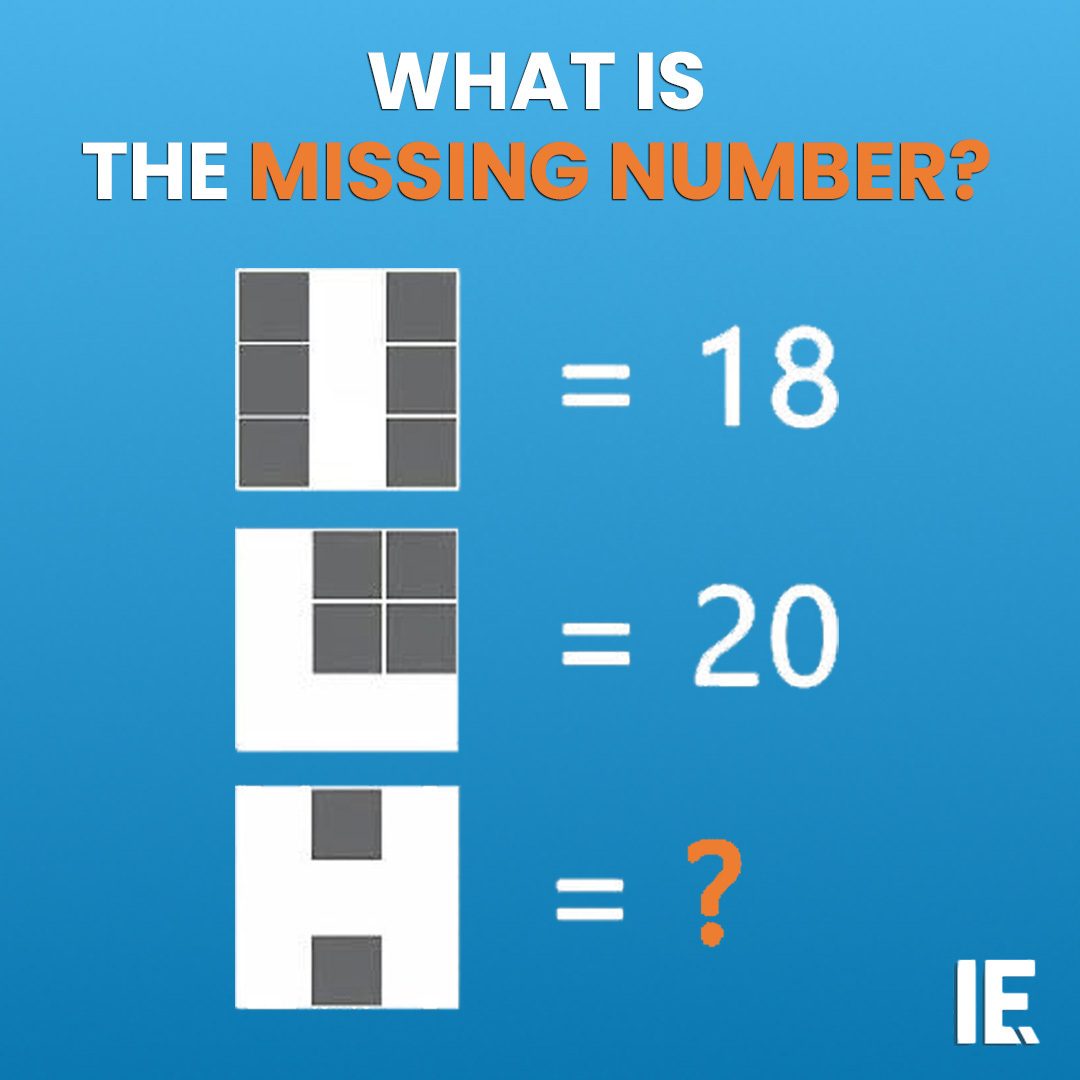
Missing Number Puzzles
Missing number puzzles are a fascinating way to challenge the mind and enhance logical thinking skills. These puzzles involve identifying patterns and using them to deduce a missing number in a given sequence or equation. They often feature shapes and numbers, adding a visual element that makes the challenge more engaging. Let's explore the intricacies of missing number puzzles, why they matter, and how to approach them effectively.
Context / Why This Matters
Missing number puzzles are more than just a fun pastime; they are excellent tools for improving cognitive abilities. Solving these puzzles can enhance critical thinking, logical reasoning, and pattern recognition skills. Whether you're an engineer, a student, or someone who enjoys brain-teasers, these puzzles offer a rewarding mental workout. Puzzles like these can also be used to assess problem-solving skills in various fields, making them a valuable tool for educators and recruiters alike. By tackling these challenges, you can sharpen your mind and develop a keen eye for detail.
Main Discussion
The Basics of Missing Number Puzzles
Missing number puzzles typically come in various forms, but they all share a common goal: to find the missing number in a sequence or equation. The puzzles often involve a series of shapes and numbers, with a logical pattern that needs to be deciphered. For example, you might see a sequence of numbers with a missing element, or a series of equations where one number is replaced by a question mark.
Identifying Patterns
One of the key aspects of solving missing number puzzles is identifying the underlying pattern. This can involve recognizing numerical sequences, geometric progressions, or even more complex relationships between the numbers and shapes. For instance, you might notice that each number in a sequence increases by a certain amount, or that the shapes follow a specific order. The key is to look for consistency and logic in the given information.
Deciphering Equations
Many missing number puzzles involve equations with shapes and numbers. These equations often have a visual component, such as shaded squares or specific shapes, that add an extra layer of complexity. To solve these puzzles, you need to understand the relationship between the visual elements and the numbers. For example, if a square represents a certain value, you need to determine how that value contributes to the overall equation.
Practical Tips
Step-by-Step Approach
- Observe the Pattern: Start by carefully observing the given sequence or equation. Look for any obvious patterns or relationships between the numbers and shapes.
- Identify Key Elements: Note down the key elements in the puzzle, such as the numbers, shapes, and any visual cues.
- Hypothesize: Form a hypothesis about the pattern or rule that governs the sequence or equation. For example, you might hypothesize that the numbers increase by a certain amount.
- Test Your Hypothesis: Apply your hypothesis to the missing number and check if it fits the pattern. If it does, you've found the solution. If not, revise your hypothesis and try again.
- Verify: Once you have a potential solution, verify it by checking if it fits all parts of the puzzle. Ensure that your answer is consistent with the given information.
Common Strategies
- Look for Arithmetic Progressions: Many puzzles involve arithmetic progressions, where each number increases by a constant amount. For example, 2, 4, 6, 8, 10 is an arithmetic progression with a common difference of 2.
- Recognize Geometric Shapes: If the puzzle involves shapes, pay attention to their properties. For example, a square might represent a certain value, while a circle represents another.
- Use Logical Deduction: Sometimes, the puzzle might require logical deduction to find the missing number. For example, if you see a pattern of increasing numbers interrupted by a missing number, you might need to deduce the missing value based on the context.
Practice Makes Perfect
Like any skill, solving missing number puzzles improves with practice. The more puzzles you attempt, the better you'll become at recognizing patterns and deciphering equations. Start with simpler puzzles and gradually move on to more complex ones as your skills improve.
Important Takeaways
- Pattern Recognition: The ability to recognize patterns is crucial for solving missing number puzzles. Look for numerical sequences, geometric progressions, and visual cues.
- Logical Thinking: Use logical deduction to find the missing number. Form hypotheses, test them, and verify your solutions.
- Practice Regularly: The more puzzles you solve, the better you'll get. Practice regularly to enhance your problem-solving skills.
Conclusion
Missing number puzzles are a fun and effective way to challenge your mind and improve your cognitive abilities. By identifying patterns, deciphering equations, and using logical deduction, you can solve these puzzles with ease. Whether you're an engineer, a student, or a puzzle enthusiast, these challenges offer a rewarding mental workout that can enhance your problem-solving skills. So, grab a pen and paper, and start solving those missing number puzzles today!
Watch the Reel
Recent articles
Fresh deep dives from the latest Reels we unpacked.




Comments
Be the first to comment.