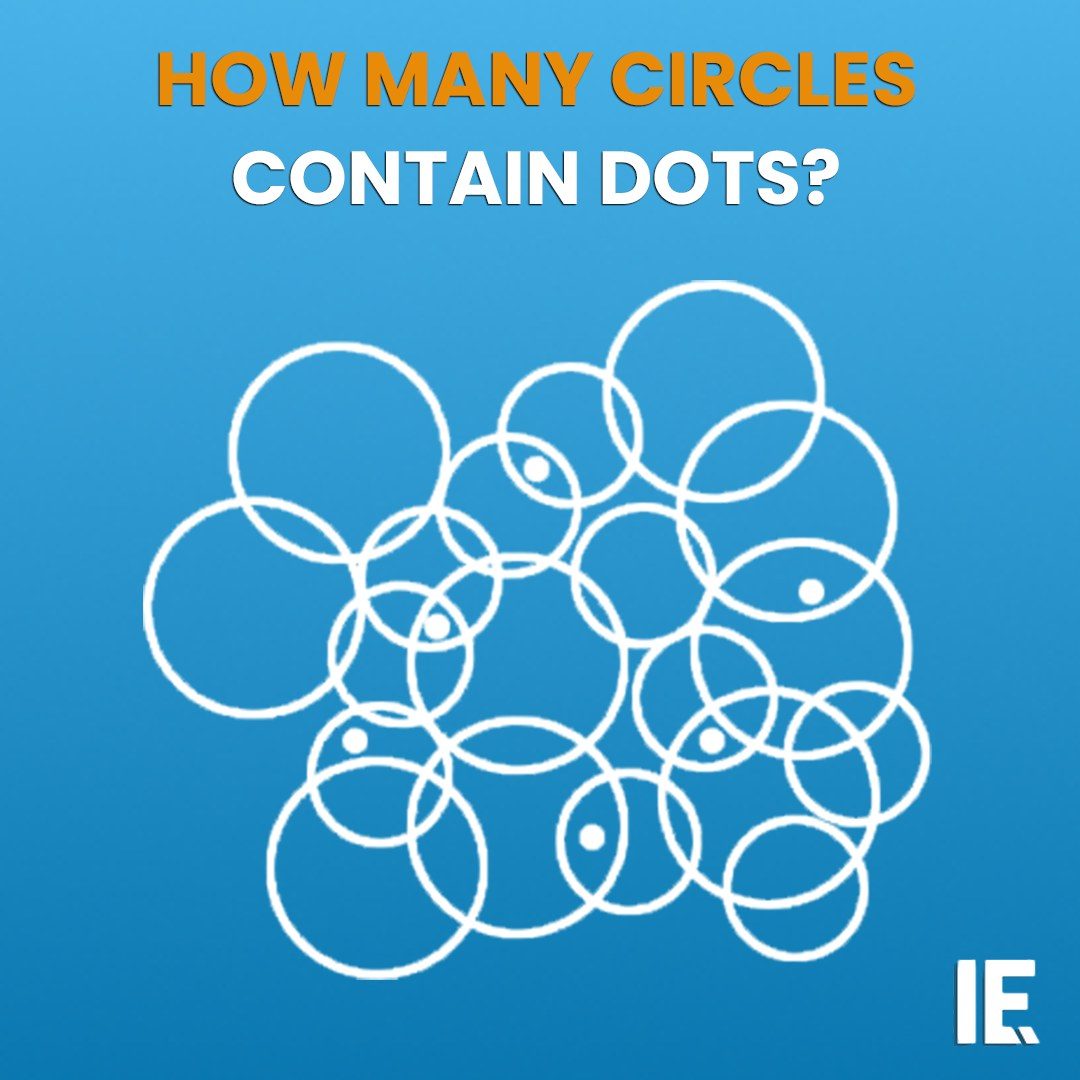
Circle and Dot Puzzle: A Visual Challenge
The Circle and Dot Puzzle presents a deceptively simple challenge: counting the number of circles that contain a dot. But looks can be deceiving, and this puzzle will test your observational skills and attention to detail. This type of visual puzzle is a favorite among brain teasers and logic enthusiasts, offering a fun and engaging way to exercise your mind.
Context / Why This Matters
Visual puzzles like the Circle and Dot Puzzle are more than just a pastime. They are tools for enhancing cognitive abilities, including problem-solving, pattern recognition, and visual acuity. These puzzles can help improve concentration and focus and even delay cognitive decline. As such, visual puzzles have become a popular component of training programs for professionals in various fields, from graphic design to software engineering. They're also widely used in educational settings to engage students and encourage critical thinking.
Main Discussion
The Basics of the Circle and Dot Puzzle
The puzzle involves a series of overlapping circles, each containing or not containing a dot. The task is straightforward: count how many circles have a dot inside them. The complexity arises from the overlapping nature of the circles, which can make it challenging to distinguish which dots belong to which circles. This overlap is a crucial element that tests the viewer's visual perception and analytical skills.
Why It's Trickier Than It Seems
The trickiness of the puzzle lies in the arrangement of the dots and circles. Often, the dots are positioned in such a way that they appear to be contained within multiple circles, or the circles overlap in a way that obscures the dots. This can lead to miscounts and frustrations, making the puzzle a true test of patience and observation.
The Psychological Aspect
The puzzle also taps into the psychological aspect of perception and cognition. Our brains are wired to seek patterns and order, and this puzzle challenges that by presenting a seemingly chaotic arrangement. The satisfaction of solving the puzzle comes from the cognitive process of organizing the visual information and arriving at the correct answer.
The Role of Visual Perception
Visual perception plays a critical role in solving the puzzle. The brain must process the spatial relationships between the circles and dots, which can be difficult when the elements are overlapping. This exercise in visual perception can improve your ability to interpret complex visual information, a skill that is valuable in many areas of life and work.
Practical Tips
Take Your Time
The first step in tackling this puzzle is to take your time. Rushing through the puzzle can lead to mistakes and frustration. Allow yourself to carefully observe the arrangement of the circles and dots and take your time to count.
Use a Systematic Approach
Another effective strategy is to use a systematic approach. Start from one end and work your way through the puzzle, counting the dots in each circle as you go. This methodical approach can help you avoid missing any circles or double-counting dots.
Break It Down
If the puzzle seems too overwhelming, try breaking it down into smaller sections. Focus on counting the dots in a few circles at a time, then move on to the next set. This can make the task feel more manageable and less daunting.
Practice Regularly
Like any skill, solving visual puzzles improves with practice. The more you practice, the better you'll become at recognizing patterns and counting accurately. Incorporate visual puzzles into your daily routine to keep your mind sharp.
Important Takeaways
- The Circle and Dot Puzzle is a visually challenging exercise that tests your ability to count and perceive overlapping elements accurately.
- The puzzle's complexity lies in the arrangement of the circles and dots, which can be deceptively simple yet tricky.
- Visual puzzles offer cognitive benefits, including improved problem-solving, pattern recognition, and visual acuity.
- Use a systematic approach and take your time to solve the puzzle accurately.
Conclusion
The Circle and Dot Puzzle is a delightful challenge that can be enjoyed by anyone, regardless of age or background. Whether you're a seasoned puzzle enthusiast or a casual observer, this puzzle offers a fun and engaging way to exercise your mind. So the next time you encounter a visual puzzle, take a moment to appreciate the complexity and enjoy the satisfaction of solving it.
Watch the Reel
Questions readers ask
What is the objective of the Circle and Dot Puzzle?
The main goal of the Circle and Dot Puzzle is to accurately count the number of circles that contain a dot. This simple yet challenging puzzle tests your ability to differentiate overlapping circles and identify the dots inside them.
Why is the Circle and Dot Puzzle considered challenging?
The puzzle can be tricky due to the overlapping nature of the circles and dots. This overlapping often causes confusion and makes it difficult to count the circles that contain dots accurately. The puzzle requires careful observation and a keen eye for detail.
How can solving the Circle and Dot Puzzle benefit me?
Engaging with the Circle and Dot Puzzle can enhance your cognitive abilities, including problem-solving skills, pattern recognition, and visual acuity. It can also improve your concentration and focus, making it a useful tool for mental exercise.
Are there different variations of the Circle and Dot Puzzle?
Yes, there are various versions of the Circle and Dot Puzzle, each with different arrangements of circles and dots. These variations can offer a range of difficulties, catering to both beginners and experienced puzzle solvers.
What techniques can help me solve the Circle and Dot Puzzle more efficiently?
To solve the Circle and Dot Puzzle more efficiently, try to visualize each circle individually, ignoring the overlapping for a moment. Take your time and verify each count to ensure accuracy. Practicing regularly can also improve your speed and precision.
Where can I find more puzzles like the Circle and Dot Puzzle?
You can find more puzzles similar to the Circle and Dot Puzzle on various online platforms, puzzle books, and mobile apps. Websites dedicated to brain teasers and logic puzzles often have a wide range of challenging puzzles to keep you engaged.
Can the Circle and Dot Puzzle be solved by children?
Yes, the Circle and Dot Puzzle can be enjoyed by people of all ages, including children. Younger solvers might find it fun and stimulating, and it can be a great way for them to develop their observational skills and attention to detail. However, adults might find the puzzle more challenging due to the complexity of the overlapping circles and dots.
Related deep dives
Similar reads based on topic and creator.


Recent articles
Fresh deep dives from the latest Reels we unpacked.




Comments
Be the first to comment.