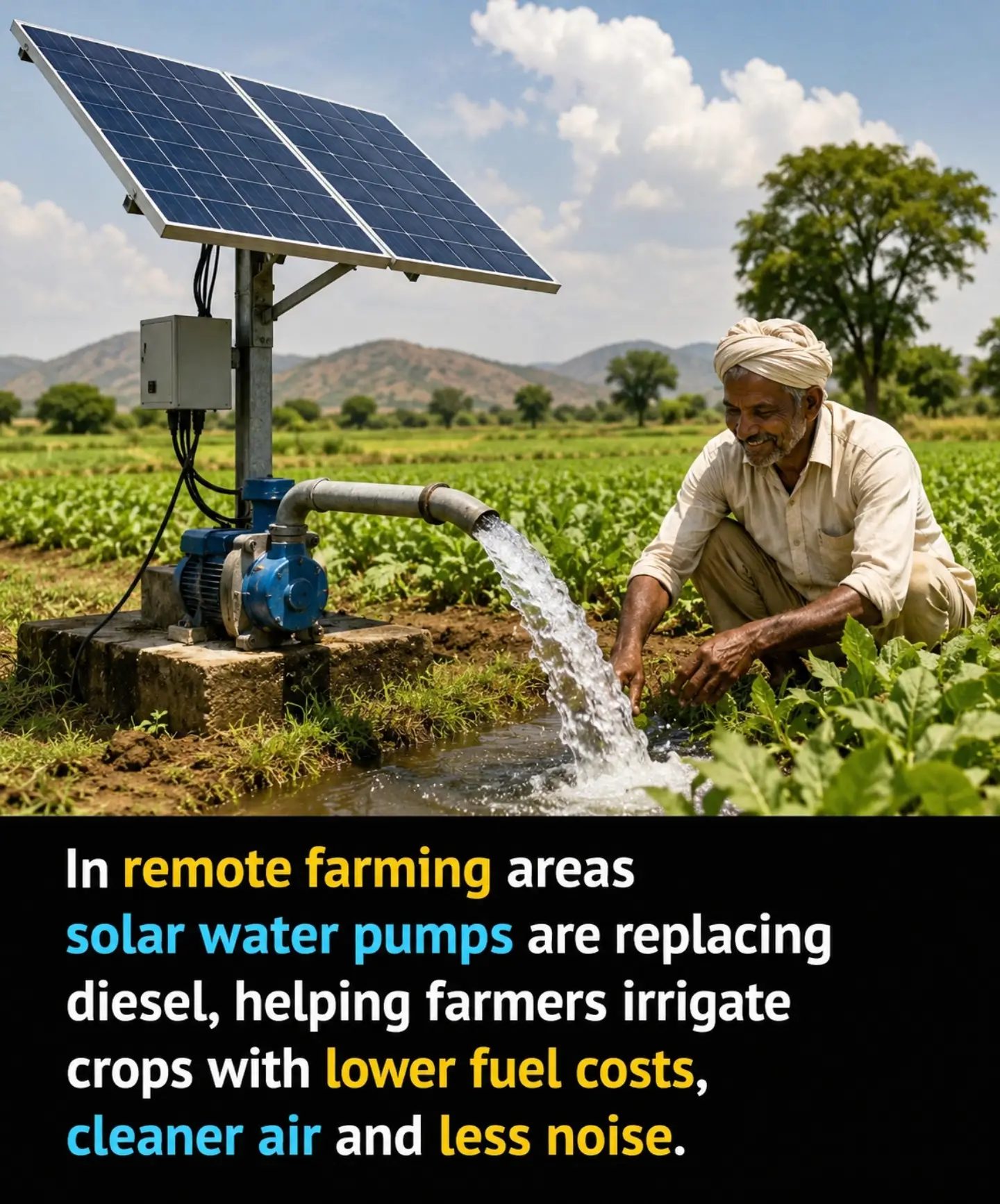
Solar Water Pumps for Farming
Solar water pumps are revolutionizing agricultural practices, particularly in remote farming areas. These systems are increasingly replacing traditional diesel pumps, offering farmers a more sustainable and cost-effective solution for irrigating crops.
Context / Why This Matters
Farming, especially in remote areas, often relies heavily on diesel pumps for water supply. However, the operational costs and environmental impact of diesel pumps are significant. Diesel pumps require continuous fuel supply, which can be costly and logistically challenging in remote regions. Additionally, the use of diesel contributes to air pollution and creates noise pollution, which can be detrimental to both the environment and the well-being of farmers.
This shift to solar water pumps is crucial because it addresses these issues head-on.
Main Discussion
The Transition to Solar Power
Solar water pumps harness the power of the sun to operate, making them an environmentally friendly and economically viable alternative to diesel pumps. The initial investment in solar water pump systems can be higher, but the long-term savings on fuel costs make it a worthwhile investment for farmers.
Cost Efficiency
One of the primary advantages of solar water pumps is the reduction in fuel costs. Diesel pumps require a continuous supply of fuel, which can be expensive and difficult to obtain in remote areas. Solar water pumps, on the other hand, use sunlight, a renewable and free resource. This means that once the system is installed, the operational costs are significantly lower. Farmers can save a substantial amount of money over time, which can be reinvested into other aspects of their farming operations.
Environmental Benefits
Solar water pumps contribute to cleaner air and less noise pollution. Diesel pumps emit harmful pollutants into the air, contributing to environmental degradation. Solar water pumps, being powered by renewable energy, produce no emissions. This makes them a cleaner and more sustainable option for farming communities.
Additionally, the reduction in noise pollution is a significant benefit. Diesel pumps are notoriously loud, which can be disruptive to both farmers and the local wildlife. Solar water pumps operate silently, providing a quieter and more peaceful environment.
Technical Considerations
The implementation of solar water pumps involves several technical considerations. These systems typically consist of solar panels, a controller, a pump, and a storage tank. The solar panels convert sunlight into electrical energy, which is then used to power the pump. The controller manages the energy flow, ensuring that the pump operates efficiently. The storage tank holds the water pumped from the source, providing a steady supply for irrigation.
Installation and Maintenance
The installation of solar water pumps can be straightforward, but it requires careful planning. The location of the solar panels is crucial for optimal sunlight exposure. Additionally, the pump and storage tank must be strategically placed to ensure efficient water delivery. Regular maintenance is also essential to keep the system running smoothly. This includes cleaning the solar panels, checking the controller, and inspecting the pump and storage tank for any issues.
Reliability and Durability
Solar water pumps are designed to be reliable and durable. They are built to withstand harsh weather conditions and can operate for extended periods without requiring frequent maintenance. This reliability is crucial for farmers who depend on a consistent water supply for their crops. The durability of solar water pumps also means that they have a longer lifespan compared to diesel pumps, making them a cost-effective investment in the long run.
Practical Tips
Choosing the Right Solar Water Pump
When selecting a solar water pump, it’s important to consider several factors:
- Water Demand: Assess your water needs based on the size of your farm and the types of crops you are growing.
- Sunlight Availability: Ensure that the location of the solar panels will receive sufficient sunlight throughout the day.
- Budget: Consider the initial investment and long-term savings. Solar water pumps may have a higher upfront cost, but the savings on fuel and maintenance can offset this over time.
- Maintenance Requirements: Choose a system that is easy to maintain and has readily available replacement parts.
Maintenance Best Practices
To keep your solar water pump system running efficiently, follow these maintenance tips:
- Regular Cleaning: Clean the solar panels regularly to ensure they are free of dirt and debris. This will maximize their efficiency.
- Inspection: Inspect the pump, controller, and storage tank periodically for any signs of wear or damage.
- Water Quality: Monitor the quality of the water being pumped to prevent mineral buildup in the system.
- Professional Help: If you encounter any issues that you cannot resolve yourself, do not hesitate to seek professional assistance.
Important Takeaways
Solar water pumps offer a sustainable and cost-effective solution for farmers, particularly in remote areas. By transitioning from diesel to solar-powered pumps, farmers can reduce fuel costs, contribute to cleaner air, and minimize noise pollution. The key benefits include cost efficiency, environmental sustainability, and technical reliability. With proper installation and maintenance, solar water pumps can provide a consistent and efficient water supply, enhancing the overall productivity and sustainability of farming operations.
Conclusion
The adoption of solar water pumps in farming represents a significant step towards more sustainable and cost-effective agricultural practices. These pumps offer numerous benefits, including reduced fuel costs, cleaner air, and less noise pollution. By embracing this technology, farmers can achieve long-term savings, improve their environmental footprint, and enhance their overall farming operations. From rural areas to larger-scale operations, solar water pumps are proving to be a game-changer in modern agriculture.
Watch the Reel
Questions readers ask
How do solar water pumps work for farming?
Solar water pumps convert sunlight into electricity using photovoltaic panels. This electricity powers a pump that draws water from a source, such as a well or canal, and distributes it to the crops through irrigation systems. The pumps operate during daylight hours, ensuring efficient water distribution when it's needed most.
What are the primary benefits of using solar water pumps in rural farming?
The main benefits include reduced fuel costs, lower environmental impact, and improved sustainability. Solar water pumps eliminate the need for diesel, reducing both air pollution and noise. Additionally, they provide a reliable water supply, especially in remote areas where grid electricity may not be available.
Can solar water pumps completely replace diesel pumps?
Yes, solar water pumps can completely replace diesel pumps in many farming scenarios. They are particularly effective in areas with ample sunlight and a consistent need for irrigation. However, for farms with extremely high water demands or limited sunlight, a hybrid system combining solar and diesel might be considered.
What is the initial cost of installing a solar water pump system?
The initial cost of installing a solar water pump system varies based on the size of the pump, the capacity of the solar panels, and other site-specific factors. While the upfront cost can be higher than diesel pumps, the long-term savings on fuel and maintenance often make solar water pumps a cost-effective choice for farmers.
How do solar water pumps impact the environment compared to diesel pumps?
Solar water pumps significantly reduce environmental impact by eliminating the need for diesel fuel, which in turn reduces greenhouse gas emissions and air pollution. They also operate quietly, minimizing noise pollution, and contribute to a cleaner, more sustainable farming practice overall.
Are there any maintenance requirements for solar water pumps?
Solar water pumps require minimal maintenance compared to diesel pumps. Regular cleaning of the solar panels and periodic checks of the pump and irrigation system are typically all that's needed. This reduces the overall maintenance costs and effort required for farmers.
How can farmers determine if a solar water pump is right for their needs?
Farmers should consider the amount of sunlight their area receives, their water requirements, and the cost of fuel for diesel pumps. Consulting with solar system providers can help determine the specific pump size and solar panel capacity needed. Additionally, many providers offer financing options to help offset the initial investment.
Recent articles
Fresh deep dives from the latest Reels we unpacked.




Comments
Be the first to comment.