Healthy Frozen Food Choices
Making smart choices in the frozen food aisle can significantly boost your nutrition and help you reach your protein goals. Let's dive into the key considerations for selecting healthier frozen food options, focusing on chicken breast, salmon, and beef sticks.
Why This Matters
With busy schedules, frozen foods offer a convenient way to maintain a balanced diet. However, not all frozen foods are created equal. Understanding how to identify better options can save time and support your health goals more effectively. The right choices can provide higher protein, fewer additives, and better overall nutrition.
Choosing Better Frozen Chicken Breast
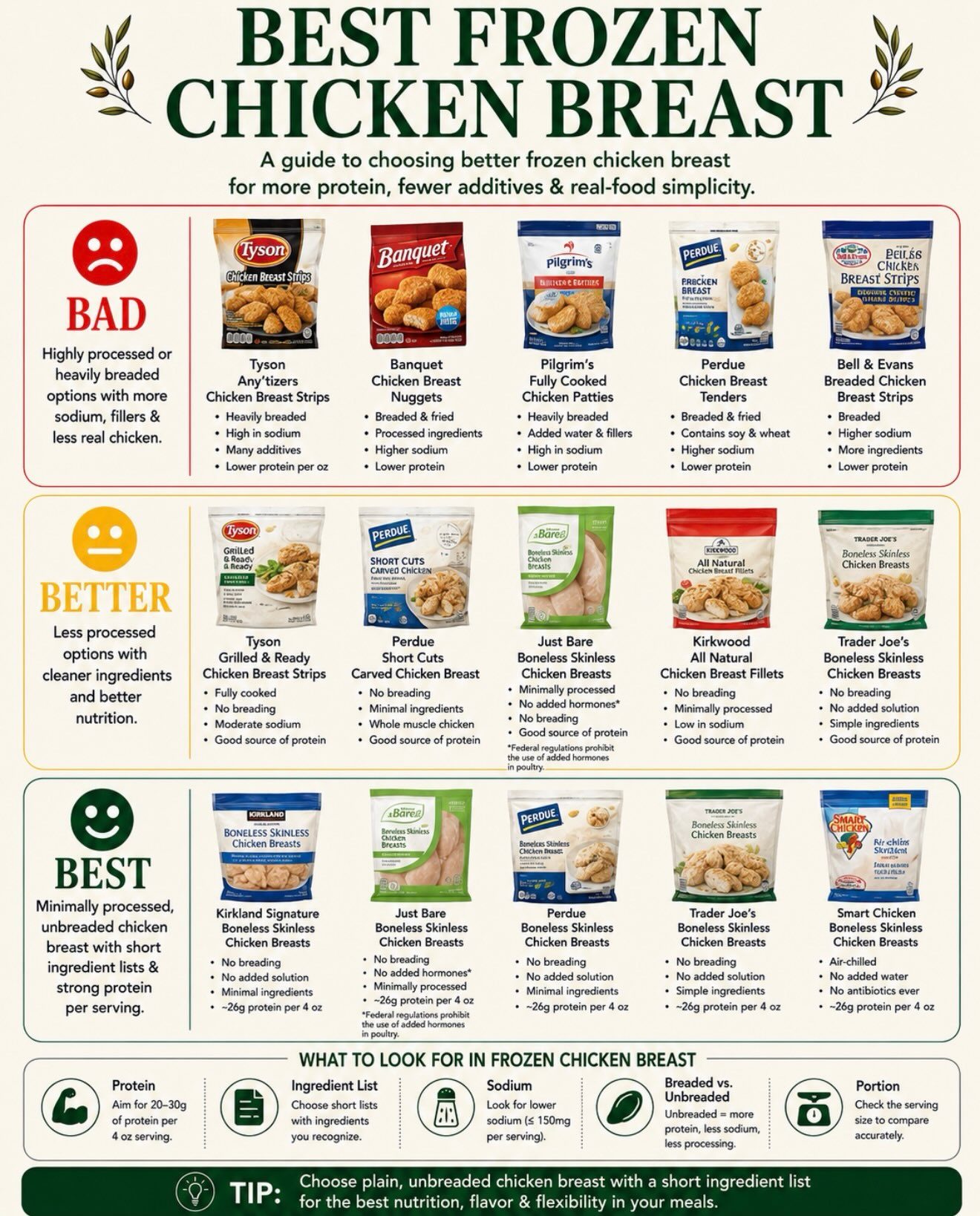
When it comes to frozen chicken breast, prioritizing minimally processed options is crucial. Look for products with shorter ingredient lists, less sodium, and fewer fillers. Here’s a breakdown of what to look for:
Ingredients to Avoid
- Breaded and Fried: These options often contain more sodium, fillers, and less real meat. Brands like Tyson, Banquet, Pilgrim's, and Perdue are typically categorized as 'Bad' or 'Better' depending on the specific product.
Ingredients to Embrace
- Minimally Processed: Opt for brands that offer unbreaded, minimally processed chicken. Bell & Evans is a good example of a 'Best' choice. These options provide more protein and cleaner ingredients, making them a healthier selection.
Selecting Healthier Frozen Salmon
Frozen salmon is another great protein source, but choosing the right type is essential for optimal nutrition. Here are some key points to consider:
What to Look For
- Wild-Caught: Wild-caught salmon is generally a better option due to its higher nutritional content and more sustainable sourcing. Brands like Gorton's and Trident often offer 'Best' choices, while heavily seasoned and processed brands like Tai Pei, Fisher Boy, and Morey's are typically 'Bad'.
Ingredients to Avoid
- Additives and Sodium: Look for options with fewer additives, less sodium, and more real meat. Avoid brands that use excessive seasoning or processing, which can reduce the nutritional value.
Opting for Better Beef Sticks
Beef sticks are a popular grab-and-go snack, but not all are created equal. Here’s how to choose healthier options:
Ingredients to Embrace
- Minimally Processed: Opt for beef sticks with minimally processed ingredients, a good source of protein, and no added sugar. Brands like Teton, Nick’s, Vermont Smoke & Cure, and Pederson’s are often categorized as 'Best' for their cleaner ingredient lists and better nutritional value.
Ingredients to Avoid
- High Sugar and Fillers: Avoid brands that are high in sugar, fillers, and unnecessary processing. Jack Link's, Slim Jim, Duke’s, and Bridgford are often categorized as 'Bad' due to their higher sugar and filler content.
Practical Tips
Here are some practical tips to help you make better frozen food choices:
- Check the Labels: Always read the ingredient list and nutritional information. Look for shorter ingredient lists and fewer additives.
- Opt for Less Processing: Choose minimally processed options with more real meat and fewer fillers.
- Prioritize Protein: Higher protein content is key, especially when choosing convenience foods.
- Avoid Excessive Sodium: Lower sodium content is generally better for health, so aim for options with less sodium.
- Consider Sustainability: For seafood like salmon, consider the sustainability of the sourcing. Wild-caught is often a better option.
Important Takeaways
Making healthier choices in the frozen food aisle doesn't have to be complicated. By focusing on higher protein, fewer additives, and less processing, you can significantly improve your nutrition. Here are the key takeaways:
- Read Labels: Always read the ingredient list to understand what you're eating.
- Prioritize Real Food: Choosing options with shorter ingredient lists and more real meat is better for your health.
- Avoid Excess Salt and Sugar: Lower sodium and sugar content should be a priority.
- Opt for Better Processing: Minimally processed options are generally healthier.
Conclusion
Choosing healthier frozen food options is a practical way to support your nutritional goals without sacrificing convenience. By focusing on higher protein, fewer additives, and less processing, you can make smarter choices that fit into a healthy lifestyle. Next time you're at the grocery store, use this guide to navigate the frozen food aisle with confidence and make better choices for your health.
Watch the Reel
Questions readers ask
What should I look for in the best frozen chicken breast?
To find the best frozen chicken breasts, focus on products with short ingredient lists and minimal processing. These products should primarily contain chicken, without added sugars or artificial ingredients. Additionally, look for brands that use high-quality, lean cuts of chicken breast.
How can I identify healthier frozen salmon fillets?
Healthier frozen salmon fillets are usually wild-caught, which means they are sourced from their natural environment. These fillets are often higher in omega-3 fatty acids and have a cleaner taste. Additionally, check the packaging to ensure there are no added preservatives, and the ingredient list should ideally be minimal, if not just salmon.
What makes a good frozen beef choice healthier?
Minimally processed beef products are healthier, as they have fewer additives and preservatives. Look for beef sticks where the sodium content is low, and the ingredient list is short. Ideally, the beef should be the primary ingredient, with no added sugars or artificial flavors.
Why is less sodium important in frozen meat?
A lower sodium content in frozen meat can help prevent high blood pressure, heart disease, and stroke. Less sodium ensures that the flavor of the meat itself is the main focus, which is tastier and healthier. Aim for frozen meat products with 500mg or less of sodium per serving.
How do I know if my frozen protein has no added sugars?
To ensure your frozen protein has no added sugars, read the nutrition labels and ingredient lists carefully. Be cautious with products that list sugar, fructose, or any other sweetener in their ingredients. Ideally, the only ingredients should be the actual meat and any essential seasonings.
What are the benefits of choosing cleaner frozen food options?
Opting for cleaner frozen food options means you avoid unnecessary preservatives and additives. These products are easier to digest and usually taste better, they also help you maintain a healthier diet by providing better nutrition. This is particularly important for those with dietary restrictions or allergies.
How do I identify minimally processed beef in the frozen section?
Minimally processed frozen beef will have a straightforward ingredient list, with beef as the main component. Avoid products with a long list of additives, fillers, or artificial flavors. Look for products labeled as 100% beef or grass-fed, as these are often less processed and higher in quality.
Recent articles
Fresh deep dives from the latest Reels we unpacked.




Comments
Be the first to comment.