Protein Food Comparison: Making Smart Choices
Protein is a vital nutrient for maintaining and building muscle, aiding in recovery, and supporting overall health. However, not all protein sources are created equal. Understanding the differences between high-quality, nutrient-dense protein foods and those that are highly processed can significantly impact your health and fitness goals.
Why This Matters
Choosing the right protein sources can make a substantial difference in your overall health. High-protein, nutrient-dense foods provide essential amino acids, vitamins, and minerals, while highly processed foods often contain excessive sodium, saturated fats, and artificial ingredients. By opting for whole, minimally processed proteins, you can fuel your body more effectively, support muscle growth, and achieve better health outcomes.
Main Discussion
The Best Protein Sources
When it comes to protein, quality matters. Opt for whole, minimally processed foods that are high in protein and packed with nutrients. These foods not only provide the protein your body needs but also offer a range of other health benefits.
Lean Proteins
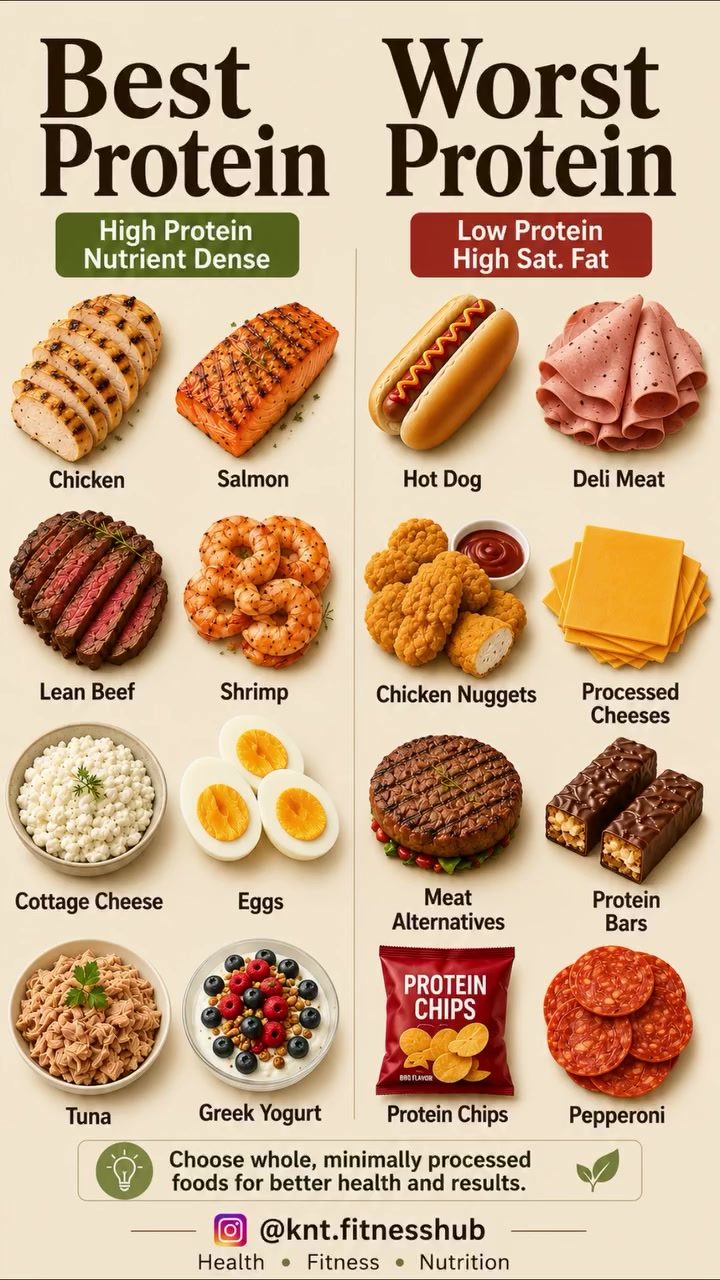
Chicken and Salmon: These lean proteins are staples in many fitness diets. Chicken breast is a low-fat, high-protein option that can be easily incorporated into various meals. Salmon is rich in omega-3 fatty acids, which support heart health and reduce inflammation. Both are versatile and can be prepared in numerous ways to keep meals interesting.
Dairy Products
Greek Yogurt and Cottage Cheese: These dairy products are excellent sources of protein and calcium. Greek yogurt is particularly notable for its high protein content and low-fat options, making it a great snack or meal addition. Cottage cheese, on the other hand, is a versatile ingredient that can be used in both sweet and savory dishes.
Seafood
Shrimp and Tuna: These seafood options are low in calories and high in protein. Shrimp is a lean protein source that pairs well with a variety of flavors, while tuna is rich in omega-3 fatty acids, making it a heart-healthy choice. Both can be enjoyed grilled, baked, or added to salads and sandwiches.
Eggs
Eggs are a complete protein source, providing all nine essential amino acids. They are also rich in vitamins and minerals, making them a nutritious addition to any meal. Whether boiled, scrambled, or poached, eggs are a versatile and convenient protein option.
The Worst Protein Sources
Not all foods labeled as high in protein are healthy choices. Many processed foods are marketed as protein-rich but are often high in sodium, saturated fats, and artificial ingredients. These foods can undermine your health and fitness goals.
Processed Meats
Hot Dogs and Deli Meat: These processed meats are often high in sodium and saturated fats, which can contribute to health issues like high blood pressure and heart disease. Opting for healthier alternatives like grilled chicken or tuna can provide the protein you need without the added sodium and unhealthy fats.
Protein Bars
While protein bars can be convenient, many are highly processed and loaded with sugars and artificial ingredients. Swapping a protein bar for a hard-boiled egg or a handful of nuts can provide more natural, nutrient-dense protein.
Protein Chips
These snacks are often marketed as a healthier alternative to traditional chips, but they can still be high in calories and low in nutritional value. Choosing Greek yogurt or a piece of fruit as a snack can provide more beneficial nutrients and better support your health goals.
Chicken Nuggets and Processed Cheeses
These foods are often high in sodium and saturated fats, which can lead to various health issues. Opting for lean proteins like grilled chicken or cottage cheese can provide the protein you need without the added unhealthy ingredients.
Navigating the Grocery Aisles
Choosing the right protein sources can be challenging, especially with the abundance of processed foods on the market. Here are some tips to help you make smarter choices:
- Read Labels: Pay attention to the ingredient list and nutrition facts. Opt for foods with minimal processing and avoid those with long lists of artificial ingredients.
- Choose Whole Foods: Focus on whole, minimally processed foods like chicken, salmon, Greek yogurt, and eggs. These foods are not only high in protein but also rich in other essential nutrients.
- Watch for Hidden Fats and Sugars: Be wary of foods that are high in saturated fats and added sugars, even if they are marketed as high in protein. These ingredients can negate the benefits of the protein content.
Practical Tips
When planning your meals, here are some straightforward swaps to help you choose better protein sources:
- Swap Protein Bars for Hard-Boiled Eggs: Eggs are a natural, nutrient-dense protein source that can be easily prepared and carried with you.
- Swap Deli Meat for Tuna or Grilled Chicken: These options provide lean protein without the added sodium and saturated fats found in processed meats.
- Swap Protein Chips for Greek Yogurt: Greek yogurt is a high-protein, low-calorie snack that can satisfy your hunger and provide essential nutrients.
Important Takeaways
- Not all protein sources are created equal. Choosing whole, minimally processed foods can significantly improve your health and fitness outcomes.
- Opt for lean proteins like chicken, salmon, Greek yogurt, and eggs. These foods are nutrient-dense and provide essential amino acids, vitamins, and minerals.
- Avoid highly processed foods that are marketed as high in protein but contain excessive sodium, saturated fats, and artificial ingredients.
- Pay attention to labels and choose whole, minimally processed foods to ensure you are getting the best nutritional value.
Conclusion
Making informed choices about the protein sources you consume can have a profound impact on your health and fitness goals. By focusing on whole, minimally processed foods and avoiding highly processed options, you can ensure that your diet supports your overall well-being. Whether you're aiming to build muscle, lose weight, or simply maintain a healthy lifestyle, choosing the right proteins is a crucial step in achieving your goals.
Watch the Reel
Questions readers ask
What are some of the best lean protein sources for a balanced diet?
Lean protein sources include grilled chicken breast, turkey, lean cuts of beef, and certain types of seafood like salmon and cod. These options are high in protein and low in fat, making them excellent choices for maintaining a healthy diet and supporting fitness goals.
How does Greek yogurt compare to other protein sources?
Greek yogurt is an excellent protein source, especially for those looking to increase their protein intake while minimizing fat. It provides a high amount of protein per serving, along with beneficial probiotics. It can be a great substitute for sour cream or mayonnaise in recipes, offering a healthier side to a meal.
Are there any downsides to processed meats like deli meats and sausages?
Processed meats, such as deli meats and sausages, are high in sodium and often contain added preservatives and artificial ingredients. They can also be high in saturated fats, which can negatively impact heart health. It's best to limit their consumption and opt for healthier alternatives, such as lean turkey or chicken breasts, for optimal health.
What are some smart protein swap ideas for a healthier diet?
Consider swapping out high-fat, processed proteins for lean, nutrient-dense options. For example, you can replace beef burgers with turkey burgers, or opt for grilled chicken instead of fried chicken. Other smart swaps include using Greek yogurt instead of sour cream, or choosing canned tuna or salmon instead of processed meats.
Why is it important to choose minimally processed protein sources?
Minimally processed protein sources, such as fresh fish, lean meats, and legumes, retain more of their natural nutrients and are free from added preservatives and artificial ingredients. Choosing minimally processed options helps to maintain a diet rich in essential vitamins, minerals, and amino acids, supporting overall health and fitness.
Related deep dives
Similar reads based on topic and creator.

Recent articles
Fresh deep dives from the latest Reels we unpacked.




Comments
Be the first to comment.