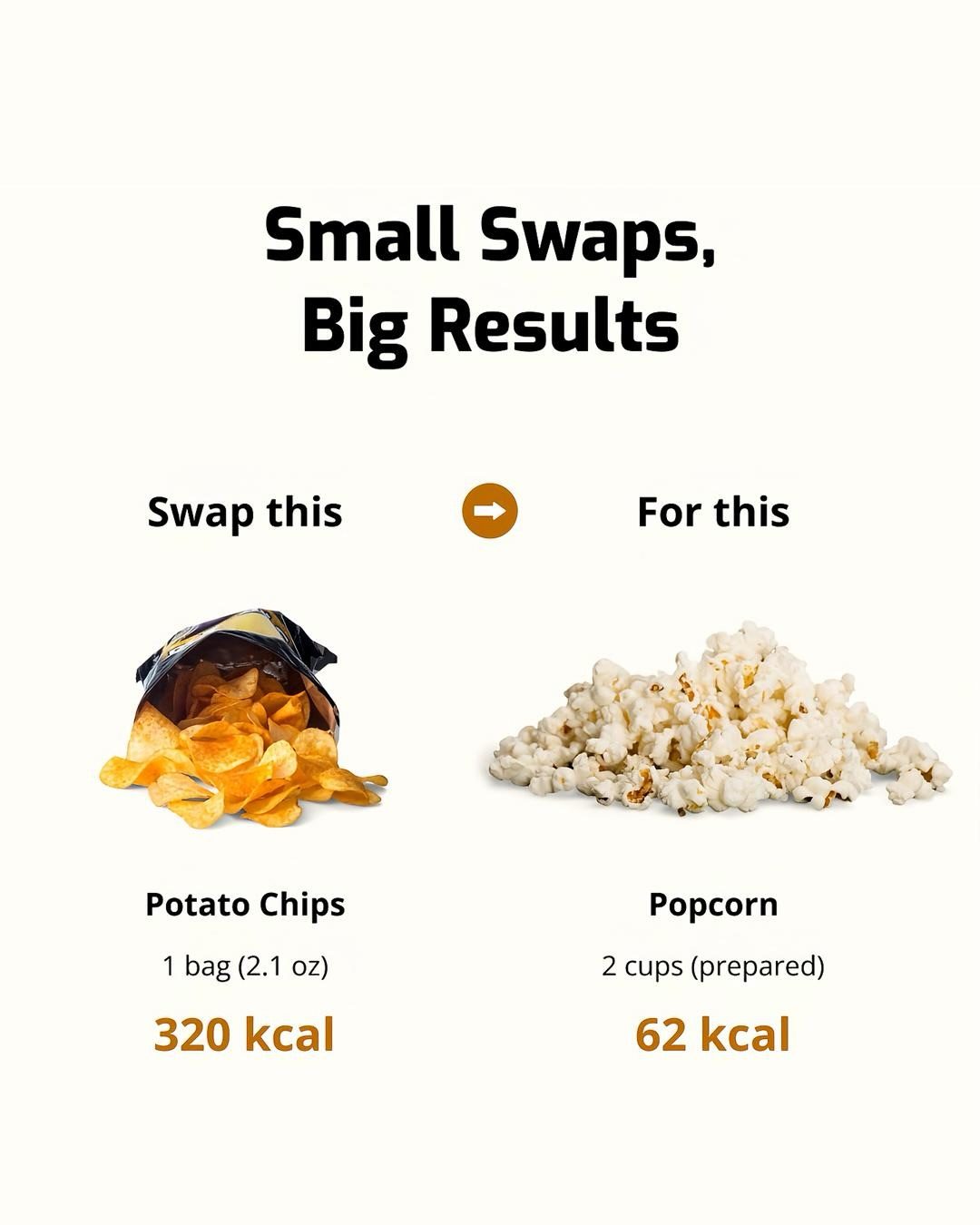
Small Swaps, Big Results: The Power of Healthy Food Alternatives
Nutrition is about making the right choices—choices that can add up to big results over time. Small, consistent changes in your daily food intake can lead to significant health benefits. This approach is not about cutting out everything you love but about making smarter choices most of the time. Here's how you can start with just one swap today.
Why This Matters
Small food swaps are essential for maintaining a healthy lifestyle. They help in reducing calorie intake, increasing protein consumption, and improving overall nutrition without feeling deprived. By making these swaps consistently, you can achieve your health goals more effectively.
Healthy Food Swaps: The Details
Swap Potato Chips for Popcorn
A classic example of a healthy food swap is choosing popcorn over potato chips. One bag of potato chips (2.1 oz) contains 320 calories, while two cups of prepared popcorn have only 62 calories. This swap significantly reduces your calorie intake while still enjoying a savory snack.
Swap Mayo for Mustard
Another easy swap is replacing mayonnaise with mustard. One tablespoon of mayonnaise (0.5 oz) contains 95 calories, whereas one tablespoon of mustard (0.5 oz) contains just 8 calories. This swap can help reduce your calorie intake without sacrificing flavor.
Swap Energy Bars for Fruit
Energy bars are convenient, but they are often high in calories. A single energy bar (1.8 oz) can contain around 180 calories, whereas a serving of fruit typically contains less than 100 calories. Opting for fruit as a snack can provide natural sugars, fiber, and essential vitamins while keeping your calorie intake in check.
Health Benefits of Small Swaps
Making these small changes can lead to substantial health benefits:
- Calorie Reduction: Swapping high-calorie foods for lower-calorie alternatives helps in reducing overall calorie intake, which is crucial for weight management.
- Increased Protein Intake: Foods like Greek yogurt and popcorn are higher in protein compared to their healthier counterparts.
- More Fiber: Foods like oats and fruits are rich in fiber, which aids in digestion and helps you feel fuller for longer.
- Better Nutrition: Fruits and vegetables provide essential vitamins and minerals that are often lacking in processed foods.
Practical Tips for Successful Swaps
- Plan Ahead: Prepare a list of healthy swaps and keep them handy. This will help you make better choices when you're grocery shopping or dining out.
- Read Labels: Pay attention to the nutrition labels on food products. This will help you make informed decisions about what to eat.
- Start Small: Begin with one or two swaps and gradually incorporate more into your diet. This will make the transition smoother and more sustainable.
- Stay Consistent: Consistency is key when it comes to healthy eating. Make these swaps a part of your daily routine for long-term benefits.
Important Takeaways
Small swaps can lead to significant health improvements over time. By making smarter choices, you can reduce calorie intake, increase protein and fiber consumption, and improve overall nutrition. These changes don’t have to be drastic; even small, consistent adjustments can make a big difference.
Conclusion
Incorporating healthy food swaps into your daily routine is a practical and effective way to improve your diet and overall health. By choosing lower-calorie alternatives and focusing on nutrient-dense foods, you can achieve your health goals without feeling deprived.
Watch the Reel
Questions readers ask
What are the benefits of making small food swaps?
Making small food swaps helps reduce daily calorie intake, which can aid in weight management. These swaps also increase protein and nutrient consumption, boosting overall health without requiring drastic changes to your diet. Consistency in these swaps can lead to significant results over time.
How does swapping popcorn for potato chips improve my health?
Popcorn is a healthier alternative to potato chips because it is lower in calories and higher in fiber, which can help you feel fuller for longer. Additionally, popcorn contains more antioxidants and whole grains, making it a more nutritious choice.
Can small food swaps help with weight loss?
Yes, small food swaps can contribute to weight loss by reducing your overall calorie intake. By consistently choosing lower-calorie, nutrient-rich foods, you can create a calorie deficit, which is essential for weight loss. For example, swapping a candy bar for a piece of fruit can save you hundreds of calories.
What are some easy calorie swaps for snacks?
Some easy calorie swaps for snacks include choosing air-popped popcorn over potato chips, Greek yogurt over sour cream, and fresh fruit over dried fruit. These swaps can significantly reduce your calorie intake while providing more nutrients. For example, dried fruit can contain up to 70% more calories than fresh fruit.
How can I start incorporating healthy food swaps into my daily routine?
Start by identifying one or two snacks or meals you consume regularly and find healthier alternatives. For example, if you eat a candy bar every afternoon, try swapping it for a piece of fresh fruit or a handful of nuts. Gradually incorporate more swaps as you become comfortable with the changes.
What are the benefits of swapping calorie-dense foods for nutrient-rich foods?
Swapping calorie-dense foods for nutrient-rich foods helps you consume more vitamins, minerals, and fiber, which are essential for overall health. This swap also aids in weight management by reducing excess calorie intake, allowing you to maintain a healthy weight without feeling deprived.
Are there any calorie swaps for breakfast foods?
Yes, there are several breakfast food swaps you can make. For example, you can swap regular pancakes for whole-grain pancakes, or swap a sugary cereal for oatmeal with fresh fruit. These swaps can help you start your day with more nutrients and fewer calories, setting a healthier tone for the rest of your meals.
Recent articles
Fresh deep dives from the latest Reels we unpacked.




Comments
Be the first to comment.