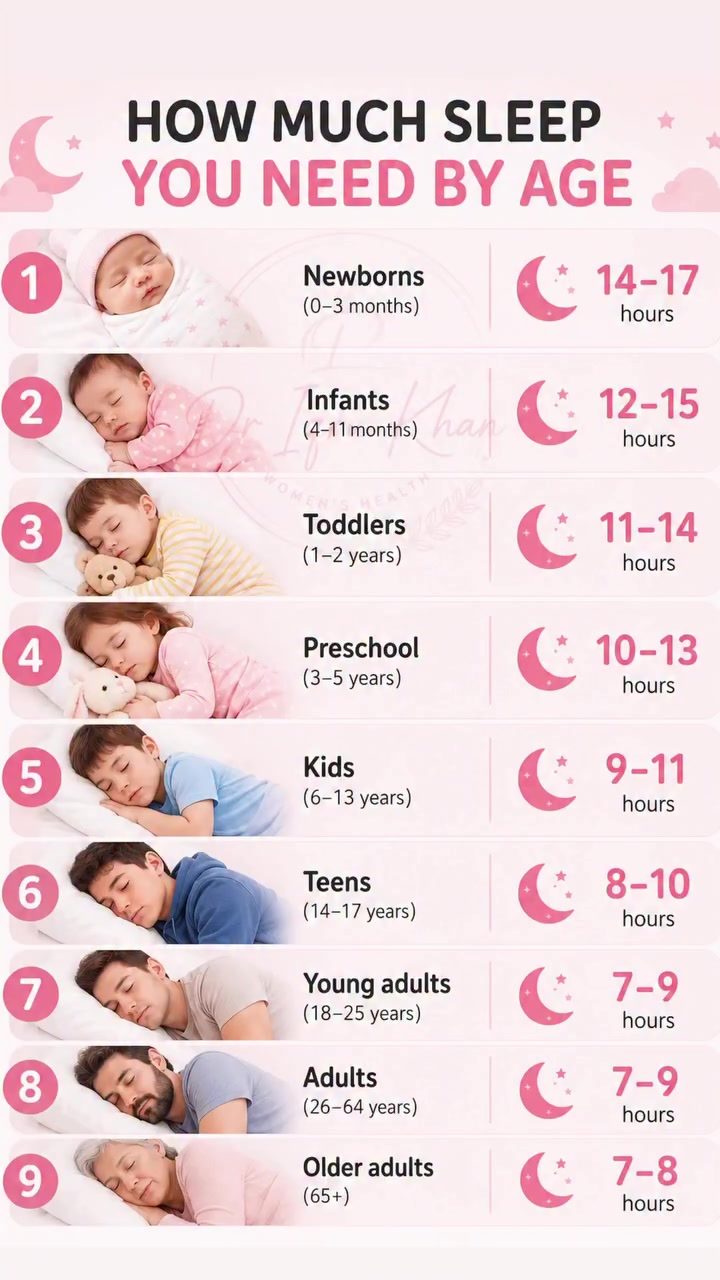
Sleep Needs by Age
Sleep is a fundamental aspect of health, influencing almost every aspect of our well-being. Understanding how much sleep you need based on your age can significantly improve your overall health and quality of life. Let’s explore the recommended sleep durations for each age group, from newborns to older adults.
Why this matters
Getting the right amount of sleep is crucial for various reasons. Adequate sleep can boost your immune system, improve your mood, enhance your memory, and keep your body healthy. Conversely, insufficient sleep can lead to numerous health issues, including weakened immunity, poor cognitive function, and increased risk of chronic diseases.
Main discussion
Newborns and Infants
For newborns (0-3 months), the recommended sleep duration is 14-17 hours. This high amount of sleep is essential for their rapid growth and development. Newborns spend a significant portion of their time sleeping, which helps their brains and bodies develop correctly. Infants (4-11 months) need 12-15 hours of sleep. This period is marked by frequent sleep-wake cycles, which are crucial for their cognitive and physical development.
Toddlers and Preschoolers
Toddlers (1-2 years) require 11-14 hours of sleep. This includes both nighttime sleep and daytime naps. Proper sleep during this stage supports their language development, motor skills, and emotional well-being. Preschoolers (3-5 years) need 10-13 hours of sleep. Adequate sleep helps preschoolers maintain their energy levels, focus better in learning activities, and enhances their overall growth.
Children and Teenagers
School-age children (6-13 years) should aim for 9-11 hours of sleep. Quality sleep is vital for their academic performance, physical health, and emotional stability. Teens (14-17 years) need 8-10 hours of sleep. This age group often experiences significant changes in their biological clock, which can disrupt their sleep patterns. Ensuring adequate sleep can help teens cope with the demands of school, social life, and emotional development.
Adults
Young adults (18-25 years) and adults (26-64 years) both need 7-9 hours of sleep. This sleep duration is essential for maintaining overall health, cognitive function, and productivity. Adequate sleep can help adults manage stress, improve their mental clarity, and support their physical health.
Older Adults
Older adults (65+) need 7-8 hours of sleep. While the sleep duration may be similar to younger adults, the quality of sleep can be affected by various factors, such as chronic pain, medications, and sleep disorders. Prioritizing good sleep hygiene can help older adults maintain their health and well-being.
Practical tips
Creating a Sleep-Friendly Environment
Ensure your sleep environment is conducive to restful sleep. This includes a comfortable mattress, supportive pillows, and a cool, dark, and quiet room. Consider using earplugs, an eye mask, or a white noise machine if necessary.
Establishing a Consistent Sleep Schedule
Maintain a regular sleep schedule by going to bed and waking up at the same time every day, even on weekends. This consistency helps regulate your body’s internal clock and can improve the quality of your sleep.
Practicing Relaxation Techniques
Engage in relaxation techniques before bed, such as deep breathing exercises, progressive muscle relaxation, or meditation. These practices can help calm your mind and prepare your body for sleep.
Limiting Caffeine and Alcohol
Avoid consuming caffeine and alcohol close to bedtime. Both substances can disrupt your sleep patterns and reduce the quality of your rest. Try to limit caffeine intake to the morning hours and avoid alcohol altogether if you struggle with sleep.
Avoiding Screens Before Bed
The blue light emitted by electronic devices can interfere with your body’s production of melatonin, a hormone that regulates sleep. Try to avoid using screens at least an hour before bedtime. Instead, read a book, listen to calming music, or engage in another relaxing activity.
Important takeaways
Understanding and adhering to the recommended sleep durations for your age group is crucial for maintaining overall health. Sleep needs vary significantly across different life stages, and meeting these needs can have a profound impact on your well-being. Prioritizing good sleep hygiene, creating a sleep-friendly environment, and establishing a consistent sleep schedule are essential steps toward achieving better sleep and improved health.
Conclusion
Sleep is not a luxury; it is a necessity. Whether you are a newborn, a teenager, or an older adult, getting the right amount of sleep can significantly enhance your mood, boost your immune system, sharpen your memory, and keep your body healthy. By understanding the sleep requirements for your age group and implementing practical tips for better sleep, you can take a significant step toward improving your overall health and well-being.
Watch the Reel
Questions readers ask
How much sleep do newborns and infants really need?
Newborns (0-3 months) typically need 14-17 hours of sleep per day, while infants (4-11 months) need 12-15 hours. This helps support their rapid growth and development. Sleep helps newborns and infants to process new information they are constantly learning.
What is the recommended sleep duration for children and teens?
Children aged 1-2 years need 11-14 hours, starting to reduce as they get older. By age 6-13, children need 9-11 hours of sleep, and teens (14-17 years) need 8-10 hours. Adequate sleep supports their physical growth, cognitive development, and emotional well-being.
How much sleep do young adults need?
Young adults (18-25 years) should aim for 7-9 hours of sleep per night. This helps to maintain their overall health, cognitive function, and emotional well-being. Young adults may struggle with maintaining a regular sleep schedule due to work, social, or school commitments, but consistency is key for optimal health.
What are the sleep needs for adults?
Adults (26-64 years) should aim for 7-9 hours of sleep per night. Sleep needs can vary based on individual factors, but this general guideline can help maintain overall health and well-being. Ensuring good sleep hygiene is key for adults, especially those with demanding schedules.
How much sleep do older adults need?
Older adults (65 years and above) need 7-8 hours of sleep per night. As people age, sleep patterns may change, and sleep may become lighter and more fragmented. Maintaining a consistent sleep schedule and practicing good sleep habits can help older adults achieve better sleep.
Why is it important to follow recommended sleep durations for my age group?
Following recommended sleep durations for your age group is crucial for optimal health and well-being. Adequate sleep supports immune function, cognitive performance, memory consolidation, and emotional regulation. Conversely, insufficient sleep can lead to various health issues, including weakened immunity, poor cognitive function, and increased risk of chronic diseases.
What can I do if I'm not getting the recommended amount of sleep for my age?
If you're not getting the recommended amount of sleep, consider improving your sleep hygiene by maintaining a consistent sleep schedule, creating a relaxing bedtime routine, and optimizing your sleep environment. If sleep issues persist, consult a healthcare professional for personalized advice and potential underlying issues. It's key to address sleeping issues to improve overall health and well-being.
Recent articles
Fresh deep dives from the latest Reels we unpacked.




Comments
Be the first to comment.