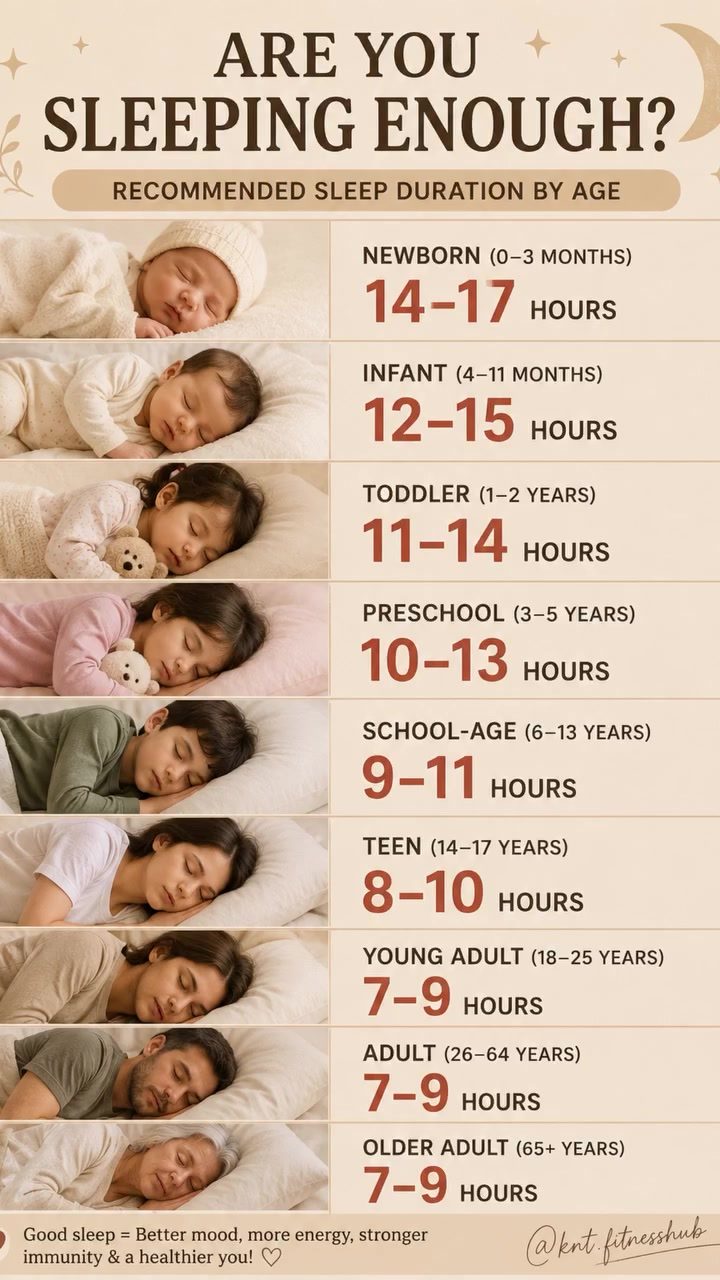
Recommended Sleep Duration by Age
Sleep is a critical component of overall health, affecting everything from mood and energy levels to immune function and physical recovery. The amount of sleep needed varies significantly with age, and understanding these differences can help ensure that individuals of all ages are getting the rest they need. Below is a guide to the recommended sleep durations for various age groups, highlighting the importance of adequate sleep for health and well-being.
Why This Matters
Sleep is not just about feeling rested; it plays a vital role in numerous bodily functions. Adequate sleep is essential for brain health, immune system function, heart health, hormone regulation, mood, metabolism, and muscle recovery. Getting the right amount of sleep can improve energy levels, focus, and overall health, making it a crucial part of a healthy lifestyle.
Main Discussion
Newborns (0-3 months)
Newborns require the most sleep, needing between 14 to 17 hours of sleep per day. This extensive sleep is crucial for their rapid brain development and physical growth. During this period, newborns often wake up frequently for feedings, which is a normal part of their sleep pattern.
Infants (4-11 months)
As infants grow, their sleep needs decrease slightly to 12 to 15 hours per day. This period is marked by the development of more regular sleep patterns, including longer stretches of nighttime sleep. Establishing a consistent bedtime routine can help infants sleep better and longer.
Toddlers (1-2 years)
Toddlers need between 11 to 14 hours of sleep per day. This includes both nighttime sleep and daytime naps. Adequate sleep supports their cognitive development, physical growth, and emotional well-being. Consistent sleep schedules and a calming bedtime routine can promote better sleep in toddlers.
Preschoolers (3-5 years)
Preschoolers require 10 to 13 hours of sleep per day. This includes nighttime sleep and, in some cases, a daytime nap. Good sleep habits during this age group support their learning, behavior, and overall health. Encouraging a regular sleep schedule and creating a relaxing bedtime environment can help preschoolers get the sleep they need.
School-Age Children (6-13 years)
School-age children need 9 to 11 hours of sleep per night. Adequate sleep is essential for their academic performance, physical health, and emotional well-being. Ensuring that children have a consistent bedtime routine and a comfortable sleep environment can help them get the rest they need.
Teens (14-17 years)
Teenagers require 8 to 10 hours of sleep per night. However, many teens do not get enough sleep due to busy schedules, screen time, and other factors. Encouraging a regular sleep schedule, limiting screen time before bed, and creating a sleep-conducive environment can help teens get the sleep they need.
Young Adults (18-25 years)
Young adults need 7 to 9 hours of sleep per night. This age group often faces significant changes, such as starting college or a new job, which can impact sleep patterns. Maintaining a consistent sleep schedule, managing stress, and avoiding caffeine and alcohol close to bedtime can promote better sleep.
Adults (26-64 years)
Adults in this age range should aim for 7 to 9 hours of sleep per night. Adequate sleep supports their overall health, including mental health, physical health, and productivity. Prioritizing sleep and creating a relaxing bedtime routine can help adults get the rest they need.
Older Adults (65+ years)
Older adults also need 7 to 9 hours of sleep per night. However, sleep patterns can change with aging, and older adults may experience more wakefulness during the night. Maintaining a consistent sleep schedule, avoiding daytime naps, and creating a comfortable sleep environment can help older adults get better sleep.
Practical Tips
Improving sleep hygiene can significantly enhance the quality and duration of sleep. Here are some practical tips to help individuals of all ages get better sleep:
Create a Consistent Sleep Schedule
Going to bed and waking up at the same time every day, even on weekends, can help regulate the body's internal clock. This consistency can make it easier to fall asleep and stay asleep.
Establish a Bedtime Routine
A calming bedtime routine can signal to the body that it's time to sleep. This routine might include activities like reading, taking a warm bath, or listening to soothing music.
Optimize the Sleep Environment
Creating a comfortable and inviting sleep environment can promote better sleep. This includes keeping the bedroom cool, dark, and quiet, and investing in a comfortable mattress and pillows.
Limit Screen Time Before Bed
The blue light emitted by electronic devices can interfere with the production of melatonin, a hormone that regulates sleep. Avoiding screens for at least an hour before bed can help improve sleep quality.
Avoid Caffeine and Alcohol Close to Bedtime
Both caffeine and alcohol can disrupt sleep patterns. Avoiding these substances close to bedtime can help ensure a more restful night's sleep.
Manage Stress
High stress levels can make it difficult to fall asleep and stay asleep. Practicing stress-reduction techniques, such as meditation, deep breathing, or yoga, can help improve sleep.
Exercise Regularly
Regular physical activity can help improve sleep quality and duration. Aim for at least 30 minutes of moderate exercise most days of the week, but avoid intense workouts close to bedtime.
Watch Your Diet
Eating a balanced diet can support better sleep. Avoiding heavy meals, spicy foods, and sugary snacks close to bedtime can help prevent sleep disruptions.
Seek Professional Help if Needed
If you consistently struggle with sleep, it may be helpful to consult a healthcare provider. They can offer personalized advice and treatment options to improve your sleep.
Important Takeaways
- Adequate sleep is crucial for overall health and well-being, affecting everything from mood and energy levels to immune function and physical recovery.
- The amount of sleep needed varies with age, from 14 to 17 hours for newborns to 7 to 9 hours for adults and older adults.
- Establishing good sleep habits, such as a consistent sleep schedule and a calming bedtime routine, can support better sleep.
- Creating a comfortable sleep environment, limiting screen time, and managing stress can all contribute to improved sleep quality.
- Regular exercise and a balanced diet can also support better sleep.
Conclusion
Understanding the recommended sleep durations for different age groups is an essential step in ensuring that individuals of all ages get the rest they need. Adequate sleep is vital for overall health and well-being, supporting brain function, immune health, and physical recovery. By establishing good sleep habits, optimizing the sleep environment, and making healthy lifestyle choices, individuals can improve their sleep and reap the numerous benefits of a well-rested body and mind.
Watch the Reel
Questions readers ask
How many hours of sleep do adults need?
Adults aged 18-64 typically need 7-9 hours of sleep per night. This range supports overall health, including brain function, immune system, and physical recovery. Ensuring you get enough sleep within this range can help improve your mood, energy levels and overall well-being.
What is the recommended sleep duration for babies?
Newborns (0-3 months) need 14-17 hours of sleep, including naps. Infants (4-11 months) need 12-15 hours. The sleep cycle is important for their growth and brain development. Make sure to provide a safe sleep environment with an adequate sleep duration.
How does sleep affect energy levels and fitness?
Adequate sleep is crucial for maintaining energy levels and supporting physical fitness. During sleep, the body repairs muscles and replenishes energy stores. Adults who get recommended sleep hours (7-9 hours) tend to have better physical performance, quicker recovery, and more energy for daily activities and exercise.
Why is sleep important for the immune system?
Sleep plays a vital role in maintaining a healthy immune system. During sleep, the body produces cytokines, proteins that help fight infections. Adequate sleep duration helps the immune system function optimally, making it easier to ward off infections and recover from illnesses. Lack of sleep can weaken the immune response, making you more susceptible to diseases.
How does sleep impact mood and nutrition?
Sleep has a significant impact on mood and nutrition. Insufficient sleep can lead to irritability, mood swings, and increased stress levels. Adequate sleep helps regulate hormones that control appetite, reducing the likelihood of overeating or making poor food choices. Ensuring you get the recommended sleep hours can help maintain a balanced diet and support overall mental well-being.
What are some sleep tips for older adults?
Older adults (65 and above) typically need 7-8 hours of sleep per night. To improve sleep quality, older adults should maintain a consistent sleep schedule, create a relaxing bedtime routine, and ensure a comfortable sleep environment. It's also important to limit daytime naps to 30 minutes and avoid stimulants like caffeine and nicotine close to bedtime. Regular physical activity can also promote better sleep.
Related deep dives
Similar reads based on topic and creator.




Recent articles
Fresh deep dives from the latest Reels we unpacked.




Comments
Be the first to comment.