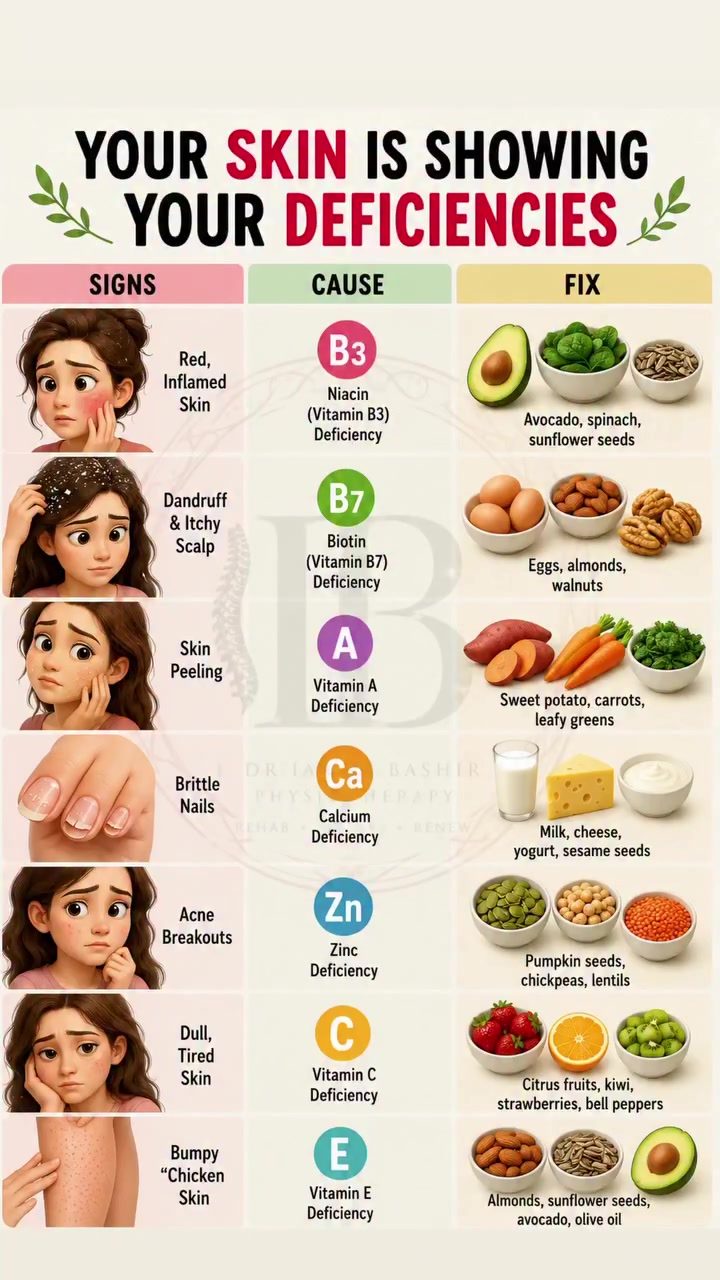
Skin Deficiencies: How Your Skin Indicates Nutritional Needs
Context
Your skin can reveal a lot about your overall health and nutritional status. Sometimes, certain skin conditions might indicate deficiencies in essential vitamins and minerals. By understanding these signs, you can take proactive steps to support your skin and maintain its health. Keep in mind, while these signs can provide valuable insights, it is important to consult a healthcare professional for a proper diagnosis, especially if symptoms persist.
Main discussion
Red, Inflamed Skin and Niacin (Vitamin B3)
Do you notice frequent redness or inflammation on your skin? This could be a sign of a Niacin (Vitamin B3) deficiency. Niacin is crucial for maintaining healthy skin, and its deficiency can lead to various skin issues, including redness, dryness, and irritation. To address this, incorporate foods rich in Niacin into your diet. Avocados, spinach, and sunflower seeds are excellent sources of this vital nutrient.
Dandruff and Itchy Scalp: A Sign of Biotin (Vitamin B7) Deficiency
Dandruff and an itchy scalp are common issues that many people face. While there are various causes, one potential reason is a Biotin (Vitamin B7) deficiency. Biotin plays a crucial role in maintaining healthy skin and hair. To combat dandruff and itchiness, include more Biotin-rich foods in your meals. Eggs, almonds, and walnuts are great sources of Biotin.
Skin Peeling and Vitamin A
If your skin is peeling or flaking, it could be due to a Vitamin A deficiency. Vitamin A is essential for skin health, as it helps to maintain the integrity of the skin barrier. Including more Vitamin A-rich foods in your diet can help alleviate skin peeling. Sweet potatoes, carrots, and leafy greens are excellent sources of Vitamin A.
Brittle Nails and Calcium
Brittle nails that break easily can be frustrating. This condition might be linked to a Calcium deficiency. Calcium is vital for nail strength and overall bone health. To improve the health of your nails, consume more Calcium-rich foods. Milk, cheese, yogurt, and sesame seeds are all good sources of Calcium.
Acne and Zinc
Acne is a common skin issue that can be caused by various factors, including a Zinc deficiency. Zinc is essential for skin health and plays a role in regulating oil production. If you're experiencing persistent acne, incorporating more Zinc-rich foods into your diet could be beneficial. Pumpkin seeds, chickpeas, and lentils are excellent sources of Zinc.
Dull, Tired Skin and Vitamin C
Dull, tired-looking skin can be a sign of a Vitamin C deficiency. Vitamin C is crucial for collagen production, which helps maintain skin elasticity and brightness. To revitalize your skin, add more Vitamin C-rich foods to your diet. Citrus fruits, kiwi, strawberries, and bell peppers are all high in Vitamin C.
Bumpy 'Chicken Skin' and Vitamin E
Do you notice bumpy, rough patches on your skin, often referred to as 'chicken skin'? This condition, known as Keratosis Pilaris, could be related to a Vitamin E deficiency. Vitamin E is a powerful antioxidant that helps protect the skin and maintain its health. Including more Vitamin E-rich foods in your diet can improve your skin's texture. Almonds, sunflower seeds, avocado, and olive oil are all good sources of Vitamin E.
The Role of a Balanced Diet
A balanced diet is essential for maintaining overall health, and it is particularly crucial for supporting healthy skin. By incorporating a variety of nutrient-rich foods into your meals, you can help ensure that your skin receives the vitamins and minerals it needs to stay healthy and vibrant. Remember, while addressing skin issues through diet can be effective, it is important to consult a healthcare professional for personalized advice, especially if symptoms persist.
Practical Tips
Incorporate a Variety of Nutrient-Rich Foods
To support your skin's health, make sure to include a variety of nutrient-rich foods in your diet. Fruits, vegetables, whole grains, lean proteins, and healthy fats should all be part of a balanced diet. This ensures that you get a wide range of vitamins and minerals necessary for healthy skin.
Stay Hydrated
Drinking plenty of water is essential for maintaining healthy skin. Hydration helps to flush out toxins, promote cellular health, and keep your skin hydrated from the inside out. Aim for at least eight glasses of water per day, and more if you are physically active or live in a hot climate.
Consider Supplements
In some cases, it might be challenging to get all the necessary vitamins and minerals from your diet alone. If you suspect a deficiency, you might want to consider taking supplements. However, it is always best to consult a healthcare professional before starting any supplement regimen.
Regular Skin Care Routine
Maintaining a regular skin care routine can help address and prevent various skin issues. Cleansing, moisturizing, and protecting your skin from the sun are all essential steps in a good skin care routine. Additionally, using products specifically formulated for your skin type and concerns can provide extra support.
Important Takeaways
Understanding the signs of vitamin and mineral deficiencies in your skin can empower you to take proactive steps to support your skin's health. By incorporating a variety of nutrient-rich foods into your diet, staying hydrated, and maintaining a regular skin care routine, you can help maintain healthy, vibrant skin.
Conclusion
Your skin is a reflection of your overall health, and it can provide valuable insights into any nutritional deficiencies you may be experiencing. By paying attention to the signs and taking proactive steps to address them, you can support your skin's health and maintain a radiant complexion. Remember, while dietary changes can be effective, it is essential to consult a healthcare professional for personalized advice and a proper diagnosis of any persistent symptoms.
Watch the Reel
Questions readers ask
What are some common skin symptoms of vitamin deficiencies?
Common skin symptoms of vitamin deficiencies include redness, inflammation, dandruff, brittle nails, and dullness. These signs can indicate a range of deficiencies, such as Niacin (Vitamin B3), Biotin (B7), Vitamin A, and Calcium.
How can a lack of Niacin (Vitamin B3) affect the skin?
A deficiency in Niacin can lead to skin conditions such as redness, inflammation, and general skin irritation. Since Niacin plays a key role in maintaining healthy skin, incorporating foods rich in Niacin, such as chicken, turkey, and peanuts, can help alleviate these symptoms.
What are the skin-related signs of a Vitamin A deficiency?
Vitamin A deficiency can manifest as dry, flaky, or dull skin. It may also cause breakouts and acne. Foods high in Vitamin A, like carrots, sweet potatoes, and leafy greens, can help improve skin health and reduce these symptoms.
Can dandruff be a sign of vitamin deficiency?
Yes, dandruff can be a sign of vitamin deficiency, particularly in vitamins like B7 (Biotin) and Zinc. Incorporating foods rich in these nutrients, such as eggs, nuts, and seeds, can help reduce dandruff and promote a healthier scalp.
What foods can help with brittle nails, a common sign of Biotin (Vitamin B7) deficiency?
To combat brittle nails, consider increasing your intake of Biotin-rich foods. These include whole grains, liver, and egg yolks. These foods can help strengthen nails and improve overall nail health.
How can a lack of Calcium affect the skin?
Calcium deficiency can lead to dry, itchy, or irritated skin. Foods high in calcium, such as dairy products, leafy greens, and fortified plant-based milks, can help maintain skin health and reduce these symptoms.
Recent articles
Fresh deep dives from the latest Reels we unpacked.




Comments
Be the first to comment.