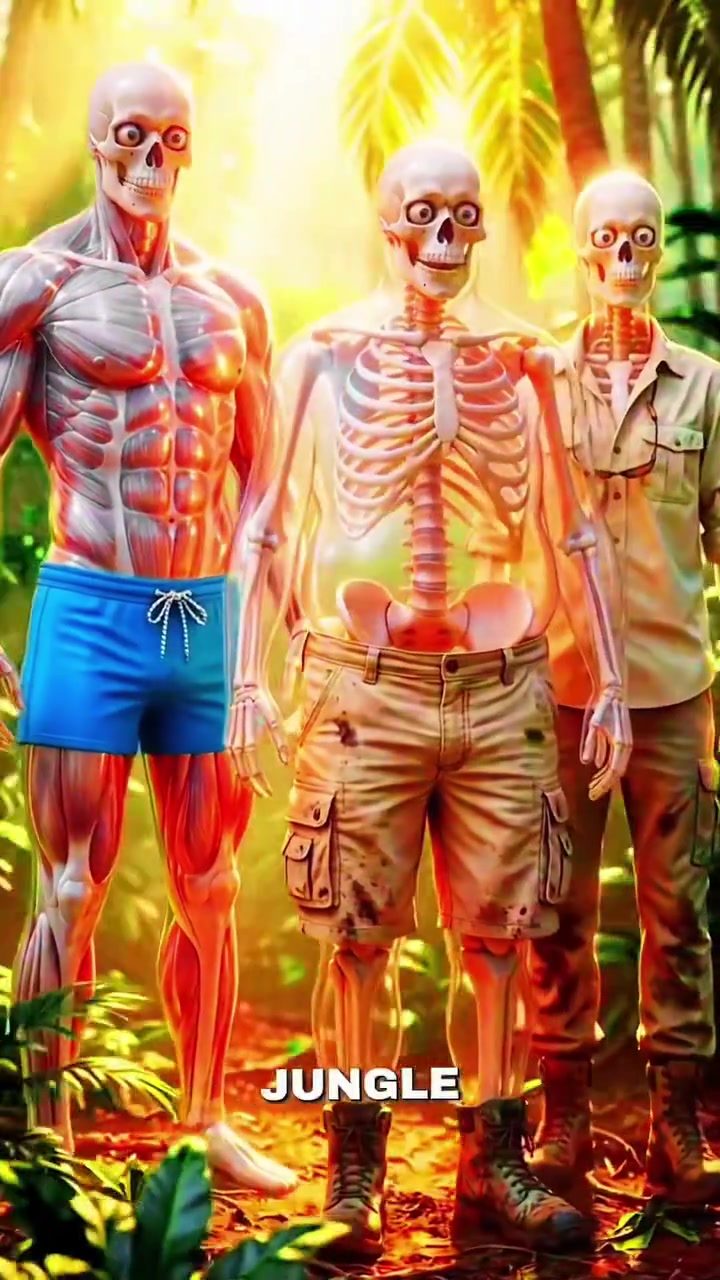
Skeletal Transformation in Digital Art
Digital art featuring skeletal transformations offers a unique and captivating way to explore human survival instincts and the dynamics of different body types in extreme environments. The narrative unfolds in a jungle setting, where three distinct figures—a muscular guy, a fat guy, and a skinny guy—each employ different strategies to escape the wilderness.
Why This Matters
The exploration of survival strategies through digital art can provide a fresh perspective on how different physical attributes might influence behavior and decision-making in a survival scenario. This type of art not only showcases creative expression but also invites viewers to think about the practical implications of physical fitness, resourcefulness, and adaptability.
Survival Instincts in the Jungle
The skeletal transformations begin with each figure taking immediate action upon entering the jungle. The muscular guy, driven by his physical prowess, climbs the tallest tree to get a better view of the area. This initial move highlights the strength and agility that comes with a muscular build, but it also raises questions about endurance and long-term strategy.
The fat guy, on the other hand, focuses on securing immediate resources. He collects melons and smashes them open with a wooden stick, demonstrating a practical approach to survival. This behavior underscores the importance of resourcefulness and the ability to sustain oneself through readily available resources.
The skinny guy takes a more methodical approach. He calmly explores the jungle, finds a clean water source, and uses mud as protection against insects. This strategic thinking showcases the adaptability and foresight that can be crucial in a survival situation.
Dynamic Transformations
As the days progress, each figure adapts to the challenges of the jungle in unique ways. On the third day, the muscular guy continues his journey guided by the sun, while the fat guy finds a river and starts collecting sticks to build a raft. The skinny guy, meanwhile, continues his calm and strategic exploration, marking trees to avoid getting lost and eventually discovering old footprints leading to the raft launch site.
By the fifth day, the muscular guy, despite his exhaustion, spots black smoke rising in the distance, indicating potential rescue. The fat guy finishes his raft and launches it into the river, embracing the natural currents to aid his escape. The skinny guy, ever the strategist, decides to follow the old footprints, which lead him back to the raft launch site. This shows that even though the muscular guy and the fat guy have their distinct strategies, the skinny guy's methodical approach ensures that he can navigate the jungle without getting lost.
Adaptability and Resourcefulness
The Muscular Guy
The muscular guy's journey is marked by a mix of strength and impulsiveness. His early actions, such as climbing the tallest tree, are driven by an instinct to survey the area and plan his escape. However, his later actions, while resourceful, show a lack of long-term planning. The climactic moment occurs when he is spotted by firefighters and rescued, highlighting that while physical strength is valuable, it can also lead to exhaustion and vulnerability.
The Fat Guy
The fat guy's survival strategy is rooted in resourcefulness and practicality. His collection of melons and construction of a raft demonstrate a knack for using available resources to secure his survival. However, his journey takes a dramatic turn when he wakes up near a famous tourist attraction with a jungle camp nearby, showing that sometimes the best survival strategy is to follow the natural flow of the environment.
The Skinny Guy
The skinny guy represents the quintessential survivalist, blending adaptability with resourcefulness. His calm demeanor and strategic thinking enable him to navigate the jungle effectively. By marking trees and following old footprints, he ensures that he doesn't get lost and eventually finds his way back to a familiar location. His ability to adapt and think on his feet demonstrates the importance of mental agility in survival scenarios.
Practical Tips
Physical Fitness
Physical fitness plays a crucial role in survival. While the muscular guy demonstrates strength and agility, the skinny guy’s endurance and adaptability are equally important. A balanced approach to physical fitness that combines strength, endurance, and agility can be beneficial in survival situations.
Resourcefulness
Resourcefulness is key to survival. The fat guy’s strategy of using available resources like melons and sticks for a raft underscores the importance of making the most of what you have. This can be applied in everyday life by learning to improvise and adapt to different situations.
Strategic Thinking
Strategic thinking is essential for navigating unfamiliar territories. The skinny guy’s methodical approach of marking trees and following footprints is a practical way to avoid getting lost. In real life, planning ahead and thinking critically can help in navigating both literal and metaphorical jungles.
Important Takeaways
Survival in the jungle, as depicted through digital art, emphasizes the importance of adaptability, resourcefulness, and strategic thinking. While physical fitness is important, it is not the only factor that determines success. The way each figure adapts to the challenges of the jungle highlights the need for a balanced approach that combines physical strength, resourcefulness, and strategic planning.
Conclusion
Digital art featuring skeletal transformations in a jungle setting offers a unique perspective on survival strategies. By exploring the different approaches of a muscular guy, a fat guy, and a skinny guy, we gain insights into the dynamics of survival and the importance of adaptability, resourcefulness, and strategic thinking. This narrative not only entertains but also invites viewers to reflect on the practical implications of these survival strategies in various aspects of life.
Watch the Reel
Questions readers ask
How does the digital art series depict different survival strategies in the jungle?
The digital art series features three skeletal figures, each with unique physical attributes, showcasing distinct survival tactics. The muscular figure relies on strength, the fat figure uses resourcefulness, and the skinny figure demonstrates adaptability. Each character's approach offers insights into various jungle survival techniques.
What are the benefits of using skeletal figures in this digital art series?
Using skeletal figures allows the artist to emphasize different body types and their respective advantages in a jungle setting. It also adds a dramatic and thought-provoking element, making the survival strategies more memorable and engaging. The skeletal forms provide a stark contrast to the lush jungle environment, highlighting the harsh realities of survival in the wild.
How does the digital art series explore the dynamics of body types in extreme environments?
The series illustrates how different body types can influence survival strategies. The muscular figure uses brute force, the fat figure leverages stored energy and insulation, and the skinny figure employs agility and stealth. This exploration encourages viewers to consider the practical benefits of each body type in a jungle survival scenario.
What are the different jungle escape tactics showcased in the art series?
The muscular figure might clear paths or climb obstacles, the fat figure might ration resources or find shelter, and the skinny figure might navigate stealthily or find hidden paths. Each character's tactics provide a unique approach to escaping the jungle, offering a comprehensive view of survival in the wild.
What are some examples of adaptability in the jungle survival depicted in the art?
The skinny figure, for instance, might use tools and materials found in the jungle to create makeshift shelters or traps. His adaptability also includes learning quickly from the environment and adjusting strategies as needed. This figure's ability to improvise and think on his feet highlights the importance of adaptability in jungle survival.
How does the digital art series portray the practical implications of physical fitness in a jungle setting?
The muscular figure demonstrates the importance of strength in overcoming physical obstacles, such as climbing steep hills or crossing bodies of water. The fat figure illustrates how stored energy and insulation can be crucial for endurance and protection. The skinny figure shows the benefits of agility and endurance, which are essential for navigating dense foliage and avoiding predators.
How does the jungle survival art create a jungle survival guide?
The jungle survival art serves as a visual guide by illustrating different tactics for escaping the jungle. The three skeletal figures provide clear examples of how different physical attributes can be used to overcome obstacles, find resources, and navigate the environment. By showcasing these strategies, the art offers a unique survival guide that is both engaging and informative.
Recent articles
Fresh deep dives from the latest Reels we unpacked.




Comments
Be the first to comment.