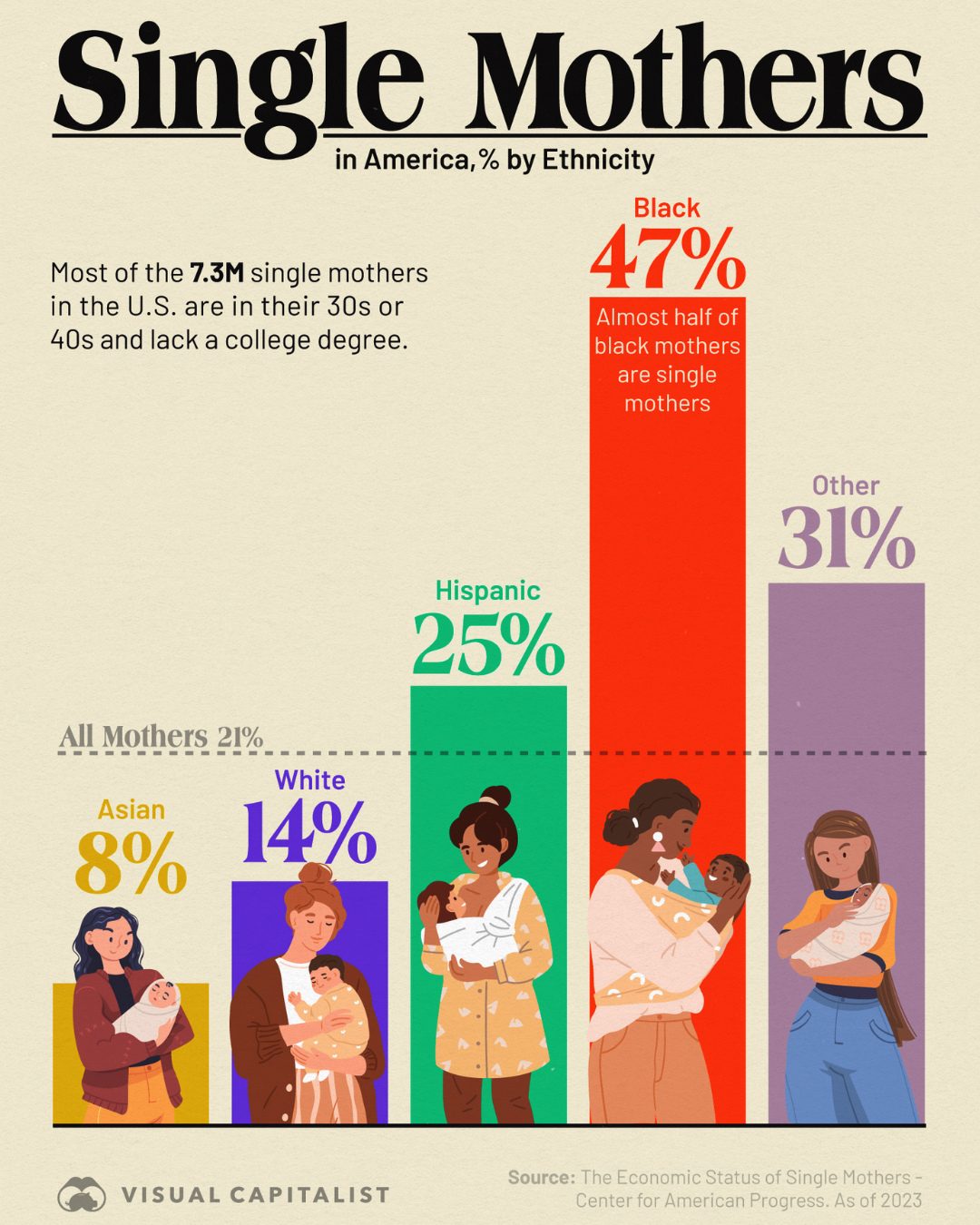
Single mothers play a crucial role in the family structure, and their demographics in America have been well-documented by various studies. The data reveals that nearly half of Black mothers are raising children without a spouse or cohabitating partner. In 2023, single-mother families made up 1 in 5 families with children under 18. Most of these mothers are in their 30s or 40s, do not have a college degree, and face significant economic challenges, including a 28% poverty rate. This highlights the disproportionate impact of single motherhood on certain racial and ethnic groups.
Context: Economic and Social Challenges
The demographic breakdown of single mothers in the U.S. by ethnicity indicates a significant disparity. The data shows that 47% of single mothers are Black, followed by 31% categorized as "Other," 25% Hispanic, 14% White, and 8% Asian. This distribution underscores the challenges faced by single mothers, particularly those from minority communities, who often cope with economic hardships and a lack of educational opportunities.
Most single mothers in the U.S. are in their 30s and 40s, and a vast majority lack a college degree. This age group often faces unique challenges, including the need to balance parenting, work, and financial security. Single mothers in this age group also have to navigate the responsibilities of raising children while often working low-income jobs, further compounding their economic difficulties.
Families and Children: The Impact
Single-mother families account for a significant portion of American households, and these families often struggle with financial stability. The data reveals that the poverty rate for families headed by single mothers is 28%. This statistic underscores the financial strain that single mothers face, which can profoundly impact their children. Single mothers often have to make tough decisions to meet the basic needs of their families, which can include sacrificing personal time, education, and even healthcare.
The challenges faced by single mothers are not limited to financial struggles. They also face social and emotional challenges that can impact their mental health and overall well-being. Single mothers often report high levels of stress, anxiety, and depression, which can affect their ability to provide the best possible care for their children. The emotional toll of single motherhood can be overwhelming, and it is essential to acknowledge and support these mothers in their journey.
Single Mothers: A Closer Look
The data from the Center for American Progress shows that single mothers in the U.S. face a unique set of challenges. The economic and social disparities they face can impact their children's future prospects. Single mothers often have to balance multiple roles, including caregiver, provider, and emotional support, which can be emotionally and physically taxing.
The data underscores the need for policies and initiatives that support single mothers and their families. These initiatives can include financial assistance, educational opportunities, and social support programs. By providing these resources, we can help alleviate some of the burdens that single mothers face and create a more equitable society.
Practical Tips for Supporting Single Mothers
Supporting single mothers requires a multifaceted approach. Here are some practical tips for individuals, communities, and policymakers to help single mothers thrive:
Community Support
Communities can play a significant role in supporting single mothers. This support can take many forms, including childcare assistance, mentorship programs, and social events that foster a sense of community. Local organizations and faith-based groups can also provide valuable resources and support for single mothers.
Educational Opportunities
Access to education is crucial for single mothers seeking to improve their economic situation. Providing scholarships, grants, and flexible learning opportunities can help single mothers pursue higher education and secure better job opportunities. Community colleges and vocational training programs can offer flexible schedules and affordable tuition options, making higher education more accessible to single mothers.
Financial Assistance
Financial assistance can help single mothers meet their basic needs and provide for their families. This assistance can come in the form of government programs, such as welfare and food stamps, or through community-based initiatives. Financial assistance can also include access to affordable housing, healthcare, and childcare services.
Mental Health and Emotional Support
Single mothers often face emotional and mental health challenges. Providing access to mental health services, counseling, and support groups can help single mothers cope with the stress and anxiety of their situation. Openly discussing the emotional toll of single parenthood and destigmatizing mental health issues can also benefit single mothers.
Job Training and Employment
Access to job training and employment opportunities can help single mothers secure stable, well-paying jobs. Local businesses and organizations can offer job training programs, internships, and apprenticeships tailored to the needs of single mothers. Providing flexible work schedules and work-from-home opportunities can also help single mothers balance work and family responsibilities.
Important Takeaways
Single mothers in the U.S. face significant economic and social challenges. The data shows that a disproportionate number of single mothers are from minority communities, and most lack a college degree, which can impact their financial stability and future prospects. These factors can create a cycle of poverty, making it difficult for single mothers and their children to break free.
It is essential to recognize the unique struggles of single mothers and provide them with the resources and support they need to thrive. By addressing the economic, social, and emotional challenges they face, we can create a more equitable society for single mothers and their families.
Conclusion
Single mothers in the U.S. face unique challenges that impact their financial stability and overall well-being. The data shows that single mothers, particularly those from minority communities, face significant disparities. Providing support through financial assistance, educational opportunities, and community resources can help single mothers overcome these challenges and create a better future for themselves and their families. By addressing these issues, we can create a more inclusive and supportive society for single mothers and their children.
Watch the Reel
Questions readers ask
What is the average age range of single mothers in America?
Most single mothers in America are in their 30s or 40s. This age range is notable as it indicates a significant portion of the single-mother population is likely to have children who are still minors, and may still be in need of support in their daily lives.
What is the current poverty rate for single mothers in the U.S.?
As of the 2023 statistic, the poverty rate for single-mother families is roughly 28%. This figure underscores the economic challenges faced by many single mothers in America, and highlights the disparity in economic standing compared to two-parent households.
What are the most common racial and ethnic backgrounds of single mothers in America?
Nearly half of single mothers in America are Black. The next-largest groups are Hispanic and Native American, each representing a significant portion. These figures indicate a notable racial and ethnic disparity among single mothers.
What percentage of single mothers in the U.S. have a college degree?
Most single mothers in America do not have a college degree. This lack of a college degree can present a barrier to higher-paying jobs and career advancement, contributing to the economic challenges many single mothers face.
How many single-mother families are there in America?
In 2023, single-mother families accounted for 1 in 5 families with children under 18. This statistic highlights the widespread prevalence of single motherhood in American society, and the need for support from various institutions, including the government.
Recent articles
Fresh deep dives from the latest Reels we unpacked.




Comments
Be the first to comment.