Rainwater Harvesting Benches: A Green Solution for Urban Spaces
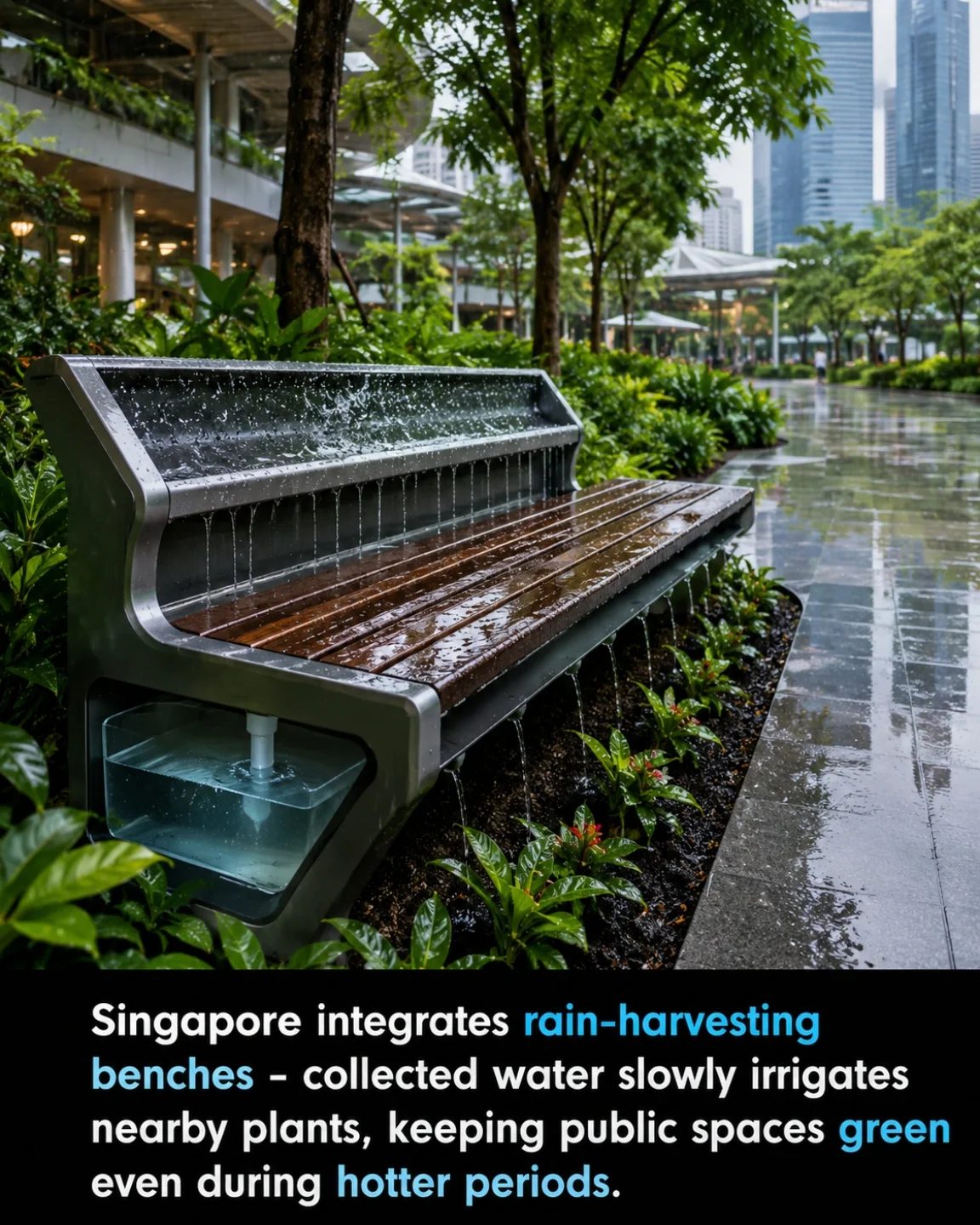
Rainwater harvesting benches are an innovative solution that blend urban design with sustainable practices. These benches, designed to collect and utilize rainwater, are particularly effective in maintaining green public spaces, especially during hot and dry periods. The concept is simple yet impactful: rainwater is collected from the bench's surface and directed into a reservoir below, which then slowly irrigates nearby plants.
Why This Matters
In urban areas, maintaining green spaces can be challenging due to limited water resources and the environmental impact of urbanization. Rainwater harvesting benches offer a practical solution by making use of a readily available resource—rainwater—to sustain plant life. This not only enhances the aesthetic appeal of public areas but also contributes to a healthier urban ecosystem.
Main Discussion
The Design and Functionality
Rainwater harvesting benches are designed with a dual purpose: to provide seating and to collect rainwater. The bench's surface is slightly angled to allow water to flow into a hidden reservoir. From there, the water is gradually released to irrigate nearby plants. This design ensures that the water is used efficiently, minimizing evaporation and ensuring that plants receive a steady supply of moisture.
Implementation in Singapore
Singapore has become a pioneer in integrating rainwater harvesting benches into its urban landscape. The city-state's commitment to sustainable urban development makes it an ideal location for such innovative solutions. The bench design in Singapore is particularly effective due to the city's frequent rainfall, ensuring a consistent supply of water for irrigation.
Benefits for Public Spaces
The primary benefit of rainwater harvesting benches is their ability to keep public spaces green, even during hotter periods. This is crucial for maintaining the aesthetic and ecological value of urban parks, gardens, and other green areas. Additionally, these benches promote water conservation by reducing the reliance on municipal water supplies for irrigation. They also contribute to urban biodiversity by supporting plant life, which in turn provides habitat for various insects and birds.
Environmental and Economic Benefits
From an environmental perspective, rainwater harvesting benches help reduce runoff, which can carry pollutants into local water bodies. By capturing and using rainwater, these benches mitigate the environmental impact of urbanization. Economically, they offer a cost-effective solution for maintaining green spaces, as they reduce the need for additional watering systems and lower water utility bills.
Practical Tips for Implementing Rainwater Harvesting Benches
Choosing the Right Location
When implementing rainwater harvesting benches, selecting the right location is crucial. They should be placed in areas with adequate rainfall and where there are nearby plants that can benefit from the collected water. Public parks, gardens, and pedestrian areas are ideal locations.
Design Considerations
The design of the bench should be both functional and aesthetically pleasing. The surface should be designed to efficiently collect water and direct it into the reservoir. Additionally, the bench should be visually appealing to encourage public use and enhance the overall design of the space.
Maintenance and Upkeep
Regular maintenance is essential to ensure the bench continues to function effectively. This includes cleaning the surface to remove debris, checking the reservoir for any blockages, and ensuring the irrigation system is working correctly. Proper upkeep will extend the lifespan of the bench and ensure it continues to provide benefits.
Community Engagement
Engaging the local community in the implementation and maintenance of these benches can enhance their effectiveness. Community members can provide valuable feedback on the placement and design of the benches, and their involvement in maintenance can foster a sense of ownership and responsibility.
Important Takeaways
Rainwater harvesting benches are a sustainable and practical solution for maintaining green spaces in urban areas. They offer numerous environmental and economic benefits, making them a valuable addition to any urban landscape. By capturing and utilizing rainwater, these benches contribute to water conservation, reduce runoff, and support urban biodiversity.
Conclusion
Rainwater harvesting benches represent a forward-thinking approach to urban design and sustainable living. By integrating these innovative solutions into public spaces, we can create greener, more livable cities that are better equipped to handle the challenges of urbanization and climate change. Whether implemented in parks, gardens, or pedestrian areas, these benches offer a practical and aesthetically pleasing way to enhance our urban environments.
Watch the Reel
Questions readers ask
How do rainwater harvesting benches collect and store water?
Rainwater harvesting benches collect water through their designed surfaces, channeling it into a hidden reservoir underneath. This reservoir stores the water, which is then gradually released to irrigate nearby plants, ensuring efficient use of rainwater.
What are the benefits of using rainwater harvesting benches in urban areas?
These benches help conserve water by utilizing rainwater for irrigation, reducing the demand on municipal water supplies. They also enhance urban green spaces by ensuring plants receive consistent hydration, even during dry periods, and contribute to a more sustainable urban environment.
Can rainwater harvesting benches be integrated into existing public spaces?
Yes, rainwater harvesting benches can be seamlessly integrated into existing public spaces. They serve dual purposes as seating and irrigation systems, making them a practical addition to parks, plazas, and other urban areas.
How do rainwater harvesting benches contribute to Singapore's green infrastructure?
In Singapore, these benches support the city's green infrastructure by promoting water conservation and enhancing the sustainability of urban green spaces. They help maintain the city's lush landscapes while reducing the strain on water resources.
Are rainwater harvesting benches suitable for all weather conditions?
Rainwater harvesting benches are designed to function in various weather conditions. They efficiently collect and store water during rainy periods and gradually release it during dry spells, ensuring that plants receive consistent hydration throughout the year.
What types of plants are best suited for irrigation by rainwater harvesting benches?
Plants that are drought-tolerant and well-adapted to Singapore's climate are ideal for irrigation by rainwater harvesting benches. These include local species that can thrive with the intermittent water supply provided by the benches.
How do rainwater harvesting benches enhance the aesthetic appeal of public areas?
These benches blend seamlessly into urban landscapes, providing functional seating while supporting green spaces. Their design contributes to the overall aesthetic of public areas, creating inviting and visually appealing environments for residents and visitors alike.
Recent articles
Fresh deep dives from the latest Reels we unpacked.




Comments
Be the first to comment.