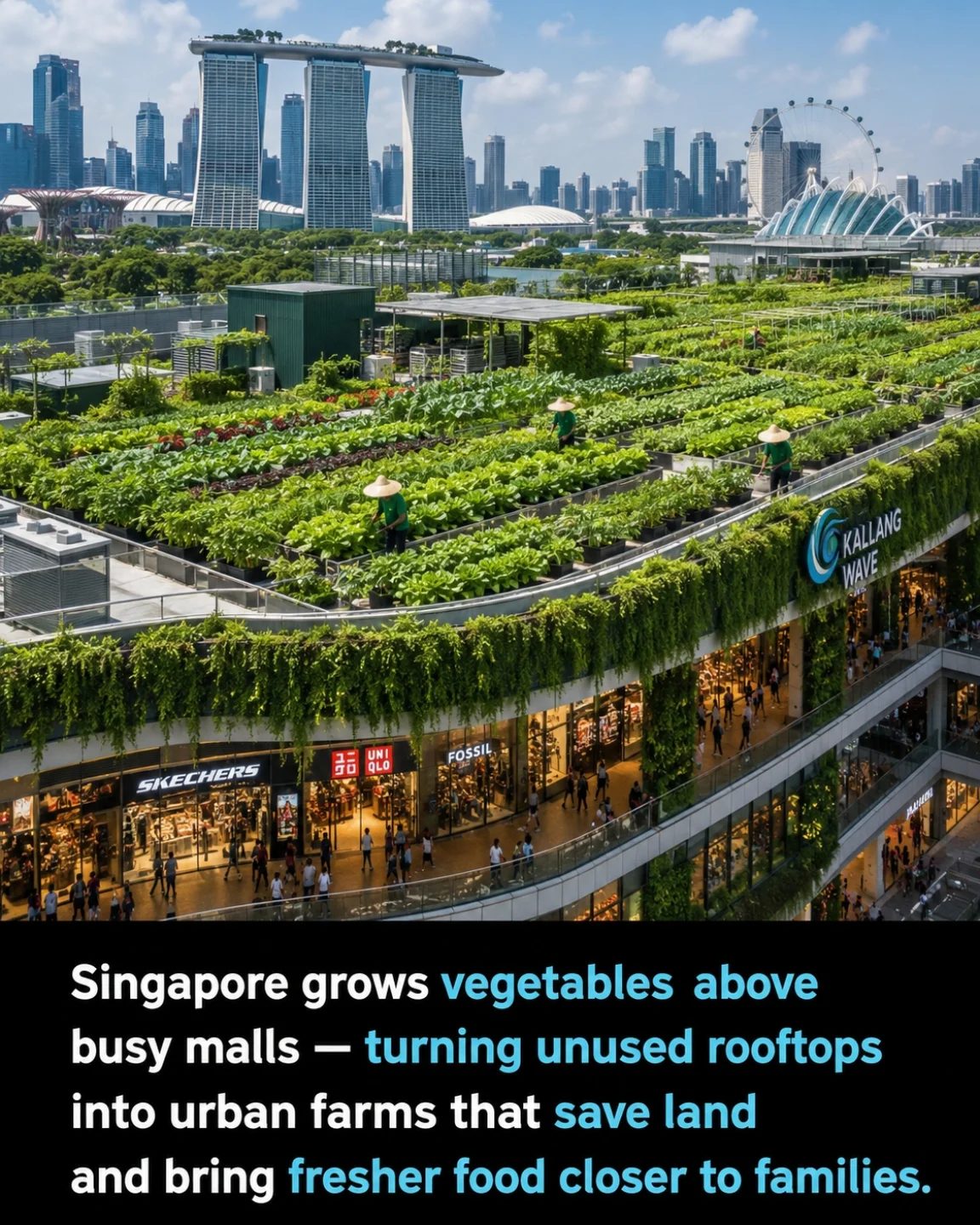
Singapore's Urban Farming Revolution: Growing Vegetables Above Shopping Malls
Singapore is making waves in sustainable urban living by transforming unused rooftops of shopping malls into productive urban farms. This initiative not only maximizes limited land resources but also brings fresh, locally grown produce closer to consumers. It's a testament to how innovative urban planning can integrate nature and commerce, creating a more sustainable and visually appealing cityscape.
Why This Matters
With a rapidly growing global population, urban areas are increasingly struggling with limited land and resources for food production. Singapore, a densely populated city-state with a land area of just 728.6 square kilometers, faces these challenges acutely. Vertical farming and rooftop gardens offer a practical solution to these issues. By growing food in urban areas, cities can reduce the environmental impact of transportation, lessen dependency on imports, and promote local economic growth.
The Rise of Rooftop Gardens
Innovative Use of Urban Space
Singapore's urban farming initiative showcases the innovative use of space. The city has strategically placed rooftop gardens above busy malls like Kallang Wave, turning unused rooftops into productive green spaces. These gardens are not just visually appealing but also serve a functional purpose. By growing vegetables and herbs, these rooftops contribute to the city's food security and sustainability goals. The contrast of lush green gardens against the bustling urban backdrop is a striking reminder of how nature and commerce can coexist.
Land and Resource Conservation
One of the primary goals of Singapore's urban farming initiative is to save land. Land is a scarce resource in Singapore, and traditional farming methods often require extensive areas. By utilizing rooftops, the city can grow food without encroaching on valuable land resources. This approach also reduces the need for land clearing, preserving valuable ecosystems and wildlife habitats.
Benefits for Consumers
Rooftop gardens bring fresh, locally grown produce closer to families. This proximity means that consumers have access to fresher, healthier food. The shorter distance from farm to table also reduces the need for preservatives and other chemicals, promoting a healthier lifestyle. Furthermore, urban farming can help lower food miles, the distance food travels from production to consumption, which reduces the carbon footprint associated with food transportation.
Practical Tips for Implementing Urban Farming
Urban farming is a multi-faceted initiative that requires careful planning and execution. Below are some practical tips for integrating urban farming into city planning:
Choose the Right Locations
When selecting locations for urban farms, prioritize underutilized spaces such as rooftops, vacant lots, and unused parking areas. The ideal spots are those that receive adequate sunlight, have access to water, and are close to potential consumers.
Leverage Technology
Modern urban farming often relies on technology to optimize growth and sustainability. Hydroponic and aeroponic systems, for instance, use nutrient-rich water solutions to grow plants without soil, reducing the need for pesticides and herbicides. Additionally, automated irrigation systems and LED grow lights can help maintain optimal growing conditions.
Engage the Community
Community engagement is crucial for the success of urban farming initiatives. Workshops, educational programs, and community gardens can foster a sense of ownership and responsibility. Encouraging local residents to participate in the cultivation and harvesting of crops can create a stronger connection to the food they consume.
Ensure Sustainability
To ensure the long-term viability of urban farming, prioritize sustainability. Use renewable energy sources such as solar panels to power the irrigation systems and grow lights. Additionally, implement waste management practices to minimize environmental impact. Composting organic waste can provide nutrients for the urban farms, while reducing the need for synthetic fertilizers.
Partner with Local Businesses
Collaborate with local businesses to create a symbiotic relationship. For instance, shopping malls can partner with urban farmers to provide space and resources, while farmers can supply fresh produce to the mall's food outlets. This mutual benefit can enhance sustainability and foster local economic growth.
Important Takeaways
The integration of urban farming in Singapore, particularly the rooftop gardens above shopping malls, represents a forward-thinking approach to sustainable urban living. This initiative showcases how innovative urban planning can address the challenges of limited land resources and food security. By blending nature and commerce, urban farming not only provides fresher, healthier food but also contributes to environmental conservation and local economic growth.
Embracing Innovation
Singapore's urban farming initiative highlights the importance of embracing innovation. The strategic use of rooftops and advanced farming technologies provides a sustainable solution to urban food production, setting a benchmark for other cities facing similar challenges.
Holistic Approach
For urban farming to be successful, it requires a holistic approach that integrates various aspects of urban planning, technology, and community engagement. By leveraging underutilized spaces, embracing technology, and involving the community, cities can create a more sustainable and resilient food system.
Encouraging Collaboration
Partnerships between local businesses and urban farmers can enhance the viability and impact of urban farming initiatives. By fostering mutual benefits, cities can create a sustainable ecosystem that supports local economic growth and environmental conservation.
Conclusion
The initiative to grow vegetables above busy malls in Singapore is a pioneering step toward sustainable urban development. By turning unused rooftops into productive green spaces, the city is not only addressing food security and land conservation challenges but also creating a visually appealing and healthier urban environment. This approach serves as a model for other cities striving to integrate nature and commerce in a sustainable way.
Watch the Reel
Questions readers ask
What types of crops are typically grown in Singapore's mall rooftop gardens?
Singapore's mall rooftop gardens primarily focus on growing leafy greens, herbs, and small vegetables. These crops are well-suited for vertical farming and rooftop environments. They require less space, water, and sunlight, making them ideal for an urban setting.
How do Singapore's rooftop gardens contribute to sustainability?
These gardens help reduce the carbon footprint by decreasing the need for long-distance transportation of produce. They also promote local economic growth, create a more pleasant cityscape, and help mitigate the urban heat island effect by providing additional green spaces.
What are the benefits of growing vegetables on mall roofs in Singapore?
Growing vegetables on mall roofs in Singapore helps to maximize limited land resources, bring fresh, locally grown produce closer to consumers, and promote a more sustainable and visually appealing cityscape.
How does Singapore's urban farming strategy address the challenges of limited land resources?
Singapore's urban farming strategy addresses limited land resources by utilizing unused rooftop spaces for vertical farming. This innovative approach allows the city to grow food in densely populated areas and reduce the environmental impact of food transportation.
What are some of the key initiatives of Singapore's urban farming on malls?
Key initiatives include transforming unused mall rooftops into productive urban farms, growing a variety of vegetables and herbs, and integrating nature with urban commerce. These initiatives aim to enhance food security, sustainability, and the overall quality of life in the city.
What challenges are overcome by growing vegetables on mall roofs in Singapore?
Growing vegetables on mall roofs in Singapore helps overcome challenges such as limited land for agriculture, environmental degradation, and the need for local food production. This initiative also addresses the issue of food security in a densely populated city-state.
What is the impact of urban farming in Singapore malls on the local economy?
Urban farming in Singapore malls stimulates local economic growth by supporting local produce markets, encouraging entrepreneurship, and creating job opportunities in agriculture and related sectors. It also reduces the dependence on imported produce, thus boosting local food production.
Recent articles
Fresh deep dives from the latest Reels we unpacked.




Comments
Be the first to comment.