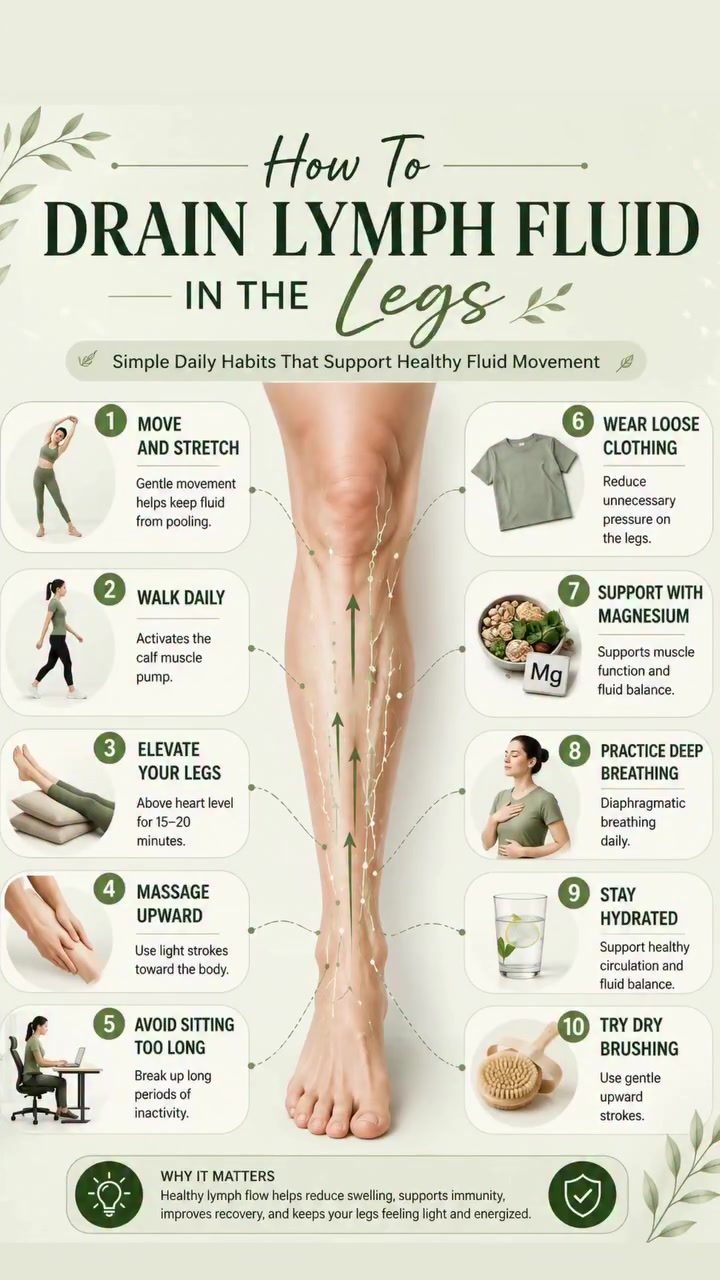
Drain Lymph Fluid in Legs
The lymphatic system plays a crucial role in maintaining overall health, particularly in the legs, where fluid buildup can cause discomfort and reduce mobility. Healthy lymph flow supports your immune system, reduces swelling, and improves recovery. Here are some practical ways to support healthy lymphatic circulation in your legs.
Why this matters
Maintaining healthy lymph flow in the legs is essential for several reasons. When lymph flow slows, it can lead to swelling, heaviness, and discomfort. This can hinder daily activities and overall well-being. Incorporating simple daily habits can significantly improve lymphatic circulation, making it easier to stay active and enjoy an improved quality of life.
Keep Moving and Stretching
Move Regularly
Regular movement is key to encouraging healthy lymphatic fluid movement. Simple activities like walking or stretching can help activate the muscles in your legs, promoting better circulation. Walking daily is especially beneficial as it activates the calf muscles, which act as pumps to push lymph fluid back up towards the heart.
Elevate and Massage
Elevating your legs for a short while can also help. By lifting your legs above heart level for 15–20 minutes, you support the natural drainage of lymph fluid, reducing swelling and discomfort. Another technique is gentle upward massage, which helps move lymph fluid toward the lymph nodes where it can be filtered and drained more effectively. These simple steps can make a significant difference in lymphatic health.
Avoid Prolonged Sitting
Prolonged sitting or standing can impede lymphatic flow. Make it a habit to move around frequently, even if it’s just for a few minutes at a time. This movement can help keep the lymph fluid moving and prevent buildup.
Wear Loose Clothing
Tight clothing can constrict the flow of lymph fluid, making it harder for your body to drain excess fluid. Opt for loose, comfortable clothing that allows for better circulation. This can be particularly important during physical activities or when you're sitting for long periods.
Breathing Techniques
Magnesium Breathing
Magnesium, a mineral essential for many bodily functions, can support lymphatic circulation. One way to incorporate magnesium is through magnesium-rich foods like leafy greens, nuts, and seeds. Another method is magnesium breathing, which involves inhaling deeply and exhaling while focusing on relaxing the muscles, including those in your legs. This can help promote overall relaxation and better lymph flow.
Deep Diaphragmatic Breathing
Practice deep diaphragmatic breathing to enhance lymph circulation. This type of breathing involves taking slow, deep breaths that fully engage the diaphragm. This technique can also help reduce stress, which can further support overall wellness and lymphatic health.
Stay Hydrated
Dehydration can slow down lymph flow, making it harder for your body to eliminate waste and excess fluid. Staying well-hydrated helps to keep the lymph fluid moving efficiently. Aim to drink enough water throughout the day to support your body’s natural detoxification processes.
Try Dry Brushing
Dry brushing involves using a brush with stiff bristles to gently exfoliate the skin. This technique can help boost lymphatic circulation by stimulating the lymph nodes and promoting the movement of lymph fluid. Be sure to use gentle strokes and choose a brush that is appropriate for your skin type.
Practical Tips
Here are some additional tips to support healthy lymphatic circulation in your legs:
- Magnesium-Rich Diet: Incorporate magnesium-rich foods into your diet, such as leafy greens, nuts, and seeds. This mineral is essential for many bodily functions, including lymphatic health.
- Gentle Exercise: Engage in light exercises that involve moving your legs, such as walking, stretching, or yoga. These activities can help improve lymphatic flow and reduce swelling.
- Regular Breaks: If you have a sedentary job, make sure to take regular breaks to move around. This can help prevent the buildup of lymph fluid and reduce the risk of swelling.
- Compression Socks: For those with more severe swelling, compression socks can be a helpful tool. These socks apply gentle pressure to the legs, promoting better lymph flow and reducing swelling.
Important Takeaways
Healthy lymphatic circulation in the legs is essential for reducing swelling, supporting immunity, and improving recovery. By incorporating simple daily habits like moving regularly, practicing deep breathing, and staying hydrated, you can support your body’s natural processes and maintain healthy lymph flow. Remember, while these habits can be beneficial, they are not a treatment for medical conditions like lymphedema. If you experience persistent swelling, pain, or other concerning symptoms, consult a healthcare professional for proper evaluation and treatment.
Conclusion
Incorporating these simple habits into your daily routine can make a significant difference in supporting healthy lymphatic circulation in your legs. By staying active, wearing loose clothing, and practicing relaxation techniques, you can reduce swelling, improve recovery, and maintain overall well-being. These changes, though small, can have a profound impact on your health and comfort. Start with one or two habits and gradually incorporate more as they become part of your routine. Your body will thank you for the extra care and attention.
Watch the Reel
Questions readers ask
What are some simple exercises to improve lymphatic flow in the legs?
Leg mobility exercises, such as walking, swimming, or yoga, can significantly enhance lymphatic drainage. An effective exercise to try is to simply walk for 20 minutes a day. This encourages leg muscle contractions, which act as a pump to push lymphatic fluid through your body.
How can I reduce leg swelling with daily habits?
Elevating your legs above heart level several times a day can help drain lymph fluid and reduce swelling. You can also wear loose clothing to avoid constricting your lymphatic vessels and try deep breathing exercises to stimulate your lymphatic system.
What is the impact of hydration on lymphatic flow?
Staying hydrated aids your lymphatic system by promoting the flow of lymph fluid. Aim to drink at least 8 glasses of water a day to maintain your body's fluid balance, which will help your lymphatic system effectively drain fluid from your legs.
Why is the lymphatic system important for leg health and mobility?
The lymphatic system is crucial for clearing waste, toxins, and excess fluid from your body, especially in the legs. Supporting this system can relieve discomfort, reduce swelling, and improve mobility, thereby enhancing your overall health.
What are some lymphatic drainage exercises for legs?
You can perform lymphatic drainage exercises at home, such as leg pumps, where you lie on your back and pump your legs up and down. Another simple exercise is ankle pumps, which involve moving your ankles in a circular motion to promote lymphatic flow.
How does wearing loose clothing help lymphatic circulation in the legs?
Tight clothing can restrict blood flow and lymphatic drainage, leading to discomfort and swelling. Opting for loose, comfortable clothing, especially around the waist, hips, and legs, allows your lymphatic system to function optimally, improving circulation.
What are the benefits of leg elevation for lymph flow?
Leg elevation for 15-20 minutes, 2-3 times a day, takes advantage of gravity, helping to drain excess fluid from your legs. This simple habit can reduce swelling, relieve discomfort, and promote better lymphatic flow, enhancing overall leg health.
Recent articles
Fresh deep dives from the latest Reels we unpacked.




Comments
Be the first to comment.