Silver vs. Gold: Annual Returns During Market Downturns
Investing in precious metals like silver and gold is often seen as a safe haven during economic uncertainties. These metals can act as hedges against inflation and market volatility. However, their performance during recessions and market downturns can vary significantly. This difference is particularly notable between silver and gold.
Context: Why This Matters
Understanding the historical performance of silver and gold during market downturns is crucial for investors. It helps them make informed decisions about asset allocation and risk management. Gold is often praised for its stability, but silver's volatile nature can present unique opportunities and challenges.
Main Discussion
Historical Performance
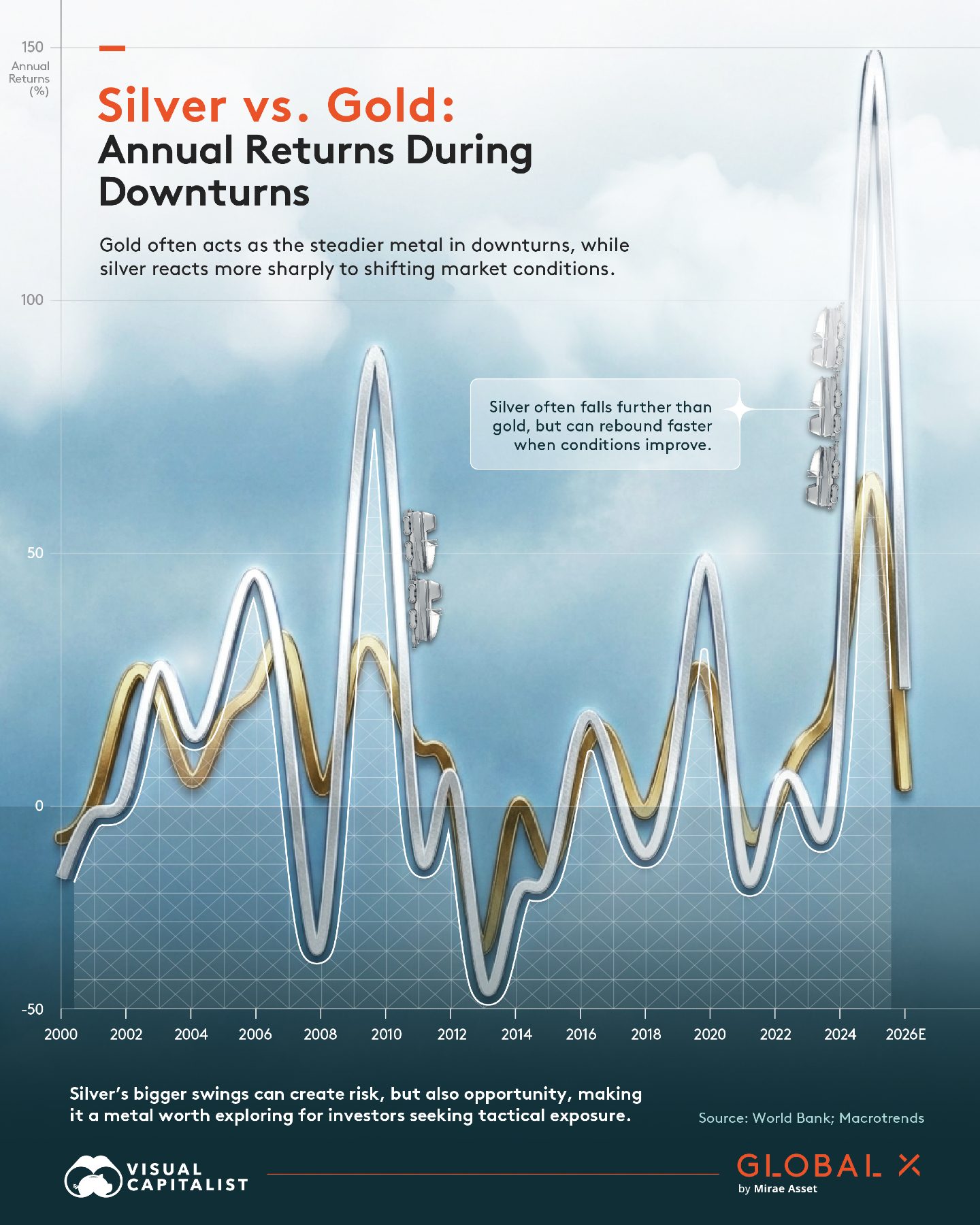
Since 2000, the annual returns of silver and gold have shown distinct patterns, especially during economic downturns. Gold has consistently demonstrated a steadier performance, making it a reliable choice for investors seeking stability. In contrast, silver has exhibited more significant fluctuations, reacting more sharply to changing market conditions.
In 2025, visualcapsilver returned 148% compared to gold's 65%. This stark contrast highlights silver's greater volatility during periods of market stress.
Volatility and Risk
Silver's volatility is both a risk and an opportunity. During market downturns, silver often falls further than gold. However, when market conditions improve, silver can also experience significant upswings. This volatility makes silver a metal worth exploring for investors seeking tactical exposure.
Investors who can navigate silver's volatility may find substantial opportunities. The metal's price movements can be dramatic, providing the potential for high returns. However, this also means that investors must be prepared for the risk of significant losses.
Comparative Analysis
Gold often acts as the steadier metal during economic downturns. Its price movements are generally more predictable, making it a safer bet for conservative investors. This stability is one of the reasons gold is often viewed as a safe haven asset.
On the other hand, silver's more volatile nature can be both a blessing and a curse. While it offers the potential for higher returns, it also comes with increased risk. Investors who understand and can manage this risk may find silver to be a rewarding addition to their portfolio.
Practical Tips
Diversification
Diversifying your investment portfolio is a key strategy for managing risk. Including both gold and silver in your portfolio can provide a balance between stability and potential high returns. Gold can offer security during turbulent times, while silver can enhance your portfolio's growth potential.
Timing the Market
Timing the market effectively is crucial when investing in silver. Given its volatility, silver's price can vary greatly over short periods. Investors should closely monitor market conditions and economic indicators to make informed decisions about when to buy or sell.
Risk Management
Investing in silver requires a solid risk management strategy. Given its high volatility, it's essential to set clear stop-loss levels and take-profit targets. This approach can help mitigate losses and lock in gains during periods of market uncertainty.
Stay Informed
Staying informed about market trends and economic indicators is vital for anyone investing in precious metals. Regularly reviewing financial news, market reports, and economic data can provide valuable insights into potential market movements and investment opportunities.
Important Takeaways
Market Responds Differently
During economic downturns, gold and silver respond differently. Gold tends to be more stable, while silver reacts more sharply to market shifts. This differential response can create both risks and opportunities for investors.
Volatility is a Double-Edged Sword
Silver's volatility can be both a risk and an opportunity. While it offers the potential for high returns, it also comes with increased risk. Investors must be prepared to navigate these fluctuations effectively.
Strategic Investing
Investing in silver requires a strategic approach. This includes diversification, effective risk management, and staying informed about market trends. By carefully managing these factors, investors can make the most of silver's potential while mitigating its risks.
Conclusion
Investing in silver and gold during market downturns presents unique opportunities and challenges. Gold's stability makes it a reliable choice for conservative investors, while silver's volatility can offer significant returns for those who can manage the risk. Understanding the historical performance of these metals and implementing effective strategies can help investors navigate the complexities of the market and achieve their financial goals.
Watch the Reel
Questions readers ask
How does silver's performance compare to gold during market downturns?
Silver tends to exhibit higher volatility than gold during market downturns. While this means silver's returns can be more dramatic, they can also be more unpredictable. In comparison, gold typically provides steadier, more modest returns during the same periods.
Why is silver considered more volatile than gold?
Silver's volatility stems from its dual role as both a precious metal and an industrial commodity. Changes in industrial demand can cause significant price fluctuations, whereas gold's primary use as a safe-haven asset leads to more stable price movements.
What are the potential benefits of investing in silver during market downturns?
Investing in silver during market downturns can offer the potential for significant gains due to its volatility. If the market recovers swiftly, silver's price can rise sharply, providing substantial returns. However, it's important to note that these gains come with higher risk.
How can investors use gold and silver in their investment strategy during market downturns?
Investors can use gold and silver to diversify their portfolios during market downturns. Gold can serve as a stable anchor, while silver can provide opportunities for growth. The key is to balance these assets based on the investor's risk tolerance and investment goals.
What factors should investors consider when comparing silver and gold during market downturns?
Investors should consider the historical performance of each metal, the current economic situation, and their own risk tolerance. Additionally, understanding the factors that drive price movements in each metal is crucial for making informed investment decisions.
How have gold and silver performed during past recessions?
During past recessions, gold has generally performed well, providing steady returns and acting as a safe-haven asset. Silver, on the other hand, has shown more volatility, with prices sometimes declining sharply and other times surging, depending on the economic conditions and industrial demand.
What strategies can help manage the risk of investing in silver during market downturns?
To manage the risk of investing in silver, consider setting stop-loss orders, diversifying your portfolio, and staying informed about economic indicators and industrial demand for silver. Additionally, it's crucial to have a well-defined investment plan and avoid making impulsive decisions based on short-term price movements.
Recent articles
Fresh deep dives from the latest Reels we unpacked.




Comments
Be the first to comment.