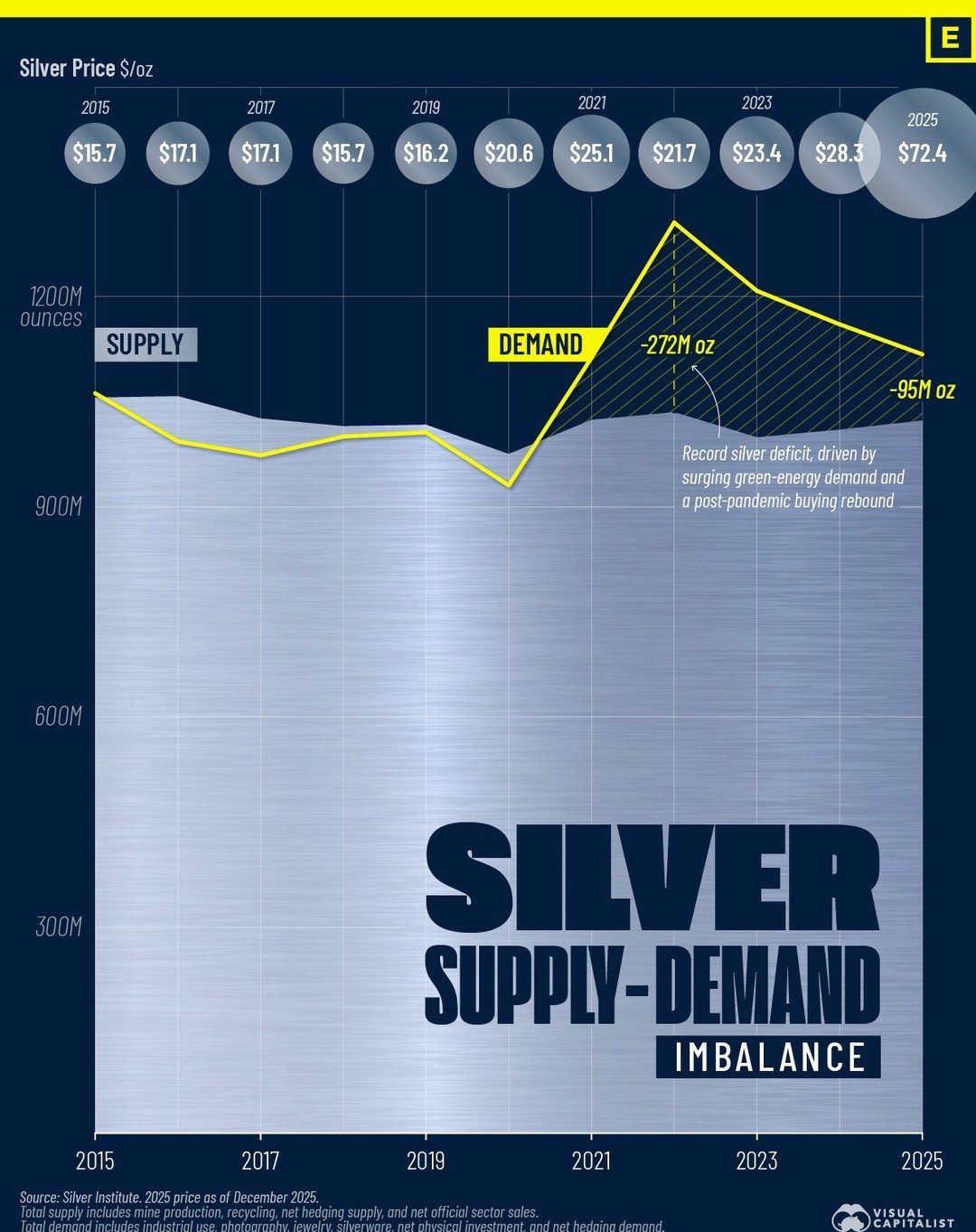
Silver Supply and Demand: Understanding the Global Imbalance
The global silver market has been experiencing a structural deficit since 2021, and this gap continues to widen. As industrial demand accelerates and supply growth remains stagnant, silver prices have surged, pushing futures above $85 in early 2026. This article delves into the growing imbalance between global silver supply and demand from 2015 to 2025 and the factors driving this trend.
Why This Matters
Understanding the dynamics of the silver market is crucial for investors, industrial users, and anyone interested in precious metals. The imbalance between supply and demand not only affects the price of silver but also has broader implications for industries that rely on it, such as green energy, electronics, and manufacturing. By examining the trends and data from the Silver Institute, we can gain insights into the future of the silver market and its potential impact on various sectors.
The Silver Supply and Demand Dynamic
Historical Trends
The silver market has seen significant fluctuations in supply and demand over the past decade. From 2015 to 2025, the global silver supply has included mine production, recycling, net physical investment, and net hedging demand. On the demand side, industrial use, photography, jewelry, silverware, net physical investment, and net hedging demand have been the primary drivers.
Key Drivers of the Deficit
Several key factors have contributed to the widening deficit in the silver market:
-
Green Energy Demand: The surging demand for green energy technologies, such as solar panels and electric vehicles, has significantly increased the need for silver. Silver is a critical component in photovoltaic cells and electric vehicle batteries, driving up its industrial use.
-
Post-Pandemic Buying Rebound: The post-pandemic economic recovery has led to a rebound in consumer demand for silver products, including jewelry and silverware. This increased consumer interest has further strained the supply.
-
Flat Supply Growth: Despite the rising demand, silver supply growth has remained relatively flat. Mine production and recycling rates have not kept pace with the increasing demand, contributing to the deficit.
The Impact on Silver Prices
The imbalance between supply and demand has had a profound impact on silver prices. From 2015 to 2025, silver prices have fluctuated but have generally trended upward. Key price points include:
- 2015: $15.7 per ounce
- 2017: $17.1 per ounce
- 2019: $16.2 per ounce
- 2021: $20.6 per ounce
- 2023: $25.1 per ounce
- 2025: $28.3 per ounce
These price points reflect the growing demand and the challenges in meeting it. By 2025, the price of silver is projected to reach $72.4 per ounce, highlighting the significant impact of the supply and demand imbalance.
Practical Tips for Navigating the Silver Market
For investors and industrial users, navigating the silver market requires a keen understanding of the supply and demand dynamics. Here are some practical tips:
For Investors
-
Stay Informed: Keep up-to-date with the latest market trends and data from reliable sources like the Silver Institute. Understanding the underlying trends can help you make informed investment decisions.
-
Diversify Your Portfolio: Consider diversifying your investment portfolio to include other precious metals and commodities. This can help mitigate the risks associated with the volatility of the silver market.
-
Long-Term Perspective: Adopt a long-term perspective when investing in silver. The current deficit and rising demand suggest that silver prices are likely to continue their upward trend, making it a potentially lucrative long-term investment.
For Industrial Users
-
Secure Supplies: Given the supply constraints, it is crucial to secure long-term supply contracts with reliable suppliers. This can help ensure a steady supply of silver for your production needs.
-
Explore Alternatives: Consider exploring alternative materials or technologies that can reduce your dependence on silver. This can help mitigate the risks associated with supply shortages and price volatility.
-
Efficient Use: Focus on improving the efficiency of silver usage in your production processes. This can help reduce waste and lower your overall silver consumption, making your operations more sustainable.
Important Takeaways
The global silver market is facing a significant deficit driven by surging green energy demand and a post-pandemic buying rebound. Key takeaways include:
- Supply and Demand Imbalance: The growing imbalance between supply and demand has led to a widening deficit in the silver market.
- Price Trends: Silver prices have trended upward, with projections indicating a price of $72.4 per ounce by 2025.
- Investment Opportunities: The current market dynamics present both risks and opportunities for investors and industrial users.
- Long-Term Outlook: The long-term outlook for silver remains positive, driven by sustained demand from green energy technologies and other industrial applications.
Conclusion
The global silver market is experiencing a significant imbalance between supply and demand, driven by increasing industrial use, particularly in green energy technologies, and a post-pandemic buying rebound. Understanding these dynamics is essential for investors and industrial users alike. By staying informed, diversifying portfolios, and exploring alternative materials, stakeholders can navigate the complexities of the silver market and capitalize on its potential. The future of silver looks promising, with projections indicating continued price increases and sustained demand, making it a valuable commodity to watch.
Watch the Reel
Questions readers ask
What is causing the current silver deficit in the global market?
The current silver deficit is primarily due to a surge in industrial demand, especially from green energy technologies, coupled with a stagnant supply growth. This imbalance has been growing since 2021 and is expected to continue through 2025.
How has the demand for silver from green energy technologies impacted its price?
The increasing demand for silver in green energy technologies, such as solar panels, has significantly contributed to the rise in silver prices. As the need for renewable energy sources grows, so does the demand for silver, pushing prices upward.
What are the key drivers behind the industrial demand for silver?
Industrial demand for silver is driven by its unique properties, such as conductivity and reflectivity, which make it essential for various applications. These include electronics, solar energy, and automotive industries, all of which are expanding rapidly.
What can investors expect from silver price trends in 2025?
Silver prices are expected to continue rising due to the persistent supply deficit and strong industrial demand. In early 2026, futures have already surged above $85, indicating a bullish trend for silver.
What are the implications of the global silver supply deficit for industries reliant on silver?
The global silver supply deficit has significant implications for industries that rely on it, including green energy, electronics, and manufacturing. These industries may face higher costs and potential shortages, affecting their production processes and profitability.
How are global silver reserves expected to change by 2025?
Global silver reserves are expected to remain under pressure due to the ongoing supply deficit and increasing demand from various industries. Without significant new discoveries or mining efforts, reserves could decrease, exacerbating the imbalance between supply and demand.
What strategic steps can industries take to mitigate the impact of rising silver prices?
Industries can explore alternative materials, enhance recycling efforts, and optimize their supply chains to mitigate the impact of rising silver prices. Diversifying their metal sources and investing in technology that reduces silver usage can also be beneficial strategies.
Related deep dives
Similar reads based on topic and creator.


Recent articles
Fresh deep dives from the latest Reels we unpacked.




Comments
Be the first to comment.