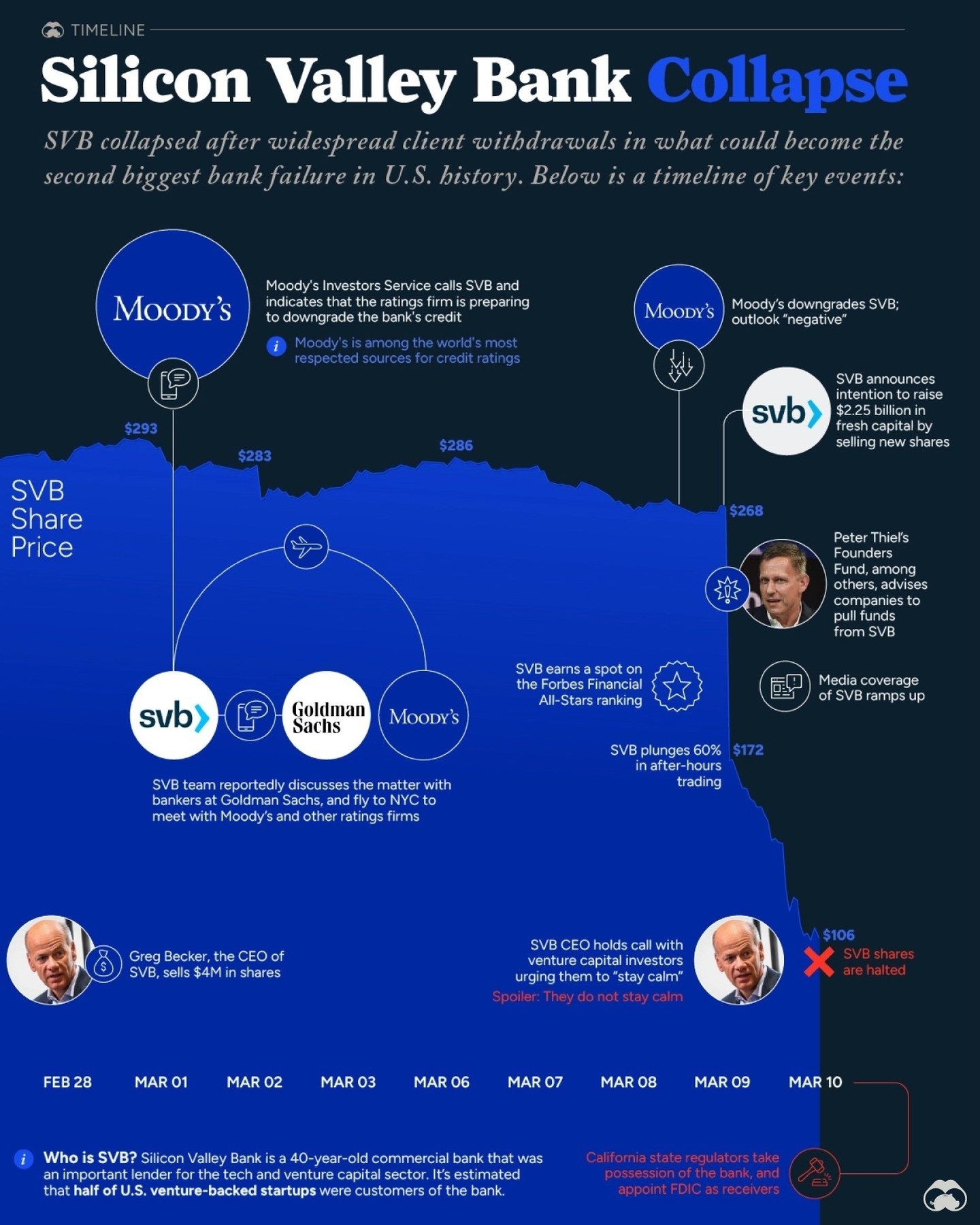
Silicon Valley Bank: A Timeline of Collapse
In just a matter of days, Silicon Valley Bank (SVB) pivoted from a highly-regarded institution in the tech sector to a closed entity due to a panic-driven bank run. The rapid deterioration of SVB's situation, chronicled from February 28th to March 9th, underscores a series of critical events that culminated in its collapse. Understanding this timeline provides a clear picture of how quickly a financial institution can falter.
Context: Why This Matters
Silicon Valley Bank was a cornerstone for thousands of U.S. venture capital-backed startups. Its collapse had significant implications for the tech industry and broader financial markets. The events leading to SVB’s downfall serve as a stark reminder of the interconnected nature of financial markets and the potential for rapid shifts in market sentiment.
The Collapse Timeline
Moody’s Downgrade
The sequence of events began on February 28th with Moody's downgrading SVB's outlook to 'negative.' This initial cautionary note from Moody's, a reputable credit rating agency, sent ripples through the market and set the stage for subsequent developments.
Capital Raising Attempts
On the same day, SVB announced its intention to raise $2.25 billion in fresh capital. This move was a pivotal moment, indicating that the bank was already grappling with liquidity issues. Raising capital is a standard response to financial stress, but it also signals to investors and clients that there are underlying concerns about the institution's stability.
Stock Price Plunge
The impact of these events became alarmingly clear on March 8th, when SVB's stock price plummeted by 60% during after-hours trading. This dramatic drop was a clear indication of the growing panic and loss of investor confidence. The rapid decline in stock value highlighted the severe trust crisis the bank was facing.
Trading Halt
On March 9th, trading of SVB shares was halted. This action by regulators was the final nail in the coffin, effectively sealing the bank's fate. By this point, the bank run had become uncontrollable, and the bank's assets were insufficient to meet the withdrawal demands.
Involvement of Goldman Sachs
Throughout this period, Goldman Sachs was involved in discussions with SVB. While the specifics of these discussions are not detailed, the involvement of such a prominent financial institution underscores the gravity of the situation and the potential for broader market implications.
What led to SVB's Collapse
Panic-Induced Bank Run
The primary catalyst for SVB's collapse was the widespread client withdrawals. The panic-driven bank run left the institution unable to meet the cash demands of its clients. This scenario highlights the fragility of financial institutions when faced with sudden and massive withdrawals.
Market Sentiment and Liquidity
The rapid decline in market sentiment, as evidenced by Moody’s downgrade and the stock price plunge, exacerbated the liquidity crisis. When investors and clients lose confidence, a cascading effect can occur, leading to more withdrawals and further depreciation of the bank's stock.
Practical Tips
For Investors
Investors should always stay vigilant about market signals and credit ratings from agencies like Moody's. Regularly monitoring these indicators can provide early warnings of potential issues. Diversifying investment portfolios across various sectors and instruments can also mitigate risks associated with any single institution's collapse.
For Startups
Startups relying on a single financial institution should consider diversifying their banking relationships. This practice can provide a safety net in case of unforeseen events. Additionally, maintaining a mix of cash reserves and liquid investments can help navigate through crises more smoothly.
For Financial Institutions
Banks should have robust contingency plans in place to handle sudden liquidity crises. This includes maintaining adequate reserves, diversifying their asset base, and fostering strong relationships with other financial institutions. Regular stress tests and scenario planning can prepare banks for potential market shocks.
Important Takeaways
The collapse of Silicon Valley Bank is a vivid reminder of the interconnectedness of financial markets and the potential for rapid shifts in market sentiment. Key takeaways include:
- Market Signals: Pay close attention to credit ratings and market signals.
- Liquidity Management: Maintain adequate liquidity and diversify financial relationships.
- Contingency Planning: Robust contingency plans and stress tests are crucial for financial institutions.
Conclusion
The rapid collapse of Silicon Valley Bank serves as a stark reminder of the fragility of financial institutions and the potential for swift market shifts. By understanding the timeline of events and the underlying factors that contributed to the bank's downfall, investors, startups, and financial institutions can better prepare for future uncertainties.
Watch the Reel
Questions readers ask
What were the initial signs of trouble for Silicon Valley Bank?
The initial signs of trouble for Silicon Valley Bank emerged on February 28, when Moody's downgraded the bank's credit rating. This downgrade was followed by a failed attempt to raise capital, which further eroded investor confidence.
What triggered the panic-driven bank run that led to SVB's collapse?
The panic-driven bank run was triggered by a series of financial setbacks. This included a precipitous decline in the bank’s stock price, concerns about its financial stability, and a widespread loss of confidence among its clients and investors.
What role did Goldman Sachs play in the SVB collapse?
Goldman Sachs was involved in the attempted capital raise by Silicon Valley Bank. When this effort failed, it contributed to the growing sense of unease and instability surrounding SVB, which ultimately led to its collapse. Goldman Sachs’ involvement was an attempt to stabilize the situation.
Why did the collapse of Silicon Valley Bank have significant implications for the tech industry?
Silicon Valley Bank was a major financial institution in the tech industry, serving thousands of startups and venture capital-backed firms. Its collapse disrupted funding and financial stability for many of these companies, leading to widespread concern and uncertainty.
What was the timeline of Silicon Valley Bank’s collapse?
Silicon Valley Bank’s collapse unfolded rapidly over a 10-day period, from February 28 to March 9. Key events included Moody's downgrade, a failed capital raise, a dramatic stock price plunge, and ultimately, the bank run that led to its closure.
What were the broader financial market implications of the SVB collapse?
The collapse of Silicon Valley Bank sent shockwaves through the broader financial markets, highlighting the interconnected nature of financial institutions. It raised concerns about the stability of other banks and the potential for further crises.
What lessons can be learned from the timeline of the SVB crisis events?
The timeline of the SVB crisis demonstrates the importance of financial stability, investor confidence, and effective crisis management. It underscores the rapidity with which financial institutions can face severe challenges and the need for vigilance in monitoring and addressing potential issues.
Recent articles
Fresh deep dives from the latest Reels we unpacked.




Comments
Be the first to comment.