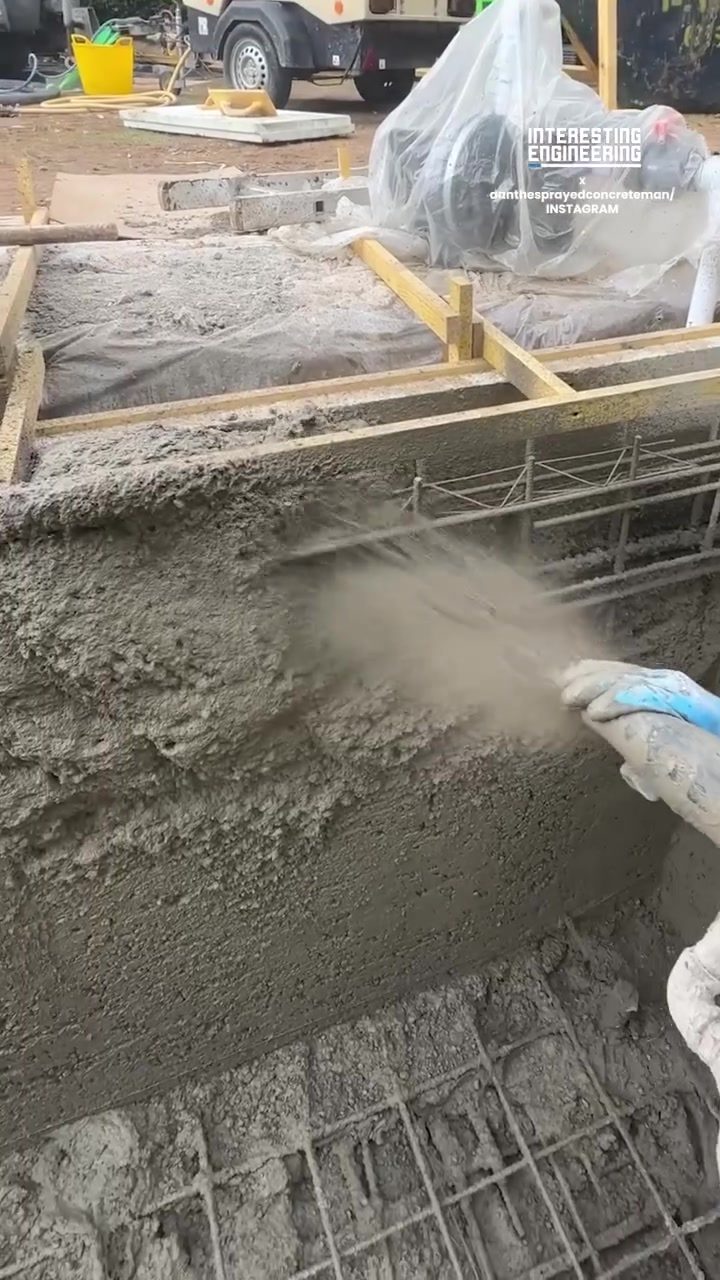
Concrete Spraying: Speeding Construction with Shotcrete
Concrete spraying, also known as shotcrete or Schottcrete, involves applying concrete at high pressure onto reinforced surfaces. This method is revolutionizing construction by allowing for the creation of vertical walls without the need for full formwork. By speeding up the construction process, shotcrete is becoming a popular choice for various applications, including retaining walls, basements, tunnels, pools, and structural repairs.
Why Shotcrete Matters
Shotcrete is particularly beneficial in construction projects where traditional formwork methods are impractical or time-consuming. By eliminating the need for full formwork, shotcrete allows for faster and more efficient construction, making it an ideal solution for both large-scale and small-scale projects. This method not only saves time but also reduces material waste, contributing to a more sustainable construction process.
Shotcrete vs Traditional Methods
Traditional concrete construction methods often require extensive formwork, which can be labor-intensive and time-consuming. Shotcrete, on the other hand, allows for the direct application of concrete onto reinforced surfaces, eliminating the need for extensive formwork. This not only speeds up the construction process but also reduces the amount of labor and materials required, making it a more efficient and cost-effective solution.
Applications of Shotcrete
Shotcrete is commonly used in a variety of construction projects, including:
- Retaining Walls: Shotcrete is an excellent choice for creating retaining walls, as it can be applied directly onto the reinforced surfaces, providing a sturdy and durable barrier.
- Basements: For basement construction, shotcrete allows for the creation of vertical walls without the need for full formwork, speeding up the construction process and reducing costs.
- Tunnels: In tunnel construction, shotcrete is used to create reinforced walls and ceilings, providing a durable and long-lasting solution.
- Pools: Shotcrete is also commonly used in pool construction, as it allows for the creation of custom-shaped pools with smooth, finished surfaces.
- Structural Repairs: Shotcrete is often used in structural repairs, as it can be applied directly onto damaged or weakened surfaces, providing a strong and durable repair solution.
The Shotcrete Process
The shotcrete process involves several key steps, from preparation to application.
Preparation
Before applying shotcrete, the surface must be properly prepared. This involves cleaning the surface to remove any debris or contaminants and applying a layer of reinforcement, such as wire mesh or rebar, to provide additional support. The reinforcement helps to ensure that the shotcrete adheres properly to the surface and provides the necessary strength and durability.
Application
The application of shotcrete involves using specialized equipment, such as a shotcrete machine, to mix and spray the concrete onto the reinforced surface. The machine uses compressed air to propel the concrete at high pressure, allowing it to adhere to the surface and form a solid, durable layer. The concrete is applied in thin layers, building up to the desired thickness.
Finishing
Once the shotcrete has been applied, it is allowed to set and cure. The curing process involves allowing the concrete to harden and gain strength over time. During this process, the surface may be finished with a variety of techniques, such as troweling or sandblasting, to achieve the desired texture and appearance.
Practical Tips for Shotcrete Application
When using shotcrete, there are several practical tips to keep in mind to ensure a successful and efficient application:
- Prepare the Surface Properly: Ensure that the surface is clean and free of debris before applying shotcrete. This will help to ensure proper adhesion and a strong bond.
- Use the Right Equipment: Invest in high-quality shotcrete equipment, such as a shotcrete machine, to ensure proper mixing and application.
- Maintain Consistency: Maintain a consistent application rate and thickness to ensure even coverage and a uniform finish.
- Monitor Curing: Allow the shotcrete to cure properly by providing the necessary conditions, such as temperature and humidity, to ensure optimal strength and durability.
Important Takeaways
Shotcrete is a versatile and efficient construction method that offers numerous benefits over traditional concrete methods. By eliminating the need for full formwork, shotcrete allows for faster and more efficient construction, reducing labor and material costs. It is commonly used in a variety of applications, including retaining walls, basements, tunnels, pools, and structural repairs. To ensure a successful shotcrete application, it is important to prepare the surface properly, use the right equipment, maintain consistency, and monitor the curing process.
Shotcrete is a valuable addition to the construction toolkit, offering a fast and efficient method for creating durable and long-lasting concrete structures.
Conclusion
Shotcrete, or concrete spraying, is a game-changer in the construction industry. By allowing for the creation of vertical walls without full formwork, shotcrete speeds up the construction process and reduces material waste. Whether you're building retaining walls, basements, tunnels, pools, or performing structural repairs, shotcrete offers a durable and cost-effective solution. With the right preparation, equipment, and techniques, shotcrete can greatly enhance the efficiency and quality of your construction projects.
Watch the Reel
Questions readers ask
What is shotcrete and how does it work?
Shotcrete is a construction method where concrete is pneumatically projected at high velocity onto a surface. It works by applying the concrete through a hose, which is accelerated by compressed air, allowing for quick and efficient application onto reinforced surfaces, such as wire mesh or rebar.
What are the primary benefits of using shotcrete in construction?
Shotcrete offers several advantages, including accelerated construction time, reduced waste, and the ability to create vertical surfaces without extensive formwork. It is also highly versatile, making it suitable for a wide range of applications, from retaining walls to structural repairs.
How does shotcrete compare to conventional concrete methods?
Shotcrete differs from conventional concrete methods in its application process. Shotcrete is applied under high pressure, which allows it to adhere to surfaces without the need for full formwork, whereas conventional concrete requires forms to hold the material in place until it cures.
What types of construction projects benefit most from shotcrete?
Shotcrete is particularly advantageous for projects where traditional methods are impractical or time-consuming. This includes retaining walls, basements, and tunnels, as well as swimming pools and structural repairs. Its efficiency is especially beneficial in tight spaces or irregular shapes.
What equipment is typically used in shotcrete construction?
Shotcrete construction requires specialized equipment, including a shotcrete machine or pump, a hose to deliver the concrete mixture, and often a compressor to provide the necessary airflow. The equipment is designed to mix the concrete and propel it at high velocity onto the intended surface.
Can shotcrete be used for structural repairs?
Yes, shotcrete is an excellent choice for structural repairs due to its ability to bond well with existing concrete and its quick application process. It is commonly used to repair deteriorated or damaged surfaces, reinforcing them with a durable, high-strength concrete layer.
How does shotcrete reduce the time required for construction?
Shotcrete reduces construction time by eliminating the need for extensive formwork and allowing for quick application and curing. This speeds up the entire construction process, from initial application to final finishing, making projects more efficient and cost-effective.
Recent articles
Fresh deep dives from the latest Reels we unpacked.




Comments
Be the first to comment.