Container Shipping Costs: Trends and Analysis
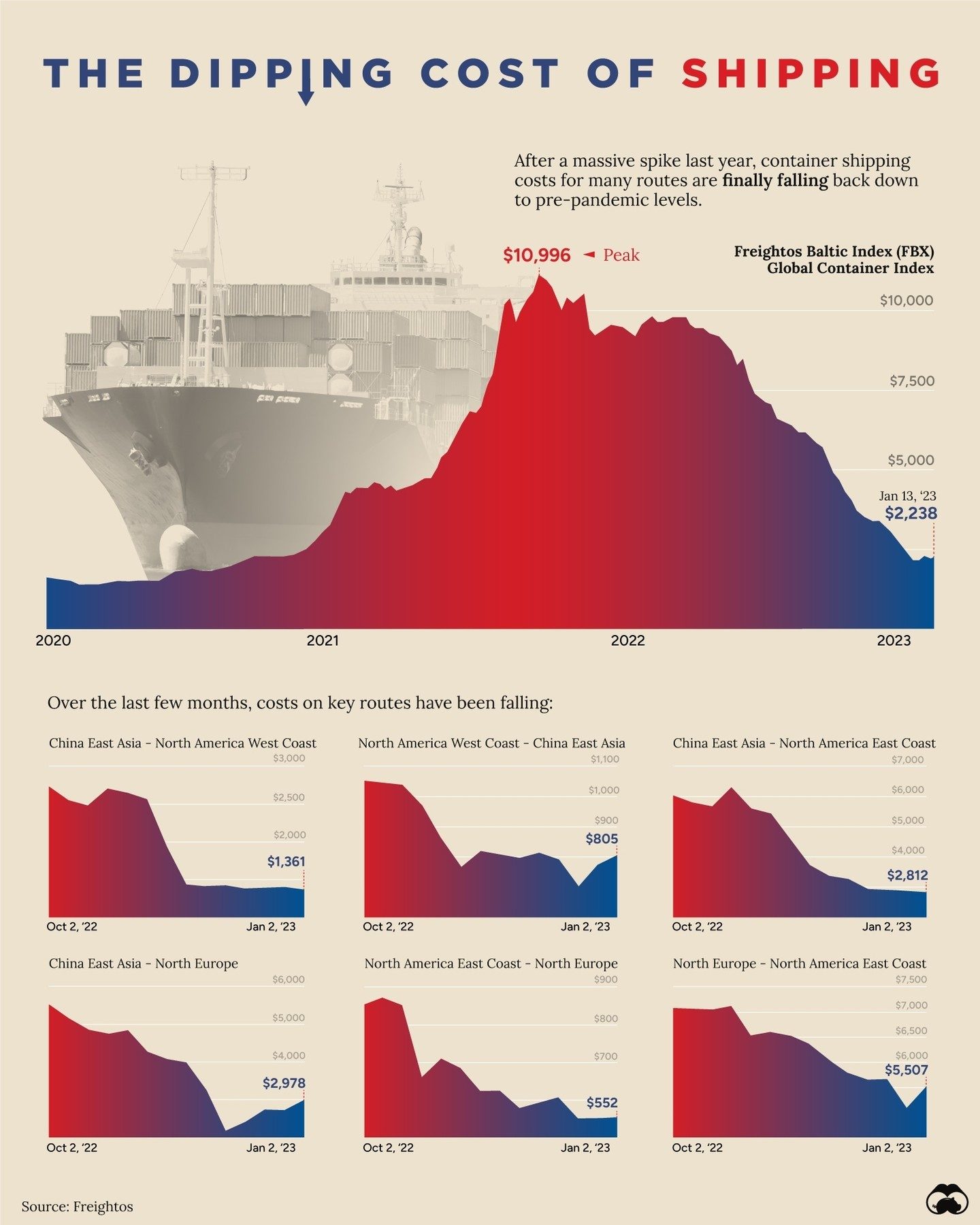
Over the past year, container shipping costs have seen a dramatic shift. After reaching record highs due to congestion at America’s West Coast ports, costs have since fallen significantly, with some routes approaching pre-pandemic levels. This trend is best illustrated by the Freightos Baltic Index (FBX) Global Container Index, which tracks these fluctuations.
Context / Why this matters
The global supply chain has undergone significant strain over the past few years, with shipping costs being a critical factor. Understanding the current trends in shipping costs is essential for businesses that rely on international trade. As costs fluctuate, so do the strategies companies employ to manage their logistics and supply chain operations. For instance, the dramatic spike in 2022 and the subsequent decline in costs have had a profound impact on the financial planning and operational strategies of numerous industries.
Main Discussion
Historical Overview
The global cost of shipping containers reached a peak in 2022, largely due to congestion at ports, particularly on the West Coast of the United States. This peak caused significant disruptions in supply chains and increased costs for businesses worldwide. The Freightos Baltic Index (FBX) Global Container Index peaked at $10,996 in 2022. This index is a critical benchmark for tracking the cost of shipping containers globally.
Current Trends
The visual representation of container shipping cost trends shows a clear decline from the peak in 2022. As of January 2023, costs have fallen significantly, approaching pre-pandemic levels. For instance, the cost for the route from China East Asia to North America West Coast has decreased from a peak of $10,996 to $2,238 as of January 13, 2023. This trend is also evident in other key routes, such as North Europe to North America East Coast, where costs have fallen from $7,500 to $2,812.
Key Routes
Several key routes have seen significant fluctuations in costs over the past few years. The route from China East Asia to North America West Coast is one of the most closely watched. The cost for this route peaked in 2022 but has since declined, reaching $2,238 by January 2023. Similarly, the route from North America West Coast to China East Asia has also seen a decline in costs, falling from $10,000 to around $1,000.
The route from China East Asia to North Europe and the route from North Europe to North America East Coast have also experienced cost fluctuations. The costs for these routes peaked in 2022 but have since declined, reaching $1,361 and $2,812, respectively, as of January 2023.
Factors Influencing Costs
Several factors have contributed to the decline in shipping costs. One of the primary factors is the reduction in port congestion, particularly on the West Coast of the United States. As ports have become more efficient, the backlog of ships waiting to unload has decreased, leading to a reduction in costs. Additionally, the increase in shipping capacity and the deployment of more vessels have helped to meet the demand for shipping services, further driving down costs.
Practical Tips
For businesses that rely on international shipping, understanding these trends is crucial for managing logistics and supply chain operations. Here are some practical tips to help navigate the current shipping cost landscape:
Monitor Cost Trends
Keeping a close eye on the Freightos Baltic Index (FBX) Global Container Index can provide valuable insights into future cost trends. By tracking this index, businesses can anticipate changes in shipping costs and adjust their strategies accordingly.
Diversify Shipping Routes
Relying on a single shipping route can be risky, especially in times of high volatility. Diversifying shipping routes can help mitigate risks and ensure that goods reach their destination on time and within budget. For example, businesses might consider using alternative routes, such as North Europe to North America East Coast, which has seen significant cost reductions.
Optimize Inventory Management
Efficient inventory management is crucial for reducing costs. By optimizing inventory levels, businesses can minimize the need for urgent shipping, which often comes at a higher cost. This can include strategies such as just-in-time inventory management and using reliable suppliers.
Negotiate Contracts
Businesses that negotiate long-term shipping contracts can often secure better rates. By locking in rates during periods of low costs, businesses can protect themselves from future price increases. Additionally, negotiating for flexible terms can provide more options for adjusting shipping strategies as needed.
Important Takeaways
Cost Volatility
The dramatic fluctuations in shipping costs over the past few years highlight the volatility of the industry. Businesses need to be prepared for sudden changes and have strategies in place to adapt quickly.
Importance of Monitoring
Regularly monitoring key indicators, such as the Freightos Baltic Index (FBX) Global Container Index, is essential for staying informed about cost trends and making informed decisions.
Diversification and Flexibility
Diversifying shipping routes and remaining flexible in inventory management and contract negotiations can help businesses navigate the complexities of the shipping industry.
Conclusion
The global cost of shipping containers has seen significant fluctuations over the past few years, with recent trends showing a decline in costs. Understanding these trends is crucial for businesses that rely on international shipping. By monitoring cost indicators, diversifying shipping routes, and optimizing inventory management, businesses can effectively navigate the current shipping landscape and prepare for future changes. As the industry continues to evolve, staying informed and adaptable will be key to success.
Watch the Reel
Questions readers ask
What factors have contributed to the decline in shipping costs over the past year?
The primary factors include reduced port congestion, particularly at America’s West Coast ports, and a decrease in demand for international shipping. These changes have led to a significant drop in container shipping costs, with some routes returning to pre-pandemic levels.
How do current global freight rates compare to those before the pandemic?
Current global freight rates have seen a dramatic shift, with many routes nearing pre-pandemic prices. This is evident in the Freightos Baltic Index (FBX) Global Container Index, which shows a notable decrease from the record highs experienced due to port congestion.
Why is understanding shipping cost trends important for businesses?
For businesses engaged in international trade, understanding shipping cost trends is crucial for effective logistics and financial planning. Fluctuations in shipping costs directly impact the strategies companies use to manage their supply chains, influencing decisions such as when and where to ship goods.
What is the Freightos Baltic Index (FBX) Global Container Index, and why is it important?
The Freightos Baltic Index (FBX) Global Container Index is a key benchmark that tracks changes in global freight rates. It provides valuable insights into the current trends of container shipping costs, helping businesses make informed decisions about their international shipping strategies.
How have shipping costs from Asia to Europe been affected by recent trends?
Shipping costs from Asia to Europe have followed the overall trend of declining freight rates. This is due to reduced demand and improved port efficiencies, leading to more stable and predictable shipping costs, which can help businesses better plan their logistics and supply chain operations.
Which regions have seen the most significant changes in shipping costs over the past year?
The most significant changes have occurred in routes from the West Coast of the United States, where port congestion was particularly severe. Additionally, East Coast shipping prices and routes from Asia to Europe have also seen notable declines as global freight rates have stabilized.
What factors should businesses consider when planning their shipping strategies in light of current trends?
Businesses should consider current trends in shipping costs, such as the reduced port congestion and lower demand, when planning their logistics strategies. It is also important to monitor freight cost indices and industry reports to anticipate future changes and adjust strategies accordingly.
Related deep dives
Similar reads based on topic and creator.



Recent articles
Fresh deep dives from the latest Reels we unpacked.




Comments
Be the first to comment.