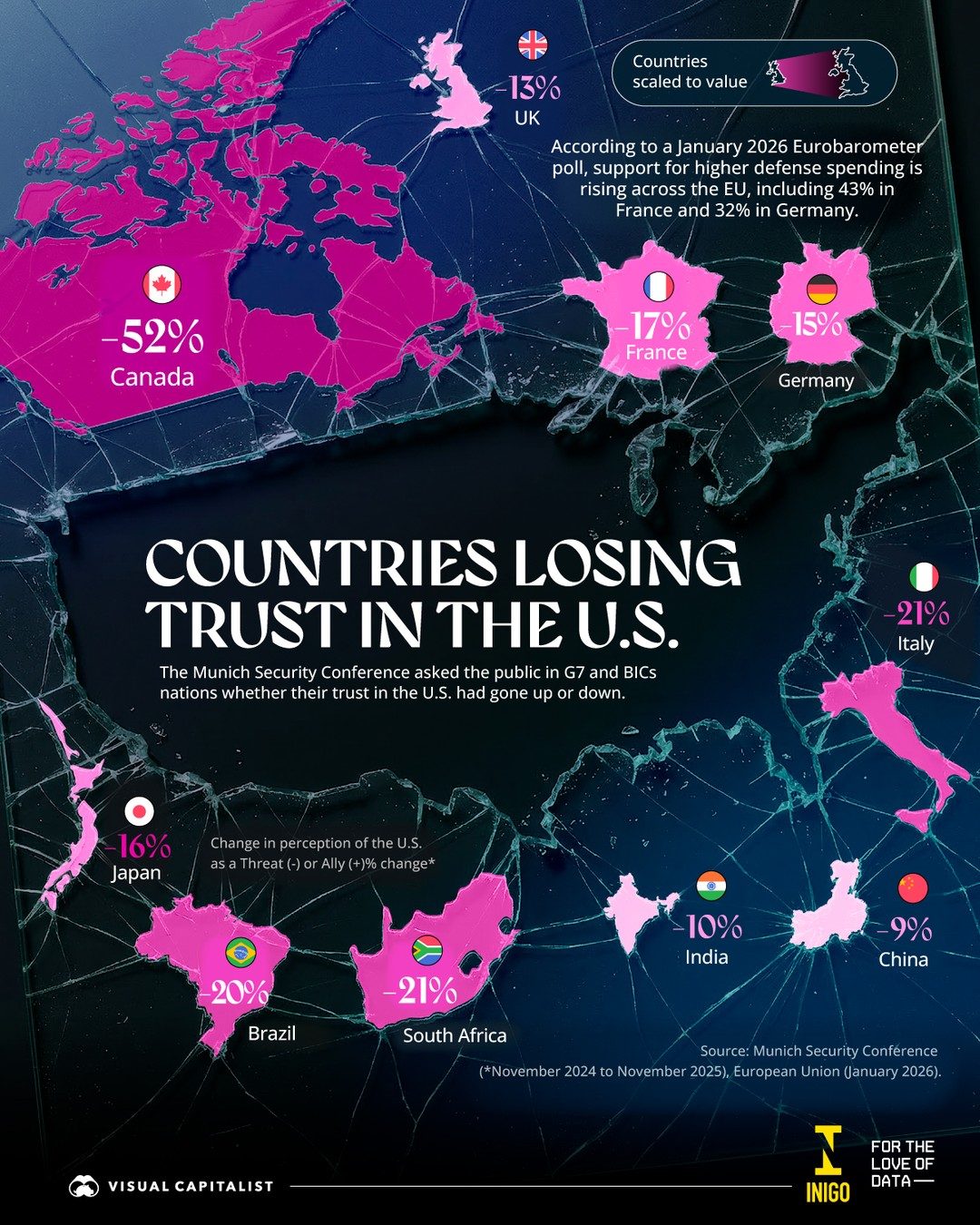
Public Trust in the United States
Public trust in the United States is undergoing significant changes, reflecting a broader reassessment of alliances in an increasingly uncertain global landscape. This shift in perception is evident in various countries, with some experiencing notable declines and others showing increases in trust. The data highlights where these changes are most pronounced, offering valuable insights into global geopolitical dynamics.
Context / Why This Matters
Understanding these shifts is crucial for several reasons. Firstly, trust is a cornerstone of international relations. It influences diplomatic decisions, economic partnerships, and military alliances. Secondly, the reassessment of alliances can impact global security, trade agreements, and regional stability. Lastly, these shifts can provide insights into broader geopolitical trends, helping policymakers and analysts navigate the complexities of international relations.
Main Discussion
The Data: Munich Security Conference Findings
The Munich Security Conference, a prominent gathering of global leaders, asked the public in G7 and BICs nations about their trust in the U.S. The results, compiled from November 2024 to November 2025, reveal significant variations in public sentiment across different countries.
Canada, for instance, shows a stark -52% change in trust. This dramatic shift suggests a significant decline in public perception of the U.S. as a reliable ally. Similarly, France (-17%), Italy (-21%), and Japan (-16%) also exhibit notable decreases in trust. These countries, traditionally strong allies, are experiencing a notable reassessment of their relationship with the U.S.
On the other hand, Germany (+15%) and the UK (+13%) show increases in trust. This positive shift indicates that these nations continue to view the U.S. favorably, despite the broader global uncertainties. Interestingly, Brazil (-20%), South Africa (-21%), India (-10%), and China (-9%) also show mixed results, reflecting varied perceptions within these emerging economies.
Broad Trends in Defense Spending
The data also highlights a broader trend in defense spending. According to a January 2026 Europarometer poll, support for higher defense spending is rising across the European Union. France leads with 43% support, followed by Germany with 32%. This trend indicates a growing concern for security and defense, potentially influenced by the shifting perceptions of the U.S. as a reliable ally.
Factors Influencing Trust
Several factors could be influencing these shifts in public trust:
-
Geopolitical Tensions: Ongoing geopolitical tensions and conflicts around the world can significantly impact public perceptions of the U.S. Role. Countries experiencing heightened tensions may reassess their alliances more critically.
-
Economic Factors: Economic policies and trade agreements can affect public trust. Countries that feel economically disadvantaged or threatened by U.S. policies may exhibit lower trust levels.
-
Cultural and Social Issues: Cultural differences and social issues can also play a significant role. Public sentiment can be swayed by perceptions of cultural insensitivity or differences in social values.
Practical Tips
For policymakers and diplomats, understanding and navigating these shifts in public trust requires a nuanced approach:
-
Engage in Open Dialogue: Foster open and honest dialogue with allies to address concerns and clarify misperceptions. Transparency can help rebuild trust in uncertain times.
-
Strengthen Economic Ties: Economic partnerships and trade agreements can bolster trust. Policies that promote mutual economic benefit can foster stronger alliances.
-
Cultural Exchange Programs: Promote cultural exchange programs to bridge cultural gaps and build understanding. This can help mitigate negative perceptions based on cultural differences.
-
Ensure Consistent Policies: Consistency in foreign policy can provide predictability and reassurance to allies. Inconsistent policies can lead to mistrust and uncertainty.
-
Invest in Defense and Security: Increased investment in defense and security can demonstrate commitment to global stability, potentially boosting trust.
Important Takeaways
-
Public Perception Matters: Public trust is a critical factor in international relations. Understanding shifts in perception can help policymakers navigate geopolitical complexities.
-
Regional Variations Exist: The data highlights significant regional variations in trust. Policies should be tailored to address these specific concerns.
-
Economic and Security Factors: Economic policies and defense spending play a crucial role in shaping public trust. Policies should aim to balance economic benefit with security concerns.
-
Open Communication: Open and transparent communication can help rebuild trust and foster stronger alliances.
Conclusion
The shifting perceptions of the United States as a trusted ally reflect a broader reassessment of global alliances in an uncertain world. By understanding these shifts and addressing the underlying factors, policymakers and diplomats can navigate the complexities of international relations more effectively. This involves fostering open dialogue, promoting economic partnerships, investing in defense and security, and engaging in cultural exchange programs. As global dynamics continue to evolve, staying attuned to these changes will be crucial for maintaining strong and stable international alliances.
Watch the Reel
Questions readers ask
What are the most significant shifts in global trust towards the United States?
The most significant shifts in global trust towards the U.S. vary by country. Some traditional allies have seen notable declines in trust, while others have shown increased favorability. These changes are part of a broader reassessment of international relations amidst a complex geopolitical landscape.
How does public trust in the U.S. impact international relations?
Public trust in the U.S. significantly influences international relations. It shapes diplomatic decisions, economic partnerships, and military alliances. High levels of trust can foster stronger collaborations, while declines can strain relationships and affect global security and trade agreements.
Why is understanding the shifts in global trust in the U.S. important?
Understanding these shifts is crucial for several reasons: Firstly, trust is a cornerstone of international relations. Secondly, the reassessment of alliances can impact global security, trade agreements and regional stability.
Which countries have seen the most pronounced changes in trust towards the U.S.?
The data highlights that countries like Canada have seen pronounced changes in trust towards the U.S. For a more detailed analysis, consider reviewing the visual highlights infographic from the US Munich Security Conference report from January 2026.
How does the reassessment of alliances affect global security?
The reassessment of alliances can significantly impact global security. Changes in trust levels can influence the strength and reliability of military partnerships, affecting international security dynamics and the effectiveness of global security measures.
What insights can be gained from the US Munich Security Conference report?
The US Munich Security Conference report from January 2026 provides valuable insights into global attitudes towards the U.S. The report examines key changes in public perception and trust, and offers a visual highlights infographic which breaks down the data, helping to illustrate these trends.
What is the significance of the Munich Security Conference report?
The Munich Security Conference report is significant as it provides a comprehensive analysis of global trust in the U.S. This analysis includes data on shifting alliances and public perceptions, helping stakeholders understand the current geopolitical landscape and make informed decisions.
Recent articles
Fresh deep dives from the latest Reels we unpacked.




Comments
Be the first to comment.