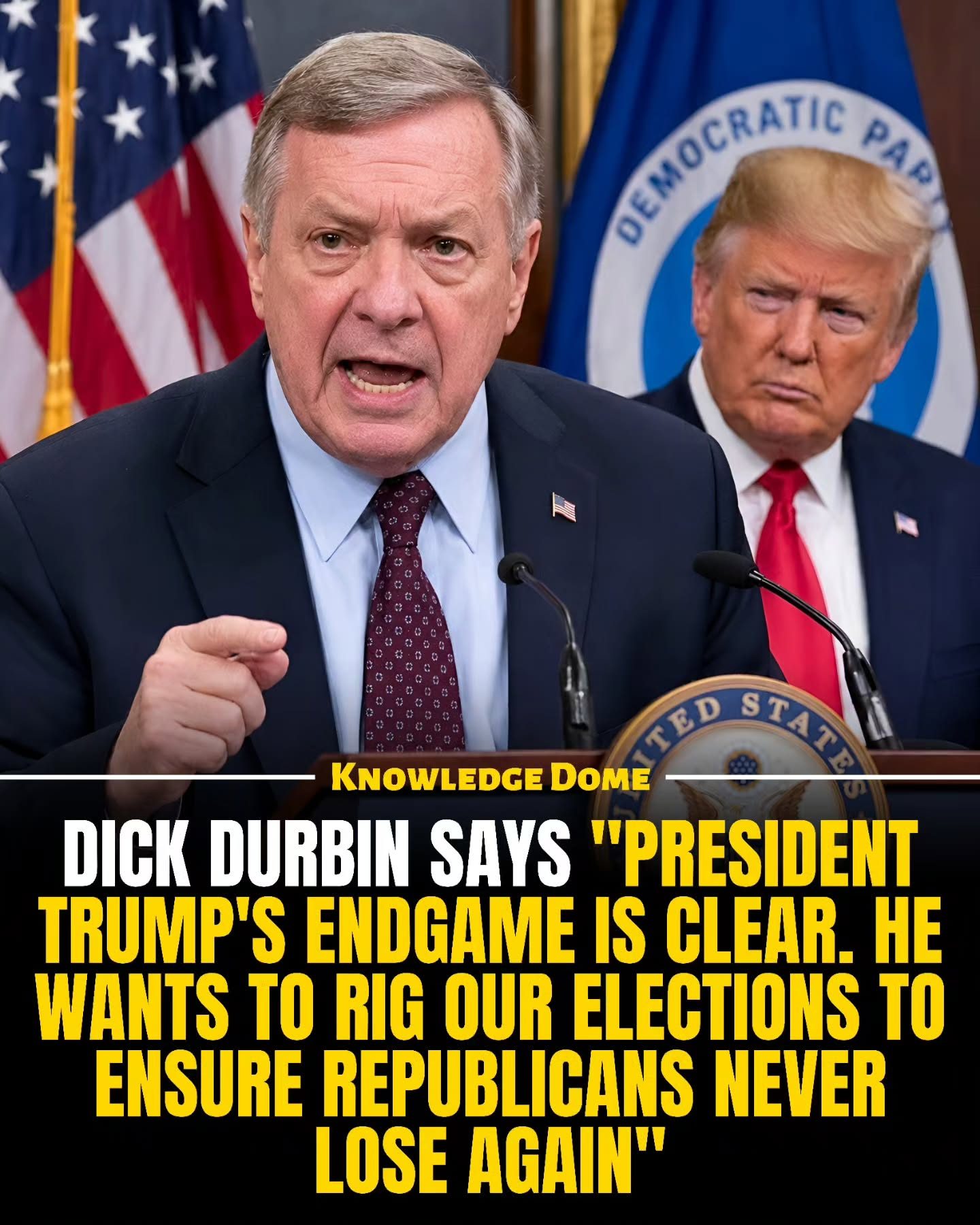
Political Commentary: Alleges President Trump’s Goal to Rig Elections
Election rigging and voter suppression are serious allegations that have been levied against the administration. The concerns center around recent changes to election systems and voting rules, with both opponents and proponents of the administration presenting vastly different viewpoints.
Context / Why This Matters
Elections are the backbone of any democratic system. They empower citizens to choose their leaders and determine the direction of their country. Any perceived or actual manipulation of the electoral process can undermine public trust and lead to widespread discontent. The new rules and regulations have sparked a heated debate, with some viewing them as necessary steps to ensure election integrity, while others see them as a means to stifle democratic participation.
The Political Commentary
Senator Dick Durbin's Allegation
Senator Dick Durbin, a prominent Democrat, has been vocal about his concerns regarding the administration's intentions. He believes that the real goal of the proposed changes is to alter the election system in a way that benefits Republicans. According to Durbin, these changes are not motivated by a desire for fairness but by a strategic move to weaken the safeguards and checks that protect the democratic process.
Durbin and his supporters argue that these new election laws and voting rule changes are designed to make it more difficult for people to vote. They contend that the underlying motive is to control who gets to participate in elections, rather than to enhance the voting experience. This perspective paints a picture of a deliberate attempt to suppress voter turnout, particularly among demographics that traditionally favor the opposing party.
Counterarguments from Trump Supporters
On the other hand, President Trump's supporters have a different narrative. They firmly reject the idea that the changes are aimed at election rigging. Instead, they assert that the primary focus is on election integrity, voter ID requirements, and the cleaning up of voter rolls to prevent fraud. According to them, these measures are essential to ensure that only legal votes are counted and that the voting process remains secure.
Supporters of the President believe that the current system is fraught with vulnerabilities that can be exploited, leading to fraudulent voting. They argue that stringent voter ID laws and regular purges of voter rolls are necessary to maintain the sanctity of the voting process. This perspective emphasizes the need to protect the integrity of elections, ensuring that the outcome reflects the true will of the people.
The Battle Over Voter ID
One of the most contentious issues in this debate is the implementation of voter ID laws. Proponents of these laws argue that they help in preventing voter fraud by ensuring that only eligible voters cast their ballots. They contend that requiring voters to present a valid form of identification is a reasonable measure to maintain the integrity of the election process.
On the other hand, opponents argue that voter ID laws disproportionately affect certain demographics, such as minorities, the elderly, and low-income individuals, who may not have access to the necessary identification documents. They believe that these laws are a thinly veiled attempt to disenfranchise these groups, who traditionally lean towards the Democratic Party.
Cleaning Up Voter Rolls
Another contentious issue is the process of purging voter rolls. Supporters of this practice argue that it is essential to remove individuals who have died, moved, or are otherwise ineligible to vote. They believe that regular purges of voter rolls help in maintaining accurate and up-to-date voter information, which is crucial for a fair and transparent election process. Proponents of purging cite numerous instances where deceased individuals have been found on voter rolls, potentially leading to voter fraud.
However, opponents argue that the purging process can be flawed and may inadvertently remove eligible voters from the rolls. They point out that purging efforts can sometimes target voters who have not voted in recent elections, leading to the disenfranchisement of eligible voters.
Practical Tips
When evaluating the validity of such allegations, it is essential to consider the following:
Stay Informed
Staying informed about the ongoing debates and changes in election laws is crucial. Reading from diverse sources can provide a more comprehensive understanding of the issues at hand. Keep track of the latest developments and expert analyses to form an informed opinion.
Engage in Dialogue
Engaging in discussions with people who hold differing viewpoints can provide new perspectives and enrich your understanding. It is essential to approach these conversations with an open mind and a willingness to listen to others' viewpoints.
Participate in the Process
Voting is a critical right in a democracy. Participating in the electoral process can help ensure that your voice is heard and that your concerns are addressed. Encourage others to vote and spread awareness about the importance of civic participation.
Important Takeaways
The ongoing debate over election rigging and voter suppression highlights the deep divisions within the political landscape. Understanding the nuances of these issues is essential for informed civic engagement. Both sides of the debate have valid points, and a balanced approach is necessary to address the concerns raised by both opponents and proponents of the proposed changes.
Conclusion
The allegations surrounding President Trump’s goal to rig elections and the counterarguments from his supporters underscore the complexity of the political landscape. The true impact of these changes on voter turnout and election integrity remains a subject of intense debate. As the dialogue continues, it is crucial to stay informed, engage in constructive discussions, and actively participate in the democratic process.
Watch the Reel
Questions readers ask
What specific changes to election systems has Trump's administration implemented that are being criticized by Senator Durbin and other Democrats?
The Trump administration has introduced several changes, including stricter voter ID laws, reduced early voting periods, and limits on mail-in voting. These changes are seen by critics like Senator Durbin as barriers that suppress voter participation, making it harder for certain groups to cast their ballots.
Why do supporters of the administration defend these changes to election rules?
Supporters argue that these changes are essential for maintaining election integrity. They contend that measures like voter ID laws help prevent voter fraud, ensuring that only eligible voters participate in elections. They also point out that these rules help to maintain public trust in the electoral process.
What concerns have been raised about the impact of these changes on voter participation?
Opponents, including Senator Durbin, express concerns that these changes disproportionately affect marginalized communities, the elderly, and those with disabilities, who may face difficulties complying with new voting requirements or accessing polling stations. This, they argue, leads to a decrease in voter turnout and undermines the democratic process.
How has the Trump administration responded to allegations of election rigging and voter suppression?
The Trump administration has consistently denied allegations of election rigging and voter suppression. They maintain that the implemented changes are aimed at enhancing election security and integrity, not at suppressing voter participation. They often point to the need to prevent voter fraud as a justification for these changes.
What role does public trust play in the debate over election rules and voting rights?
Public trust is a crucial element in any democratic process. When changes to election rules are perceived as attempts to rig elections or suppress votes, public trust can erode, leading to widespread discontent and potential social unrest. Both sides of the debate recognize the importance of maintaining public trust in the electoral process.
How have Democrats, including Senator Durbin, responded to the administration's stance on election integrity?
Democrats, led by figures like Senator Durbin, have countered the administration’s stance by arguing that the changes to election rules are disproportionately impacting certain voting groups, thereby undermining the principles of fair and equal voting rights. They advocate for policies that increase voter access and participation, rather than restrict it.
What are the implications of these changes on future elections and political discourse in the U.S.?
The recent changes and the ensuing debate have significant implications for future elections, as they set a precedent for how voting rights and election integrity are perceived and addressed. The current discourse highlights the need for bipartisan dialogue to find a balance between ensuring election security and maintaining high levels of voter participation.
Recent articles
Fresh deep dives from the latest Reels we unpacked.




Comments
Be the first to comment.