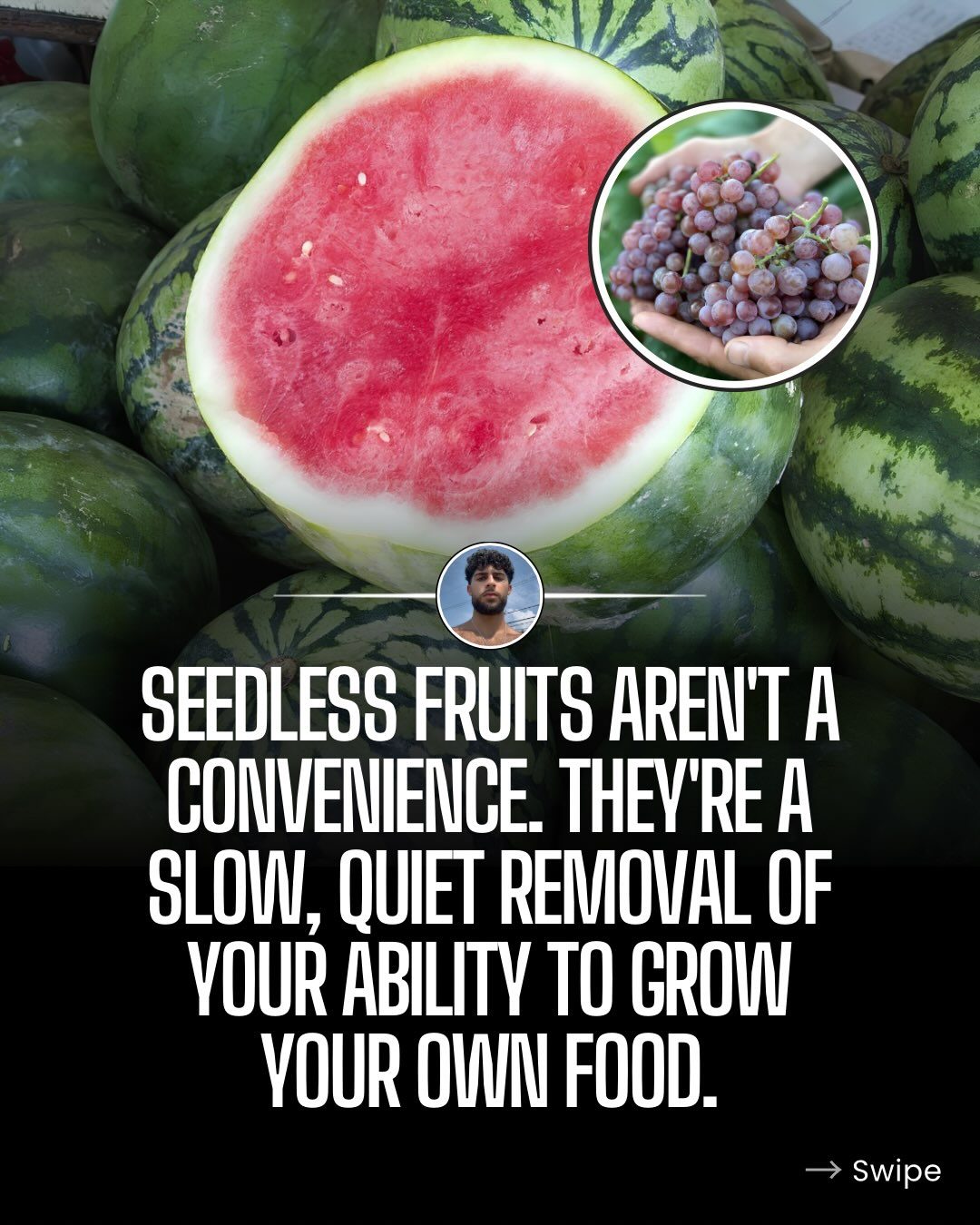
Seed saving and food independence go hand-in-hand. As more and more fruits are bred to be seedless, consumers lose the opportunity to grow food independently. One of the leading contributors to the seed market, Bayer, is controlling more and more of the market, and many seeds are patented. This means that farmers have to buy new seeds each year, and the cycle of saving seeds is broken.
Context / Why this matters
Seed saving is a valuable practice that, for thousands of years, provided people with the ability to grow their own food. This practice was simple — save seeds from each harvest and replant them for the next season. This cycle gave families the ability to feed themselves without relying on anyone else.
The prevalence of seedless fruits can seem like a convenience, but it also means a reduction in food independence. A seedless fruit can't reproduce on its own, which makes it impossible for anyone to save and replant seeds from a seedless fruit.
Today, a small number of companies, like Bayer, Syngenta, and Corteva, have a significant amount of control over the global seed market. Farmers have to buy new seeds for each season, which can lead to a cycle of reliance on these companies for food. This reduces food independence and makes it difficult for individuals to grow their own food.
The Importance of Seed Saving
The Benefits of Seed Saving
Saving seeds is a way to protect food independence. The practice of saving seeds is essential for those who want to maintain a degree of control over their food supply. By learning to save seeds, anyone can grow their own food and reduce their reliance on large companies. Seed saving has a long history, and it is a skill that can be easily learned and passed on to future generations.
Historical Practices
For thousands of years, communities around the world have saved seeds from each harvest and replanted them for the next season. This practice provided families with a reliable source of food and allowed them to maintain their independence. By saving seeds, people were able to grow a variety of crops, which helped to maintain crop diversity and ensure that food remained abundant.
Seedless Fruits
As seedless fruits become more common, the ability to save seeds is compromised. Seedless fruits are marketed as a convenience, but they also mean fewer people are saving and growing their own seeds. Many seedless fruits are genetically modified or hybridized, which means they can't reproduce on their own. This makes it difficult for anyone to save seeds from these fruits and replant them for the next season. This makes it more difficult to grow food independently.
The Role of Large Companies
Bayer and Other Seed Companies
Large companies like Bayer, Syngenta, and Corteva have significant control over the global seed market. These companies often patent their seeds, which means farmers have to buy new seeds every season. This cycle of dependence can lead to a loss of food independence and make it difficult for individuals to grow their own food.
The Loss of Crop Diversity
As large companies control more of the seed market, heirloom seed varieties are disappearing. The United Nations estimates that about 75% of crop diversity has been lost since the 1900s. This loss of crop diversity can have significant impacts on food security and the ability of communities to adapt to changing environmental conditions.
Practical Tips
How to Save Seeds
Saving seeds is a relatively simple process, but it does require some knowledge and practice. Here are some tips for saving seeds:
- Choose the Right Seeds: Not all seeds are created equal. Choose seeds from heirloom or open-pollinated plants, which are more likely to produce viable seeds.
- Harvest at the Right Time: Harvest seeds at the right time to ensure they are mature and viable. This will vary depending on the type of seed.
- Store Properly: Store seeds in a cool, dry place to ensure they remain viable for the next planting season.
- Label Seeds: Label seeds by type and date to ensure you know what you are planting and when it was harvested.
Choosing the Right Seeds
When choosing seeds to save, it is important to select seeds from heirloom or open-pollinated plants. These plants are more likely to produce viable seeds that can be replanted for the next season. Hybrid plants, on the other hand, are often bred to be sterile or to produce seeds that do not produce plants true to the parent plant. This makes them less suitable for seed saving.
Harvesting and Storage
Harvesting seeds at the right time is essential for ensuring they are mature and viable. This will vary depending on the type of seed, but generally, seeds should be harvested when the plant has fully matured. Once harvested, seeds should be stored in a cool, dry place to ensure they remain viable for the next planting season. Labelling seeds by type and date is also important for keeping track of what you have and when it was harvested.
Important Takeaways
The importance of saving seeds is often overlooked, but it is a valuable practice that can help maintain food independence. By saving seeds, individuals can reduce their reliance on large companies for food and ensure they have a reliable source of food for the future. Seed saving is a simple process that anyone can learn, and it is a skill that can be passed on to future generations.
Conclusion
Seed saving is more than just a hobby; it is an essential practice for maintaining food independence. As large companies like Bayer continue to control more of the global seed market, it is important for individuals to take control of their food supply. By saving seeds, anyone can grow their own food and ensure they have a reliable source of food for the future. Even a small garden can produce enough seeds for future harvests, making seed saving an accessible practice for anyone interested in maintaining their food independence.
Watch the Reel
Questions readers ask
What is seed saving and why is it important for food independence?
Seed saving is the practice of collecting and storing seeds from harvested crops to replant in subsequent seasons. It is crucial for food independence as it allows individuals and communities to grow their own food, ensuring food security and self-sufficiency without relying on external suppliers.
How do seedless fruits impact the ability to save seeds?
Seedless fruits disrupt the natural cycle of seed saving, as they do not produce viable seeds that can be replanted. This dependency on purchasing new seeds each year is problematic for farmers and consumers wanting to grow their own food.
Why is the concentration of seed market control in fewer hands a concern?
When control over the seed market is concentrated in fewer hands, such as large corporations like Bayer, it limits the variety of seeds available and increases dependency on these corporations. Farmers may face restrictions and costs associated with patented seeds, making it difficult to save and replant.
What is the difference between heirloom seeds and hybrid seeds in the context of seed saving?
Heirloom seeds are open-pollinated and have been passed down through generations, allowing for consistent replanting and saving. Hybrid seeds, on the other hand, are produced by crossing two different varieties and often do not breed true, meaning the seeds from the resulting plants may not retain the desired characteristics, making them less suitable for seed saving.
What are some common seed saving techniques for beginners?
Common seed saving techniques include allowing fruits and vegetables to fully ripen on the plant, collecting seeds from healthy and robust plants, and drying seeds thoroughly before storage. Specific methods vary by plant type, so research is key for effective seed saving.
Recent articles
Fresh deep dives from the latest Reels we unpacked.




Comments
Be the first to comment.