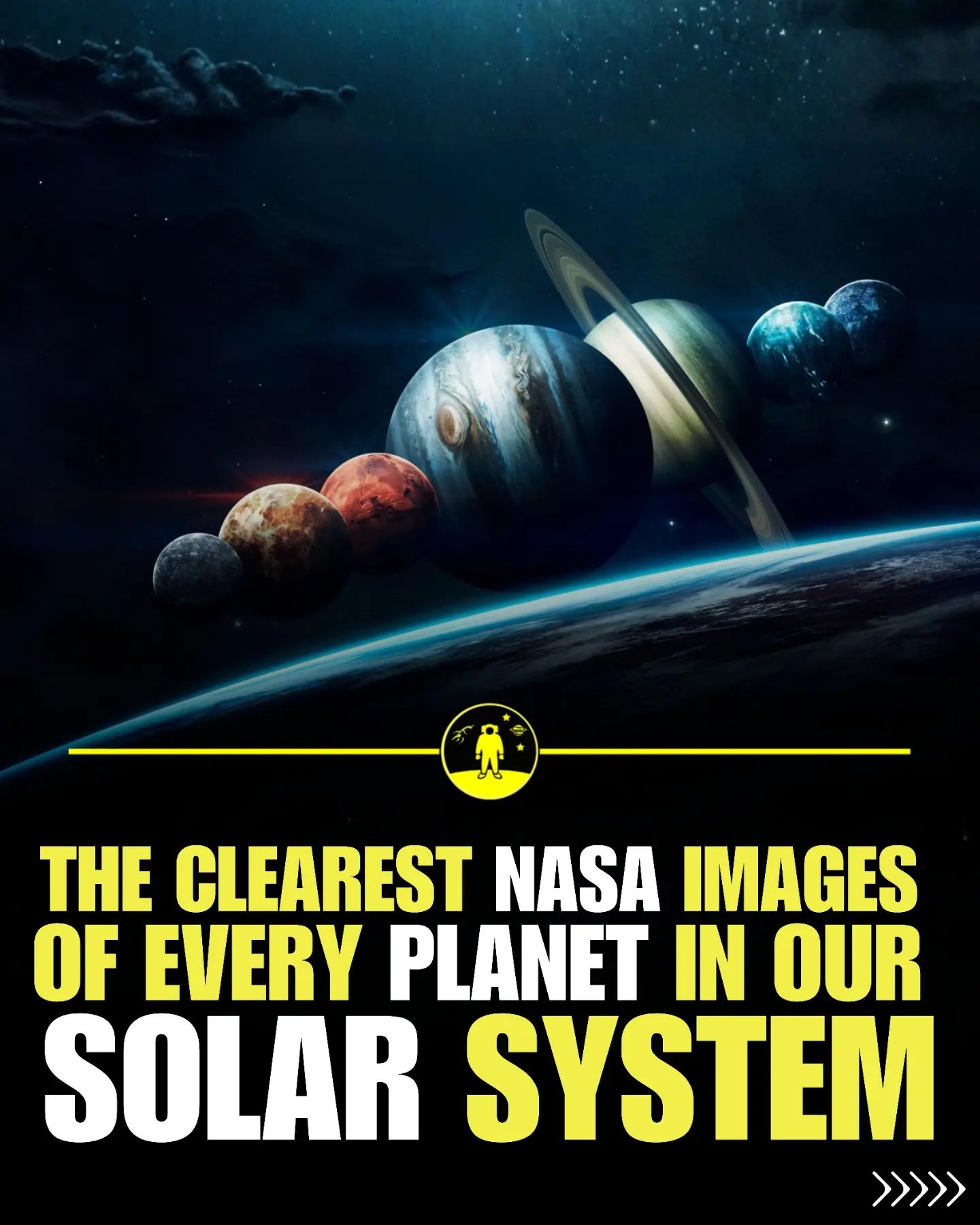
Exploring the Wonders of Our Solar System Through NASA's Clearest Images
The Solar System, a vast and diverse cosmic neighborhood, has captivated human curiosity for centuries. From the scorching surface of Mercury to the icy blue world of Neptune, each planet offers a unique story shaped by billions of years of evolution. Thanks to decades of space exploration, NASA's spacecraft and telescopes have captured breathtaking images that reveal the intricate details of these distant worlds. These images allow us to witness towering volcanoes, massive storms, colorful cloud bands, frozen landscapes, and mysterious craters without ever leaving Earth.
Why This Matters
Exploring the Solar System is not just about satisfying our curiosity; it's about understanding our origins and the potential for life beyond Earth. Each mission to another planet or moon expands our knowledge of how celestial bodies form, evolve, and interact with their environments. The images captured by NASA's spacecraft provide valuable data that scientists use to unravel the mysteries of our cosmic neighborhood. They also inspire future generations of explorers and scientists, reminding us of the boundless wonders waiting to be discovered.
Main Discussion
The Rocky Terrestrial Planets
Mercury and Venus are our closest planetary neighbors. Mercury, the smallest and innermost planet, is a world of extremes. Its surface temperatures can reach over 800°F (427°C) during the day and drop to -290°F (-180°C) at night. Despite these harsh conditions, Mercury's surface features, such as the Caloris Basin, offer insights into the planet's violent past. Venus, on the other hand, is shrouded in thick, toxic clouds that hide a surface hot enough to melt lead. The Soviet Vega and Venera missions, along with NASA's Magellan orbiter, have provided detailed maps of Venus's surface, revealing vast volcanic plains and mountains.
Earth, our home planet, is the only known world to support life. From space, Earth appears as a fragile blue marble, its oceans and atmosphere teeming with life. Images of Earth from space have become iconic, reminding us of the delicate balance that sustains us and the importance of protecting our planet.
Mars, the red planet, has long fascinated scientists and dreamers alike. Its dusty red surface is marked by the largest volcano in the Solar System, Olympus Mons, and a vast canyon system called Valles Marineris. Evidence from Mars rovers and orbiters suggests that liquid water once flowed on the planet's surface, raising intriguing questions about the possibility of past or present microbial life.
The Gas Giants
Jupiter and Saturn are the giants of our Solar System. Jupiter, the largest planet, is a tumultuous world of swirling storms and colorful cloud bands. Its most famous feature, the Great Red Spot, is a storm larger than Earth that has raged for at least 350 years. Saturn, known for its stunning rings, is a gas giant with a complex system of moons. Titan, Saturn's largest moon, is of particular interest because it has a dense atmosphere and liquid methane lakes, making it a potential host for exotic forms of life.
The Ice Giants
Uranus and Neptune are the ice giants, named for their composition of ices such as water, ammonia, and methane. Uranus is unique because it rotates on its side, with an axial tilt of 98 degrees. This unusual orientation results in extreme seasonal variations. Neptune, the farthest planet from the Sun, has the strongest winds in the Solar System, reaching speeds of up to 1,200 mph (1,930 km/h). Both planets have faint ring systems and numerous moons, adding to their allure.
Practical Tips for Exploring Solar System Images
Whenever you encounter solar system images, there are a few practical tips to enhance your understanding and appreciation:
- Contextualize the Images: Always consider the scale and context of the images. Knowing the size of the planet and the features being observed can deepen your understanding.
- Compare and Contrast: Compare images of different planets to appreciate their unique characteristics. For example, contrast the rocky terrain of Mercury with the gas clouds of Jupiter.
- Follow NASA Missions: Stay updated with the latest NASA missions and discoveries. Each new mission brings fresh data and images that reveal more about our Solar System.
- Use Interactive Tools: NASA's website and other space agencies offer interactive tools and apps that allow you to explore 3D models of planets and moons, providing a more immersive experience.
Important Takeaways
- Diversity of Planets: Each planet in our Solar System is unique, with distinct characteristics shaped by their environment and history.
- Importance of Exploration: Space exploration not only satisfies our curiosity but also provides valuable scientific data and inspires future generations.
- Innovation and Discovery: Continued advancements in technology will reveal even more about our cosmic neighborhood, expanding our understanding of the universe.
Conclusion
The clearest NASA images of every planet in our Solar System offer a window into the wonders of our cosmic neighborhood. From the scorching surface of Mercury to the icy blue world of Neptune, each planet tells a story of formation, evolution, and the potential for life. As we continue to explore and uncover the mysteries of our Solar System, we are reminded of the incredible diversity and beauty that surrounds us. Whether you're a seasoned astronomer or a curious stargazer, these images inspire awe and a deeper appreciation for the vast, mysterious universe we call home.
Watch the Reel
Questions readers ask
How does NASA capture such detailed images of the planets?
NASA uses a combination of spacecraft and telescopes to capture detailed images of the planets. These include orbiters that circle the planets, flyby missions that pass by, and telescopes like Hubble that observe from a distance. Each method offers unique perspectives and levels of detail.
Which planet in our solar system has the most striking surface features?
Mercury, the closest planet to the sun, has a surface marked by craters and vast plains. NASA's MESSENGER mission provided some of the clearest images of Mercury's surface, revealing its molten past and the effects of intense solar radiation.
What are the key features visible in the clearest images of Neptune?
Neptune's clearest images show its vibrant blue color, which is due to the absorption of red light by methane gas. The images also reveal the planet's strong winds, which can exceed 1,200 miles per hour, and its mysterious dark spots, which are massive storms.
How can I access the best NASA images of planets?
You can access the best NASA images of planets through NASA's official website and their image galleries. Additionally, platforms like the Planetary Data System and the HubbleSite offer extensive collections of high-quality images and resources.
What makes the surface of Uranus unique in the clearest images?
The clearest images of Uranus show a featureless, pale blue planet due to the absorption of red light by methane in its atmosphere. However, these images also reveal faint cloud bands and storms, as well as its unique sideways rotation, which results in extreme seasons.
Are there ways to see the clearest planet images without using a telescope?
Yes, you can see the clearest planet images without using a telescope by exploring NASA's extensive image archives online. These images are often accompanied by detailed descriptions and insights from scientists, providing a rich understanding of each planet's surface and atmosphere.
Related deep dives
Similar reads based on topic and creator.

Recent articles
Fresh deep dives from the latest Reels we unpacked.




Comments
Be the first to comment.