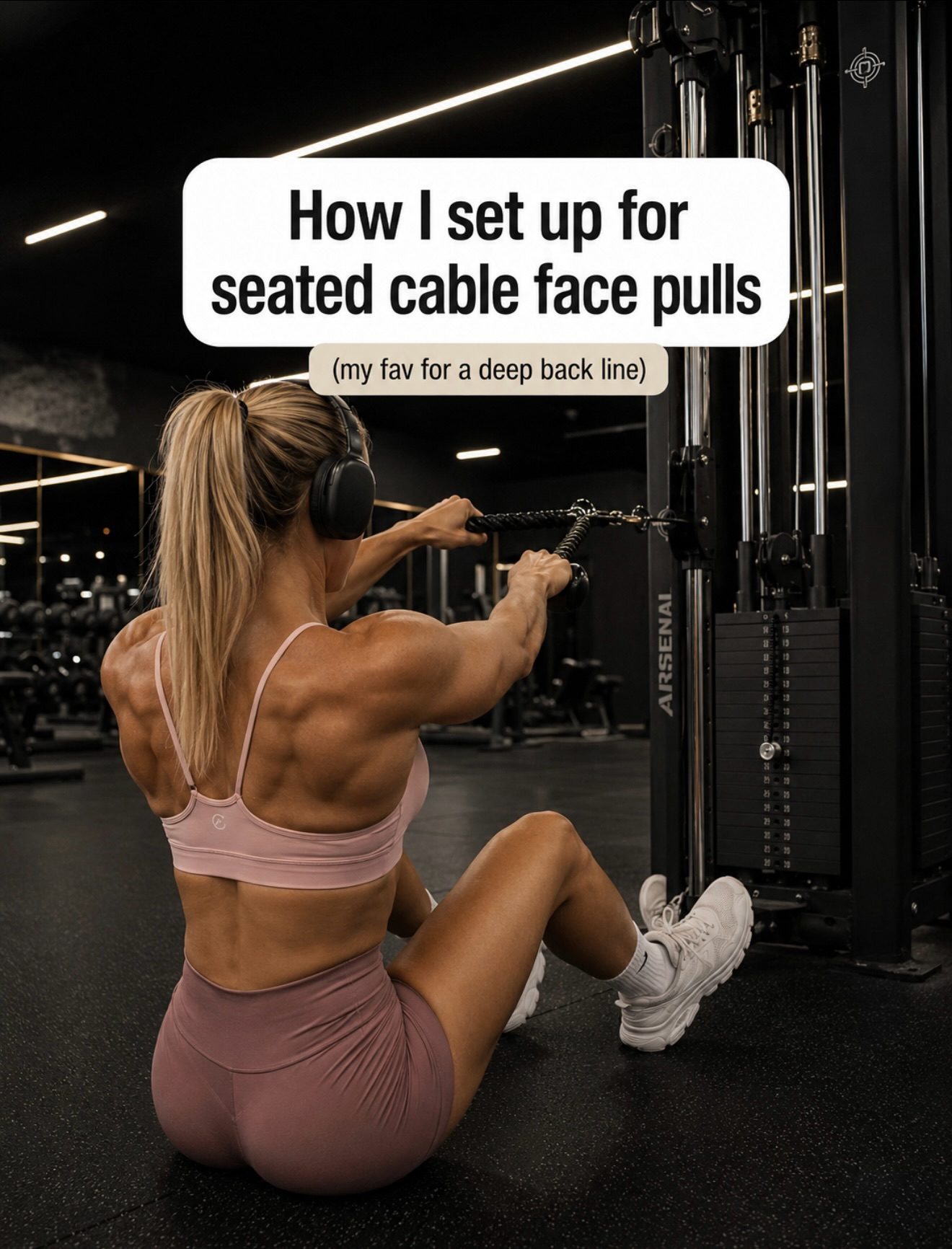
Seated Cable Face Pulls
Seated cable face pulls are a staple exercise for targeting the upper and mid-back muscles, which are crucial for a strong and defined back line. This exercise is often misunderstood and poorly executed, but mastering the setup can transform your back workouts.
Why This Matters
Properly executed, seated cable face pulls can significantly improve your posture, shoulder stability, and overall upper body strength. Small adjustments in cable height, body position, grip, elbow path, and tension can make a substantial difference in how effectively you engage your back muscles.
Setting Up for Success
Equipment and Initial Setup
To begin, you'll need a cable machine with an adjustable pulley system and a rope attachment. Start by adjusting the pulley to around face height. This position ensures that the tension is maintained on the cable throughout the exercise, allowing for a more controlled movement.
Attach the rope to the cable machine. An angle that targets the upper and mid-back is ideal for creating that defined back line. Make sure the rope is securely fastened to avoid any slips or accidents during the exercise.
Body Position
Position yourself on a bench or chair facing the cable machine. Sit back slightly to maintain tension on the cable. Sitting too far forward can cause the weight to pull you off the bench, disrupting your form. Keeping your back straight and your shoulders down and slightly back ensures that your upper back muscles are doing the work, not your arms.
Grip and Starting Position
With your arms fully extended, grasp the rope with an overhand grip. Your hands should be about shoulder-width apart. This starting position helps your upper back muscles engage from the beginning of the movement.
Executing the Movement
The Pull
As you initiate the pull, focus on opening your elbows, which should move outward and upward. Think about pulling the cable through your elbows rather than just using your hands. This technique ensures that your rear delts and upper back are fully engaged.
The Return
Controlling the negative (the return to the starting position) is just as important as the pull. Instead of rushing back, slowly extend your arms, keeping your shoulders down and back. This slow return allows for more muscle work and helps prevent injury.
Maximizing Muscle Engagement
Focus on the Rear Delts and Upper Back
To ensure you're targeting the correct muscles, keep the cable around face height and maintain a straight back throughout the movement. This position helps isolate the rear delts and upper back muscles, preventing your arms and traps from taking over.
Maintaining Proper Form
- Cable Height: Keep the cable around face height to ensure constant tension and proper muscle engagement.
- Body Position: Sit back slightly to maintain tension on the cable.
- Shoulders: Keep them down and back to avoid rounding forward.
- Elbow Path: Open your elbows as you pull, focusing on pulling through your elbows rather than just your hands.
- Control the Negative: Slowly return to the starting position to maximize muscle engagement and prevent injury.
Building a Balanced Upper Body
Movements like seated cable face pulls are crucial for building a balanced upper body shape. A strong upper back not only improves posture but also enhances shoulder stability and adds definition to your back line. Incorporating this exercise into your routine can help you achieve a more aesthetic and functional physique.
Practical Tips
Common Mistakes to Avoid
- Rounding Your Shoulders: This shifts the work to your traps and arms instead of your back muscles.
- Using Too Much Weight: Start with a manageable weight to focus on form and gradually increase as you get stronger.
- Rushing the Movement: Control the tempo to maximize muscle engagement and reduce the risk of injury.
Progression
As you become more comfortable with the exercise, consider increasing the weight or resistance. However, always prioritize proper form over heavier weights. Additionally, you can experiment with different grip widths or attachments to challenge your muscles in new ways.
Integration into Your Workout Routine
Incorporate seated cable face pulls into your back workout routine 1-2 times per week. Pair it with other compound and isolation movements for a well-rounded back workout. Remember, consistency is key to seeing progress and improvements in your strength and muscle definition.
Important Takeaways
- The setup for seated cable face pulls, including cable height, body position, grip, and elbow path, is crucial for effective muscle engagement.
- Keeping your back straight, shoulders down and back, and pulling through your elbows ensures proper form and target muscle activation.
- Controlling the negative portion of the movement is essential for maximizing muscle work and preventing injury.
Conclusion
Mastering seated cable face pulls can revolutionize your back workouts. By focusing on proper setup and execution, you can effectively target your rear delts, upper back, and mid-back muscles. Remember, small adjustments in your form can significantly impact your results. Incorporate these tips into your routine and experience the difference for yourself.
Watch the Reel
Questions readers ask
What muscles are primarily worked during seated cable face pulls?
Seated cable face pulls primarily target the rhomboids, trapezius, and rear deltoids. These muscles are crucial for a strong and defined upper and mid-back, contributing to improved posture and shoulder stability.
How should I set the cable height for seated cable face pulls?
The cable height should be set at or slightly above eye level. This position allows for optimal engagement of the back muscles and helps maintain proper form throughout the exercise.
What is the correct body position for performing seated cable face pulls?
To perform seated cable face pulls correctly, sit upright on a bench positioned at a distance from the cable machine. Keep your back straight, chest up, and core engaged. This position ensures that the back muscles are the primary movers during the exercise.
What is the ideal grip for seated cable face pulls?
Use a neutral grip, where your palms face each other. Hold the rope attachment with both hands, and maintain a slight bend in your elbows. This grip promotes better muscle activation and reduces strain on the wrists.
How can I ensure proper elbow path during the movement?
Keep your elbows high and close to your body throughout the movement. This ensures that the back muscles are engaged and reduces the involvement of the shoulders and arms.
What are the benefits of incorporating seated cable face pulls into my workout routine?
Seated cable face pulls help to improve posture and shoulder stability. This exercise strengthens the upper and mid-back muscles, contributing to a more defined back line. Additionally, it can enhance overall upper body strength.
Recent articles
Fresh deep dives from the latest Reels we unpacked.




Comments
Be the first to comment.