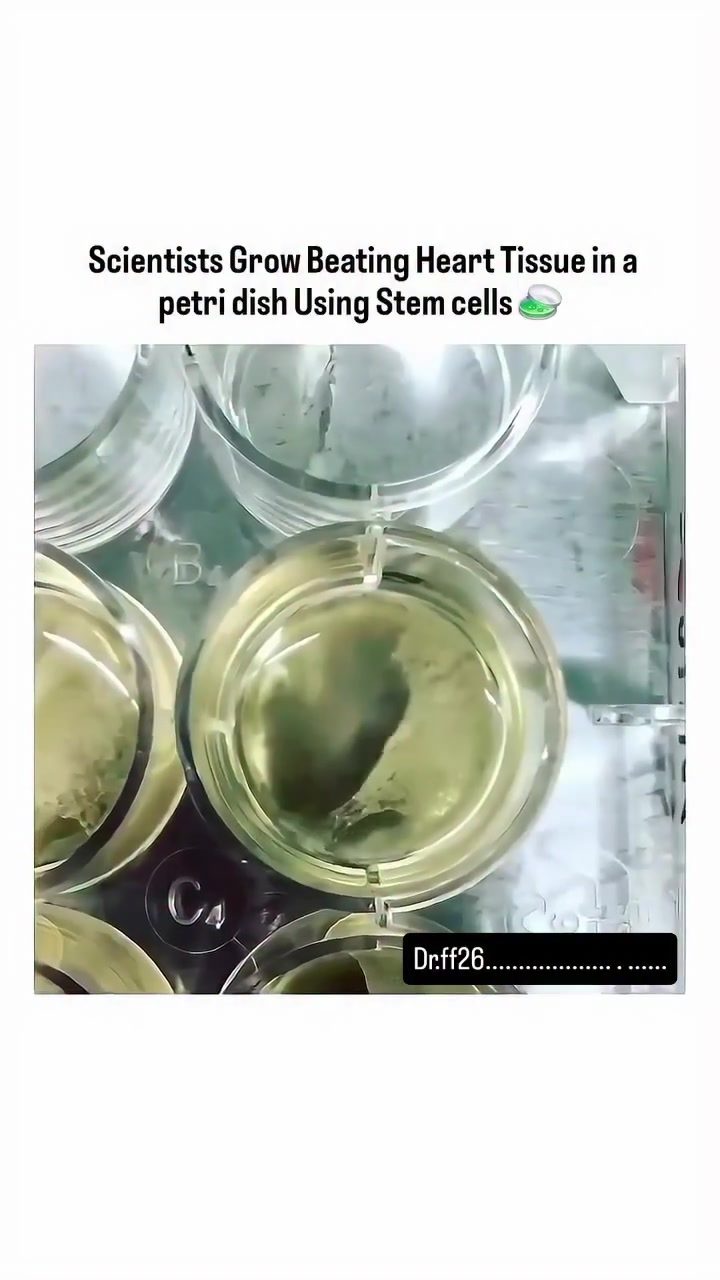
Heart Tissue Growth
The growth of heart tissue using stem cells represents a significant advancement in regenerative medicine and opens new avenues for research and treatment. This process involves creating organoid hearts that mimic the characteristics of a human heart, providing an ethical and accurate alternative to animal testing.
Why This Matters
The ability to grow heart tissue using stem cells has profound implications for medical research and patient care. By creating organoid hearts, scientists can study cardiac development, test new drugs, and develop personalized treatments without relying on animal models. This approach not only improves the accuracy of research but also aligns with ethical standards by reducing the need for animal testing.
Main Discussion
Stem Cell Isolation
The first step in growing heart tissue is the isolation of pluripotent stem cells. These cells have the unique ability to differentiate into various cell types, including cardiac cells. Researchers typically collect these cells from sources like bone marrow, blood, or skin, and then reprogram them to an embryonic-like state. This process ensures that the cells are versatile and can be guided to develop into specific tissues.
Cell Differentiation
Once isolated, the stem cells are cultivated in a controlled environment to guide their differentiation into cardiac tissue. This process involves the use of specific growth factors and signaling molecules that direct the cells to become cardiomyocytes, the muscle cells found in the heart. The differentiation process is carefully monitored to ensure that the cells develop the required characteristics, such as the ability to contract and conduct electrical impulses.
3D Culture Techniques
To support the formation of heart-like structures, researchers use bioreactors or scaffolds. These tools provide a three-dimensional environment that mimics the natural structure of the heart. Bioreactors simulate the physical and chemical conditions of the human body, allowing the cells to develop into complex, functional tissues. Scaffolds, on the other hand, provide a structural framework that supports the growth and organization of the cells.
Maturation
After the initial formation of the heart tissue, the cells require further maturation to enhance their functionality. Researchers apply electrical and mechanical stimuli to the developing tissue, which helps the cells to align and function more like mature heart cells. This process involves the use of electrical pacing and mechanical stretching, which mimic the natural contractions of a beating heart. The maturation phase is critical for ensuring that the tissue can perform the necessary functions of a human heart.
Practical Tips
Optimizing Cell Differentiation
To optimize the differentiation of stem cells into cardiac tissue, researchers must carefully control the environment in which the cells are cultured. This includes maintaining the correct temperature, pH, and nutrient levels. Additionally, the use of specific growth factors and signaling molecules can guide the cells towards becoming cardiomyocytes.
Using Bioreactors and Scaffolds
Bioreactors and scaffolds play a crucial role in supporting the growth of heart tissue. Bioreactors simulate the physical and chemical conditions of the heart, allowing the cells to develop into complex, functional tissues. Scaffolds provide a structural framework that supports the organization and growth of the cells. The choice of bioreactor or scaffold will depend on the specific requirements of the research and the desired outcome.
Enhancing Tissue Maturation
To enhance the maturation of heart tissue, researchers apply electrical and mechanical stimuli. These stimuli help the cells to align and function more like mature heart cells. Electrical pacing mimics the natural contractions of a beating heart, while mechanical stretching provides the necessary physical stress to promote tissue development. The combination of these stimuli can significantly improve the functionality of the developing heart tissue.
Important Takeaways
Ethical Implications
The development of organoid hearts has significant ethical implications for medical research. By providing an alternative to animal testing, researchers can conduct more accurate and humane studies. This approach aligns with ethical standards and reduces the need for animal models, which can be controversial and limited in their applicability to human health.
Potential Applications
The ability to grow heart tissue using stem cells has numerous potential applications. These include studying cardiac development, testing new drugs, and developing personalized treatments for patients with heart conditions. The organoid hearts can be used to model various heart diseases and test the effectiveness of new therapies before they are applied to humans.
Future Directions
The field of regenerative medicine is rapidly advancing, and the growth of heart tissue using stem cells is just one example of its potential. As researchers continue to refine their techniques and improve the functionality of organoid hearts, the possibilities for treatment and research will expand. Future developments may include the creation of fully functional organoid hearts that can be transplanted into patients, offering new hope for those with heart disease.
Conclusion
The growth of heart tissue using stem cells represents a groundbreaking advancement in regenerative medicine. By creating organoid hearts that mimic the characteristics of a human heart, researchers can conduct more accurate and ethical research, leading to new treatments and therapies. The process involves several critical steps, including stem cell isolation, cell differentiation, 3D culture techniques, and maturation. As this technology continues to evolve, its potential applications will expand, offering new hope for patients with heart conditions and advancing the field of regenerative medicine.
Watch the Reel
Questions readers ask
What are pluripotent stem cells and how are they used in growing heart tissue?
Pluripotent stem cells are a type of stem cell that can differentiate into any cell type in the body. In the context of growing heart tissue, these cells are induced to become cardiac cells, mimicking the natural development of heart tissue. This process is crucial for creating organoid hearts that closely resemble human heart tissue, allowing for more accurate studies and drug testing.
How does growing heart tissue in a laboratory benefit medical research?
Laboratory-grown heart tissue offers a more accurate and ethical alternative to animal testing. By creating organoid hearts, scientists can conduct studies on stem cells and cardiac tissue engineering, improving our understanding of cardiac development and disease. This allows for more precise drug testing and the development of tailored treatments for patients.
What are the potential clinical applications of organoid hearts?
Organoid hearts have the potential to revolutionize clinical applications in several ways. They can be used to test new drugs and therapies, providing a more reliable platform than animal models. Additionally, organoid hearts can be personalized using a patient's own cells, paving the way for customized treatments that could significantly improve patient outcomes.
Why is it important to reduce reliance on animal models in cardiac research?
Reducing reliance on animal models in cardiac research is crucial for both ethical and scientific reasons. Animal models often do not accurately represent human physiology, leading to potential inaccuracies in research results. By using organoid hearts, researchers can conduct studies that are not only more accurate but also align with ethical standards by minimizing the use of animals in experimentation.
What are the steps involved in inducing stem cells to grow heart tissue?
The process involves several key steps. First, pluripotent stem cells are guided to differentiate into cardiac progenitor cells. These progenitor cells are then encouraged to further develop into specialized heart cells, such as cardiomyocytes. The cells are cultured in a controlled environment to form heart tissue, and eventually, more complex structures like organoid hearts.
Can heart tissue grown from stem cells be used for transplants in the future?
While the current research focuses on using organoid hearts for research and drug testing, there is potential for future clinical applications. Scientists are working towards creating functional heart tissue that could be used for transplants, but this requires overcoming significant technical challenges, such as ensuring proper vascularization and electrical conductivity. Ongoing studies on stem cells and cardiac tissue engineering are crucial for advancing this goal.
What challenges do scientists face in growing human heart tissue?
Scientists face several challenges in growing human heart tissue. These include ensuring that the stem cells differentiate correctly into heart cells, maintaining the structural and functional integrity of the tissue, and integrating these organoids into the human heart. Additionally, achieving a proper vascular network and ensuring that the tissue can contract and function like natural heart tissue are key hurdles to overcome.
Recent articles
Fresh deep dives from the latest Reels we unpacked.




Comments
Be the first to comment.