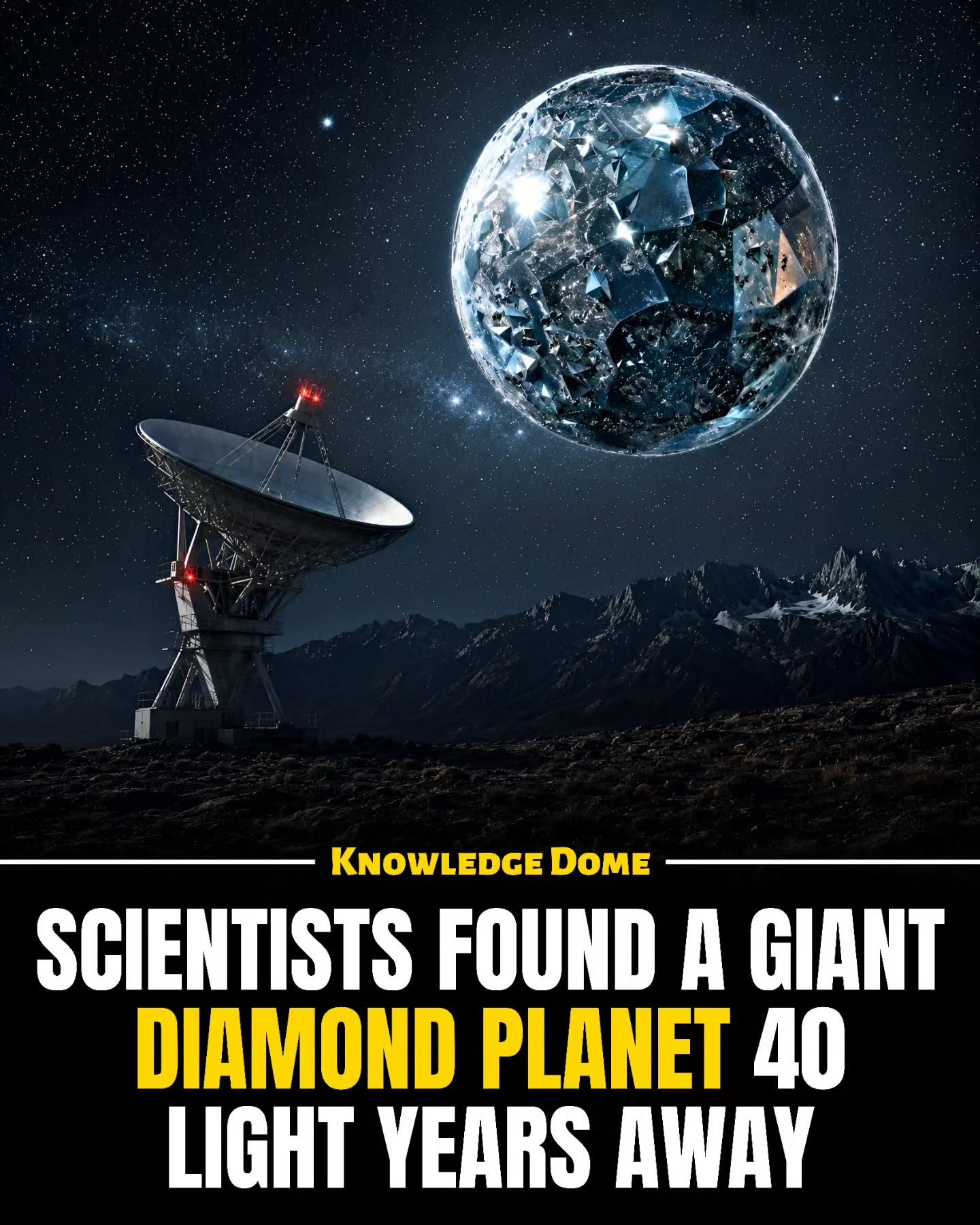
Giant Diamond Planet
The discovery of a planet rich in diamonds has captivated astronomers and space enthusiasts alike. Named 55 Cancri e, this exoplanet is located about 40 light-years away from Earth, nestled in the constellation Cancer. Its unique composition and extreme conditions make it a fascinating subject of study, pushing the boundaries of our understanding of planetary systems.
Why This Matters
Scalt is located in the constellation Cancer. This discovery is significant for several reasons. Firstly, it challenges our conventional understanding of planetary composition, as 55 Cancri e is believed to be rich in carbon, leading to the possibility of large amounts of graphite and even crystalline diamond within its structure. Secondly, the planet's extreme conditions, including its fast orbit and high surface temperatures, provide a unique test bed for understanding the behavior of materials under such intense conditions. Lastly, the discovery of such a planet so close to Earth in astronomical terms (40 light-years away) highlights the potential for further discoveries and the possibility of finding diverse planetary systems within our galactic neighborhood.
Main Discussion
Planetary Composition
One of the most intriguing aspects of 55 Cancri e is its potential composition. Unlike Earth, which is primarily composed of silicate rocks and metals, 55 Cancri e orbits a star that is rich in carbon. This carbon-rich environment has led scientists to speculate that the planet could be composed of significant amounts of graphite and even crystalline diamond. The extreme pressure and heat within the planet could transform carbon into these dense, crystalline forms. While the surface of the planet may not be entirely made of diamonds, the presence of such materials in significant quantities would make it a unique celestial body.
Extreme Conditions
The environmental conditions on 55 Cancri e are far from hospitable for life as we know it. The planet is approximately twice the size of Earth and completes an orbit around its star in a mere 18 hours. This incredibly fast orbit results in extreme surface temperatures, reaching around 3,900°F (2,150°C). Such high temperatures are due to the planet's close proximity to its star, which causes intense radiation and heat. This environment is far too harsh for any known form of life to survive, making 55 Cancri e a hellish world despite its potential diamond-rich interior.
Orbital Characteristics
The orbital characteristics of 55 Cancri e are equally remarkable. Its 18-hour orbital period is extraordinarily short compared to Earth's one-year orbit. This rapid orbit is a result of the planet's close proximity to its star, which also contributes to its extreme temperatures. The planet's orbit is so tight that it is tidally locked, meaning one side of the planet always faces the star while the other side remains in perpetual darkness. This extreme tidal locking has significant implications for the planet's climate and atmospheric conditions, further emphasizing its unique and alien nature.
Discovery and Observation
The discovery of 55 Cancri e was made possible through advancements in astronomical observation techniques. Observations using a radio telescope, which are coupled with detailed analyses of the planet's transit data, have provided valuable insights into its composition and orbital characteristics. These observations reveal the planet's mass, density, and the elements present in its atmosphere. Such detailed data allows scientists to model the planet's internal structure and predict the presence of graphite and diamond.
Future Research
The discovery of 55 Cancri e opens up new avenues for research in planetary science. Future studies will focus on refining our understanding of the planet's composition and internal structure. Advanced telescopes and observational techniques will enable scientists to gather more precise data on the planet's atmosphere and surface conditions. Additionally, the study of 55 Cancri e will contribute to our broader understanding of exoplanets and the diverse planetary systems that exist within our galaxy.
Practical Tips
Observing 55 Cancri e
For amateur astronomers, observing 55 Cancri e can be a challenging but rewarding endeavor. While the planet is not visible to the naked eye, it can be observed with the help of powerful telescopes. The constellation Cancer, where 55 Cancri e is located, is relatively easy to find in the night sky. Using a star chart or astronomical software can help you pinpoint the exact location of the star system.
Advanced Techniques
Advanced observers with access to high-resolution telescopes and spectroscopy equipment can delve deeper into the study of 55 Cancri e. Spectroscopy, in particular, can provide valuable data on the planet's atmospheric composition and surface temperature. By analyzing the light that passes through the planet's atmosphere during a transit, scientists can identify the chemical elements present and gain insights into the planet's internal structure.
Educational Outreach
The discovery of 55 Cancri e offers an excellent opportunity for educational outreach. Astronomy clubs, schools, and museums can use this discovery to engage the public in discussions about exoplanets and the potential for diverse planetary systems. Interactive exhibits, lectures, and workshops can help demystify the complexities of planetary science and foster a deeper appreciation for the wonders of the universe.
Important Takeaways
- Unique Composition: 55 Cancri e is believed to be rich in carbon, possibly containing significant amounts of graphite and crystalline diamond.
- Extreme Conditions: The planet's surface temperatures reach around 3,900°F (2,150°C), making it unsuitable for life as we know it.
- Fast Orbit: 55 Cancri e completes an orbit around its star in just 18 hours, highlighting its close proximity and tidal locking.
- Discovery Methods: The planet was discovered using advanced astronomical techniques, including radio telescopes and transit data analysis.
- Research Potential: The study of 55 Cancri e will contribute to our broader understanding of exoplanets and planetary systems.
Conclusion
55 Cancri e stands as a testament to the diversity and complexity of the universe. Its unique composition, extreme conditions, and rapid orbit make it a fascinating subject of study. As we continue to explore the cosmos, discoveries like 55 Cancri e remind us of the vast and mysterious nature of the universe, pushing the boundaries of our knowledge and inspiring further exploration.
Watch the Reel
Questions readers ask
What makes 55 Cancri e unique among exoplanets?
55 Cancri e is unique because it is believed to be rich in carbon, which could result in large deposits of graphite and diamond. This composition challenges conventional ideas about what planets are made of and offers insights into how materials behave under extreme conditions.
How far away is 55 Cancri e from Earth?
55 Cancri e is located approximately 40 light-years away from Earth. While this distance is vast, it is relatively close in astronomical terms, making the planet a promising candidate for further exploration and study.
Why is the discovery of 55 Cancri e significant for astronomers?
The discovery is significant because it provides a new perspective on planetary composition. It also offers an opportunity to study the behavior of materials under extreme conditions, something not possible through the study of planets within our Solar System.
What are the extreme conditions on 55 Cancri e like?
55 Cancri e is known for its extreme conditions, including high temperatures and intense pressure. These conditions are believed to be conducive to the formation of diamonds and other crystalline structures from carbon.
How does the study of 55 Cancri e benefit our understanding of exoplanets?
By studying 55 Cancri e, astronomers can gain insights into the diversity of planetary compositions and the processes that lead to the formation of unique materials like diamonds. This knowledge can then be applied to the study of other exoplanets.
Recent articles
Fresh deep dives from the latest Reels we unpacked.




Comments
Be the first to comment.