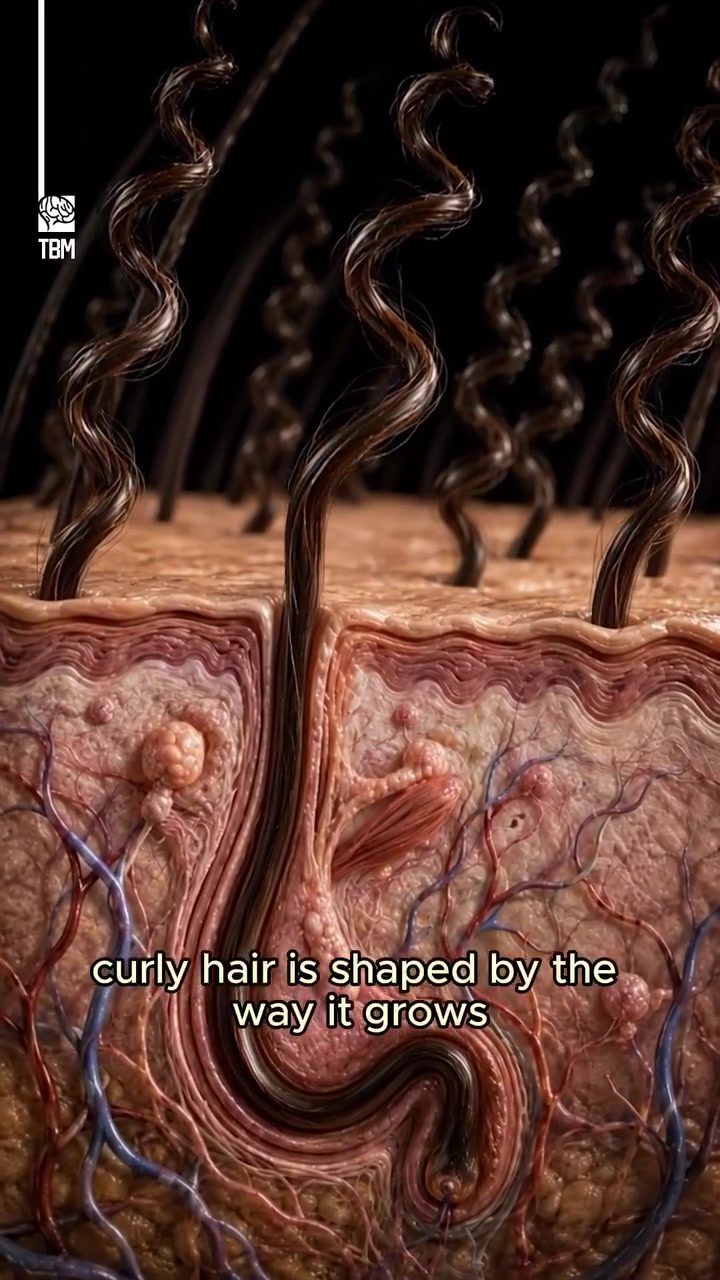
Curly hair is shaped by the way it grows, long before it ever becomes visible on the surface of the scalp. It is quite fascinating how the shape of a follicle, a tiny structure deep inside the skin, determines the type of hair that grows. This follicle dictates whether the hair grows straight, wavy, or curly.
To understand the science behind curly hair, let’s dive deeper into the role of hair follicles and the impact of keratin proteins on curl formation.
Context / Why this matters
Understanding the science behind curly hair can help in managing and caring for it effectively. Knowing the unique architecture of curly hair follicles and the distribution of keratin proteins can guide better hair care practices, product choices, and styling techniques tailored to curly and textured hair.
Main discussion
The Role of Follicle Shape in Hair Growth
The shape of the hair follicle determines the growth pattern of each hair strand. Follicles can be round, oval, or curved, and this shape influences the hair's direction and texture as it grows. A perfectly round follicle produces straight hair, while oval or curved follicles result in curly, wavy, or coiled hair.
Genetics largely determines the shape of the follicle, which is why curly hair often runs in families. The unique follicle shape is essentially a record of the type of hair you will have. This innate architecture is critical because it predisposes your hair to grow in a specific pattern, whether straight, wavy, or curly.
The Distribution of Keratin Proteins
Apart from the follicle shape, the distribution of keratin proteins inside the hair also plays a significant role. Keratin proteins are structural proteins that make up the hair shaft, and their arrangement can influence how the hair grows and twists. The way these proteins are distributed affects the tightness of the curl. For instance, if the keratin proteins are unevenly distributed, the hair strand may twist more tightly, resulting in tighter curls or coils.
Curly Hair Characteristics
Curly hair characteristics can vary widely, and understanding these variations can help in choosing the right hair care routine. Some key characteristics of curly hair include:
- Texture: Curly hair can range from fine to coarse, and the texture can influence how the hair behaves. Fine curls, for example, may be more prone to frizz, while coarse curls tend to be more resilient and can hold styles better.
- Porosity: This refers to how well the hair absorbs and retains moisture. High porosity hair, common in curly and textured hair, can absorb moisture quickly but also loses it quickly, making it more prone to dryness and frizz. Choosing the right products for curly hair can help manage this.
- Density: The density of the hair refers to how closely the hair strands are packed together. High-density hair may have more volume and body, while low-density hair may appear thinner. Understanding the density can help in choosing the right styling techniques and products.
Practical tips
Caring for curly hair requires understanding its unique needs and adopting a routine that supports its natural tendencies. Here are some practical tips for managing curly and textured hair:
Use the Right Products
Curly hair tends to be drier and more prone to frizz, so it’s essential to use products that provide moisture and hold without weighing the hair down. Look for products specifically formulated for curly hair, which often contain ingredients like shea butter, coconut oil, and glycerin. These can help to hydrate and define the curls.
Gentle Cleansing
Washing curly hair can be challenging because it tends to be drier. Avoid harsh sulfates and opt for gentle, sulfate-free shampoos or co-washing (washing with conditioner only) to retain natural oils and moisture. Deep conditioning treatments once a week can also help keep the hair hydrated and healthy.
Proper Drying Techniques
Avoid using a towel to dry curly hair, as it can cause frizz and disrupt the curl pattern. Instead, use a microfiber towel or an old t-shirt to gently squeeze out excess water. Scrunching the curls with a product like a leave-in conditioner or gel can help to define them as they dry. Air drying is the best option, but if you need to use a blow dryer, use a diffuser on the lowest heat setting.
Regular Trimming
Regular trims can help to keep curly hair looking its best by removing split ends and maintaining shape. Aim for a trim every 8 to 12 weeks, depending on your hair's growth rate and the condition of your ends.
Styling Techniques
Curly hair responds best to styling techniques that work with its natural texture. Techniques like finger-detangling, plopping, and diffusing can help to define curls without causing frizz. Avoid brushing curly hair when it’s dry, as this can disrupt the curl pattern and cause frizz.
Important takeaways
- Curly hair formation and growth are determined by the shape of the follicle and the distribution of keratin proteins.
- Genetics play a significant role in determining follicle shape, which in turn influences hair texture.
- Understanding the unique characteristics of curly hair—such as texture, porosity, and density—can help in choosing the right hair care products and techniques.
- Regular maintenance and gentle hair care practices can help to keep curly hair looking its best.
Conclusion
Understanding the science behind curly hair can provide valuable insights into how to care for and manage it effectively. By recognizing the impact of follicle shape and the distribution of keratin proteins, you can tailor your hair care routine to suit the unique needs of your curly hair. Embracing the natural tendencies of curly hair and adopting a routine that supports its health and vitality can lead to beautiful, defined curls.
Watch the Reel
Questions readers ask
How does the shape of a hair follicle influence the curl pattern of hair?
The shape of a hair follicle directly influences the curl pattern of hair. Oval or curved follicles produce curly hair, while round follicles typically result in straight hair. The more oval or asymmetrical the follicle, the curlier the hair tends to be.
What role do keratin proteins play in the formation of curly hair?
Keratin proteins are crucial in determining the texture of hair. In curly hair, the distribution and bonding of these proteins create a unique structure that promotes curls. The proteins form strong bonds within the hair strands, which contribute to the strength and elasticity needed to maintain curl patterns.
Why do curly hair strands have a different growth pattern compared to straight hair?
Curly hair strands have a different growth pattern due to the shape of the hair follicles. Curly hair follicles are often oval or curved, which causes the hair to grow in a spiral or zigzag pattern. This unique growth pattern is what gives curly hair its distinctive shape and texture.
Can the shape of hair follicles change over time, affecting curl patterns?
The shape of hair follicles is generally determined by genetics and does not change significantly over time. However, factors such as aging, hormonal changes, and certain medical conditions can sometimes affect hair texture and curl patterns.
How does understanding hair follicle structure help in managing curly hair?
Understanding the structure of curly hair follicles helps in choosing the right hair care products and techniques. For example, knowing that curly hair has a different oil distribution, due to the shape of the follicle, can guide the selection of moisturizing products that cater to its specific needs.
What are the differences between straight vs. curly hair follicles?
Straight hair follicles are typically round, which allows the hair to grow directly outwards from the scalp. In contrast, curly hair follicles are oval or asymmetrically shaped, causing the hair to grow in a curved or spiral pattern. This difference in follicle shape is what determines whether hair grows straight or curly.
How does the growth of curly hair differ from straight hair at the follicle level?
Curly hair grows in a spiral or zigzag pattern due to the oval or curved shape of the hair follicles. The hair follicle directs how the hair strand emerges, and for curly hair, this means it exits the follicle at an angle, resulting in a curl. In contrast, straight hair grows directly out of a round follicle.
Recent articles
Fresh deep dives from the latest Reels we unpacked.




Comments
Be the first to comment.