Saudi Arabia Pivots to China: A Shift in Global Trade Dynamics
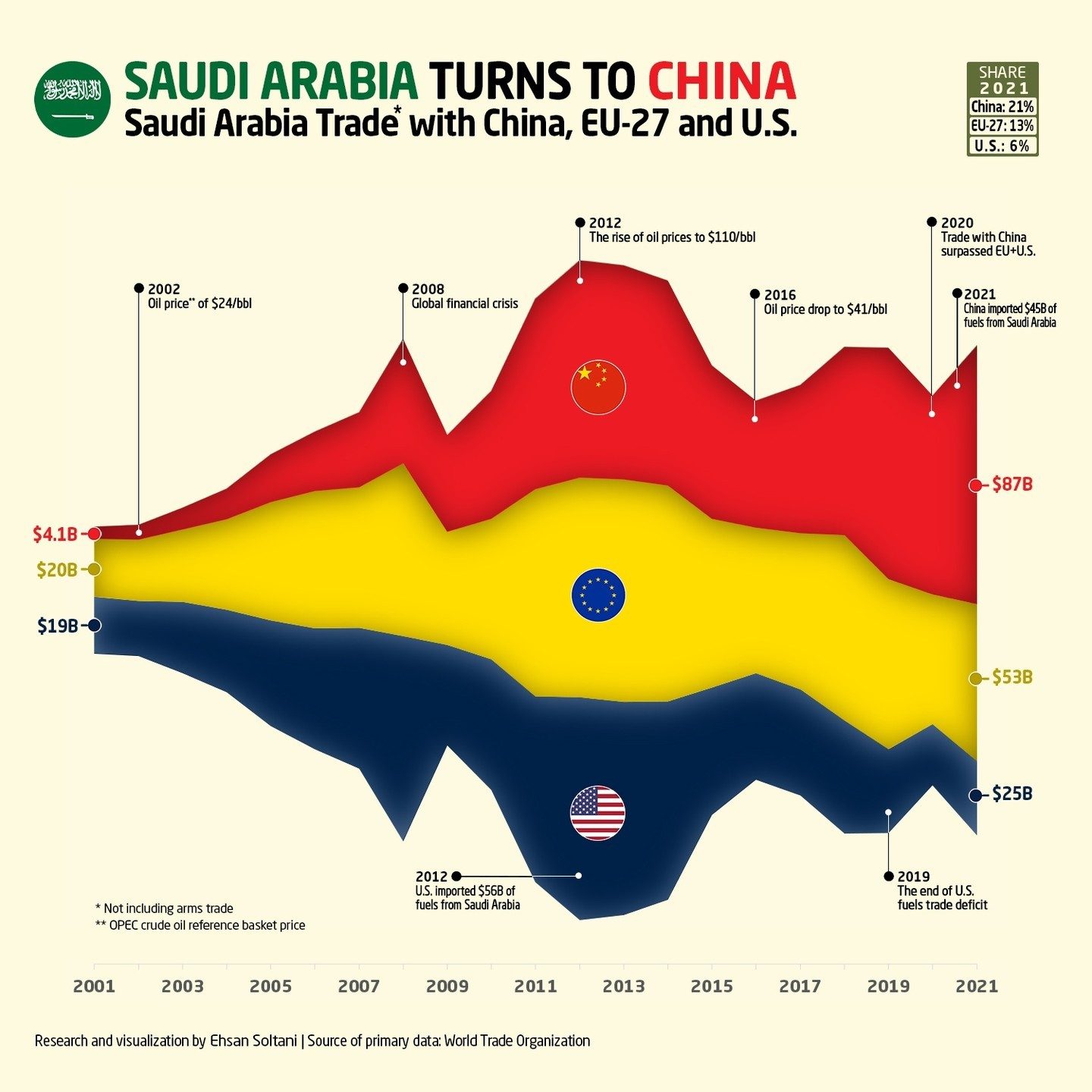
China has emerged as Saudi Arabia's dominant trading partner, surpassing the combined trade of the U.S. and the EU. This shift underscores a broader transformation in global trade relationships, significantly influenced by fluctuations in oil prices and geopolitical events.
Why This Matters
Understanding the dynamics of Saudi Arabia's trade with China, the EU, and the U.S. provides valuable insights into the broader geopolitical landscape and the evolving nature of global trade. As the world's largest oil exporter, Saudi Arabia's trading patterns have far-reaching implications for energy markets, economic stability, and international relations. By examining these trends, businesses, investors, and policymakers can better navigate the complexities of the global economy.
The Evolution of Trade Relationships
Historical Context (2001-2009)
The early 2000s marked a period of significant change in global energy markets. In 2002, the oil price stood at around $24 per barrel (bbl), setting the stage for a decade of volatility. The global financial crisis of 2009 further disrupted trade dynamics, leading to shifts in import and export patterns. During this period, the U.S. and the EU were among Saudi Arabia's primary trading partners, driven by their substantial fuel demands.
The Rise of China (2010-Present)
Over the past decade, China has steadily increased its imports from and exports to Saudi Arabia. By 2021, China accounted for 21% of Saudi Arabia's trade, compared to 13% for the EU-27 and 6% for the U.S. This shift is largely attributable to China's growing energy needs and strategic investments in Saudi Arabia. In 2020, China's trade with Saudi Arabia surpassed the combined trade volumes of the EU and the U.S., solidifying its position as a dominant trading partner.
Key Events and Milestones
- 2009: The global financial crisis led to a temporary dip in trade volumes, but it also set the stage for a more diversified trade landscape.
- 2012: Oil prices surged to $110 per barrel, reflecting increased demand and supply constraints.
- 2016: The oil price drop to $41 per barrel disrupted trade patterns, leading to a more competitive global energy market.
- 2020: China's trade with Saudi Arabia surpassed that of the EU and the U.S., marking a significant shift in global trade dynamics.
Economic and Geopolitical Implications
China's Energy Security
China's increasing trade with Saudi Arabia is driven by its need to secure energy supplies. China is the world's largest importer of oil, and Saudi Arabia is a key supplier. By strengthening trade ties, China ensures a stable supply of energy, which is crucial for its economic growth and development.
Saudi Arabia's Economic Diversification
For Saudi Arabia, diversifying its trade partners is a strategic move towards reducing economic dependence on the U.S. and the EU. This diversification helps insulate Saudi Arabia from geopolitical tensions and market volatility, enhancing its economic resilience.
Impact on the U.S. and the EU
The shifting trade dynamics have significant implications for the U.S. and the EU. The U.S. has seen a gradual shift from a fuel trade deficit to a surplus. This change reflects not only Saudi Arabia's evolving trade patterns but also broader shifts in global energy markets, such as increased U.S. oil production and the rise of renewable energy sources. The EU, meanwhile, faces challenges in maintaining its trade volumes with Saudi Arabia amid increasing competition from China.
Practical Tips for Businesses
Diversifying Supply Chains
Businesses reliant on energy and commodities should consider diversifying their supply chains to mitigate risks associated with geopolitical tensions and market volatility. Engaging with multiple trading partners can provide a buffer against disruptions and ensure a stable supply of critical resources.
Monitoring Global Trends
Staying informed about global trade trends and geopolitical developments is essential for strategic decision-making. Businesses should regularly review trade data and economic indicators to anticipate changes in global markets and adapt their strategies accordingly.
Exploring Emerging Markets
As trade dynamics shift, businesses should explore emerging markets and new trading opportunities. Engaging with countries like China, which are becoming key players in global trade, can open new avenues for growth and expansion.
Important Takeaways
- China's trade with Saudi Arabia has surged, making it the dominant trading partner for the oil-rich country.
- Historical events, such as the global financial crisis and oil price fluctuations, have significantly influenced trade dynamics.
- The shifting trade landscape has important implications for energy security, economic diversification, and global market stability.
- Businesses should diversify their supply chains, monitor global trends, and explore emerging markets to navigate the changing trade environment effectively.
Conclusion
The rise of China as Saudi Arabia's dominant trading partner reflects a broader transformation in global trade dynamics. As the world's largest oil exporter, Saudi Arabia's trade patterns have far-reaching implications for energy markets, economic stability, and international relations. By understanding these shifts, businesses, investors, and policymakers can better navigate the complexities of the global economy and position themselves for future success.
Watch the Reel
Questions readers ask
Why has China become Saudi Arabia's top trading partner?
China's rise to the top of Saudi Arabia's trading partners is primarily due to its growing energy demands and strategic investments. China's economy has been expanding, requiring more oil to fuel its industries and infrastructure, making Saudi Arabia a key supplier. Additionally, both countries have fostered a strong trade partnership through strategic investments and initiatives.
What are the economic implications of Saudi Arabia's trade shift towards China?
The shift towards China has significant economic implications for both nations. China becomes a bigger buyer of Saudi oil exports, giving China a strong foothold in Saudi Arabia's economic landscape. Meanwhile, Saudi Arabia benefits from a more reliable market for its energy resources, which ensures economic stability and growth.
How might Saudi Arabia's trade dynamics affect global energy markets?
Saudi Arabia's trade dynamics greatly affect global energy markets. As China becomes a primary importer, the price and distribution of oil can fluctuate, impacting other energy markets. Additionally, China's investments in Saudi Arabia's energy sector can influence the development of new oil and gas projects, affecting global supply chains, prices, and market stability.
What does this pivot mean for Saudi Arabia's relationships with the U.S. and EU?
Saudi Arabia's pivot towards China has led to a shift in its trade relationships with the U.S. and EU. While trade with these traditional partners remains significant, the emphasis has declined, leading to a potential reshaping of global alliances and geopolitical influence. This shift may prompt the U.S. and EU to reassess their own strategies in the Middle East and energy sectors.
What strategic investments have China made in Saudi Arabia?
China has invested in several key sectors, including oil and gas, infrastructure, and technology. For example, China's state-owned enterprises have invested in oilfields and refining projects, while Chinese companies have developed significant infrastructure projects in Saudi Arabia, enhancing their trade relationship.
Recent articles
Fresh deep dives from the latest Reels we unpacked.




Comments
Be the first to comment.