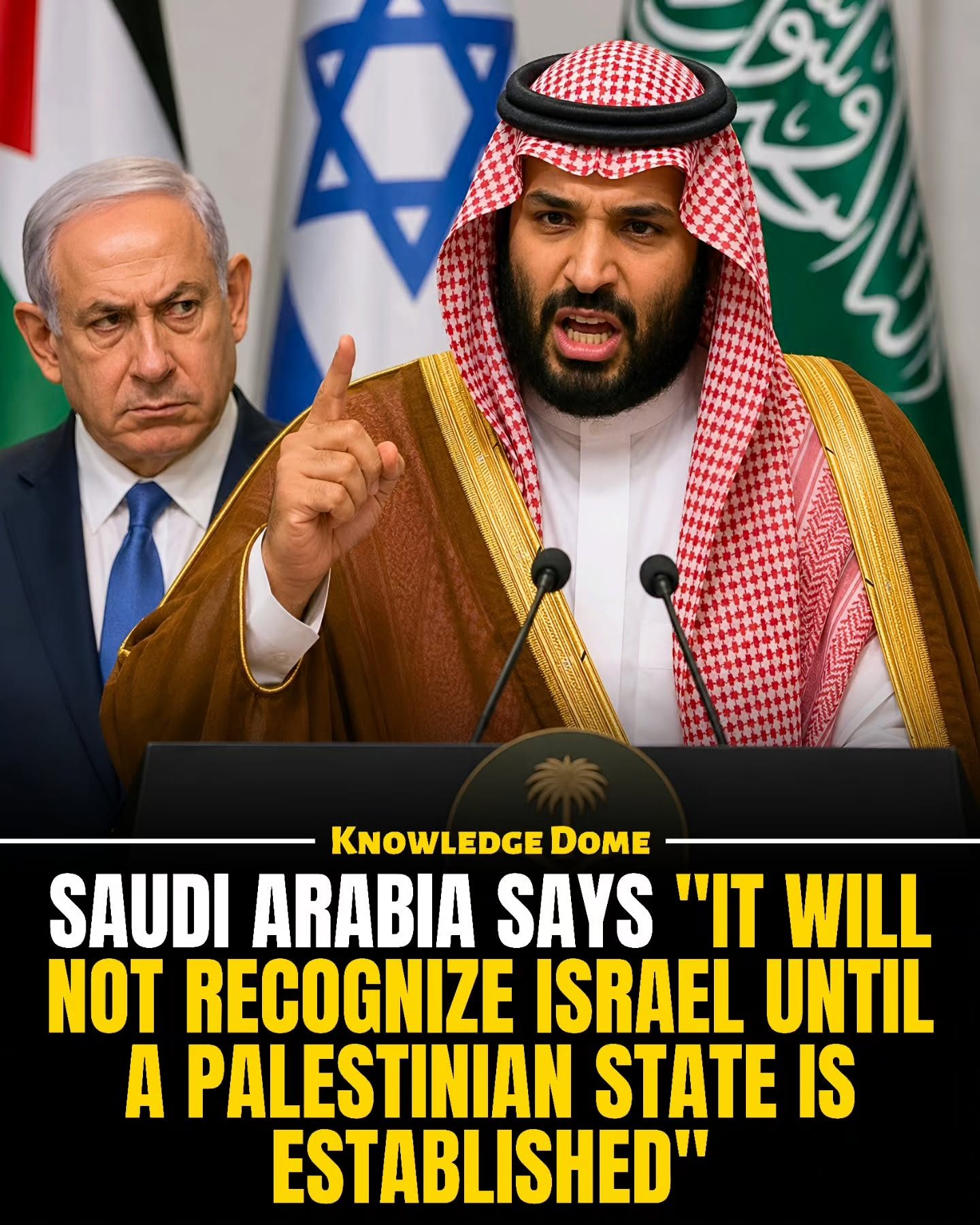
Saudi Arabia’s Stance on Recognizing Israel
Saudi Arabia has firmly stated that it will not establish diplomatic relations with Israel until an independent Palestinian state is created. This position has been consistently communicated by Saudi leaders, including Crown Prince Mohammed bin Salman. The kingdom emphasizes that any agreement must pave a genuine and enduring path toward a two-state solution. This means Saudi Arabia envisions a Palestinian state based on the borders that existed before 1967, with East Jerusalem as its capital.
Context: The Significance of Saudi Arabia’s Position
Saudi Arabia's stance is crucial for several reasons. First, it underscores the kingdom's commitment to the Palestinian cause, which has long been a cornerstone of its foreign policy. Second, it highlights the complex geopolitical landscape of the Middle East, where various nations have different priorities and alliances. Third, it shows how deeply intertwined the issues of Palestinian statehood and regional stability are.
The two-state solution has been a central theme in peace negotiations in the Middle East. This solution envisions an independent Palestinian state coexisting alongside Israel. The borders proposed by Saudi Arabia—which reflect the pre-1967 lines—are significant because they predate the Six-Day War, during which Israel captured significant territories, including the West Bank, Gaza Strip, and East Jerusalem.
Main Discussion
The Two-State Solution
The two-state solution is a framework for resolving the Israeli-Palestinian conflict. It aims to create two independent states: one for the Palestinians and the other for the Israelis. This solution has been a focal point for international diplomacy, with various peace plans and negotiations centered around it. Saudi Arabia’s endorsement of this solution, with specific conditions, adds a layer of complexity and significance to the ongoing discussions.
Borders and Jerusalem
The borders proposed by Saudi Arabia are based on the pre-1967 lines, which were the boundaries before the Six-Day War. This war significantly altered the geographical and political landscape of the region, with Israel gaining control over territories that are now part of the West Bank and Gaza Strip. Jerusalem, particularly East Jerusalem, is a contentious issue. Saudi Arabia's insistence that East Jerusalem should be the capital of the Palestinian state reflects the deep-seated historical and religious claims surrounding the city.
Regional Stability and Palestinian Justice
Saudi Arabia believes that achieving lasting peace in the Middle East hinges on resolving the Palestinian issue. This perspective is rooted in the belief that regional stability is contingent on justice for the Palestinians. By insisting on a clear path toward Palestinian statehood, Saudi Arabia is advocating for a stable and just resolution to the conflict, which it views as a prerequisite for broader regional stability.
Practical Tips
For those looking to understand the complexities of the Middle East’s geopolitical landscape, the following tips can be helpful:
-
Research Historical Context: Understanding the historical context, including key events like the Six-Day War and the Israeli occupation of Palestinian territories, is crucial. This background knowledge provides a foundation for grasping the current dynamics.
-
Follow Key Leaders: Leaders like Crown Prince Mohammed bin Salman and Israeli Foreign Minister Yair Lapid play pivotal roles in shaping their countries’ policies. Keeping an eye on their statements and actions can provide insights into potential shifts in regional politics.
-
Monitor International Negotiations: The two-state solution has been a focal point of various international negotiations and peace plans. Staying updated on these discussions can offer a deeper understanding of the evolving geopolitical landscape.
-
Engage with Multiple Sides: The Middle East conflict is multifaceted, with diverse viewpoints and interests. Engaging with perspectives from different sides—whether Israeli, Palestinian, or Arab—can provide a more comprehensive understanding of the issues at hand.
-
Stay Informed on Regional Developments: The geopolitical situation in the Middle East is dynamic. Regularly following news and updates, including any changes in Saudi Arabia’s position, can help maintain a current understanding of the situation.
Important Takeaways
Saudi Arabia’s position on recognizing Israel is a significant geopolitical statement. It underscores the kingdom’s strong commitment to the Palestinian cause and the importance of the two-state solution for regional stability. By insisting on a Palestinian state based on pre-1967 borders and with East Jerusalem as its capital, Saudi Arabia is advocating for a just and lasting resolution to the conflict. Regional stability, in its view, is inseparable from justice for the Palestinians.
Conclusion
Saudi Arabia’s stance on recognizing Israel is more than just a diplomatic posture; it is a reflection of deep-seated beliefs and strategic interests. The kingdom’s commitment to a two-state solution, with specific conditions, highlights the complexities of the Middle East’s geopolitical landscape. Understanding this position is essential for anyone seeking to navigate the intricacies of the region and its ongoing conflicts.
Watch the Reel
Questions readers ask
What are the key conditions Saudi Arabia sets for recognizing Israel?
Saudi Arabia requires the creation of an independent Palestinian state, with borders based on the pre-1967 lines, and East Jerusalem as the Palestinian capital. Additionally, any agreement must genuinely advance a two-state solution, which Saudi Arabia sees as essential for regional stability.
How has Saudi Arabia's Crown Prince Mohammed bin Salman addressed the issue of Israel recognition?
Crown Prince Mohammed bin Salman has consistently communicated that Saudi Arabia will not establish diplomatic relations with Israel until an independent Palestinian state is created. This stance emphasizes the kingdom's commitment to the Palestinian cause and a two-state solution.
Why is Saudi Arabia's position on the Israel-Palestine conflict significant?
Saudi Arabia's position is significant due to its influence in the Middle East. The kingdom's stance reflects its commitment to the Palestinian cause and its strategy for maintaining regional stability. It also underscores the complexity of the geopolitical landscape in the Middle East.
What does Saudi Arabia mean by a 'two-state solution'?
By a 'two-state solution,' Saudi Arabia envisions an independent Palestinian state co-existing alongside Israel. This solution is based on the pre-1967 borders, with East Jerusalem serving as the capital of the Palestinian state, aiming to ensure a lasting peace in the region.
How does Saudi Arabia's recognition of Israel impact the peace process?
Saudi Arabia's position on Israel recognition is pivotal in the peace process. Its commitment to a two-state solution and the creation of an independent Palestinian state influences other nations in the Middle East, potentially fostering broader support for a peaceful resolution.
What role do pre-1967 borders play in Saudi Arabia's stance on Israel recognition?
The pre-1967 borders are crucial in Saudi Arabia's stance as they mark the territorial boundaries that the kingdom advocates for a Palestinian state. By insisting on these borders, Saudi Arabia aims to ensure a viable and independent Palestinian state, which is a prerequisite for any diplomatic relations with Israel.
How does East Jerusalem factor into Saudi Arabia's requirements for Israel recognition?
For Saudi Arabia, East Jerusalem is a vital component of a future Palestinian state, serving as its capital. This stance is non-negotiable and underscores the kingdom's commitment to the Palestinian cause and the integrity of a future Palestinian state.
Recent articles
Fresh deep dives from the latest Reels we unpacked.




Comments
Be the first to comment.