Laundry Automation
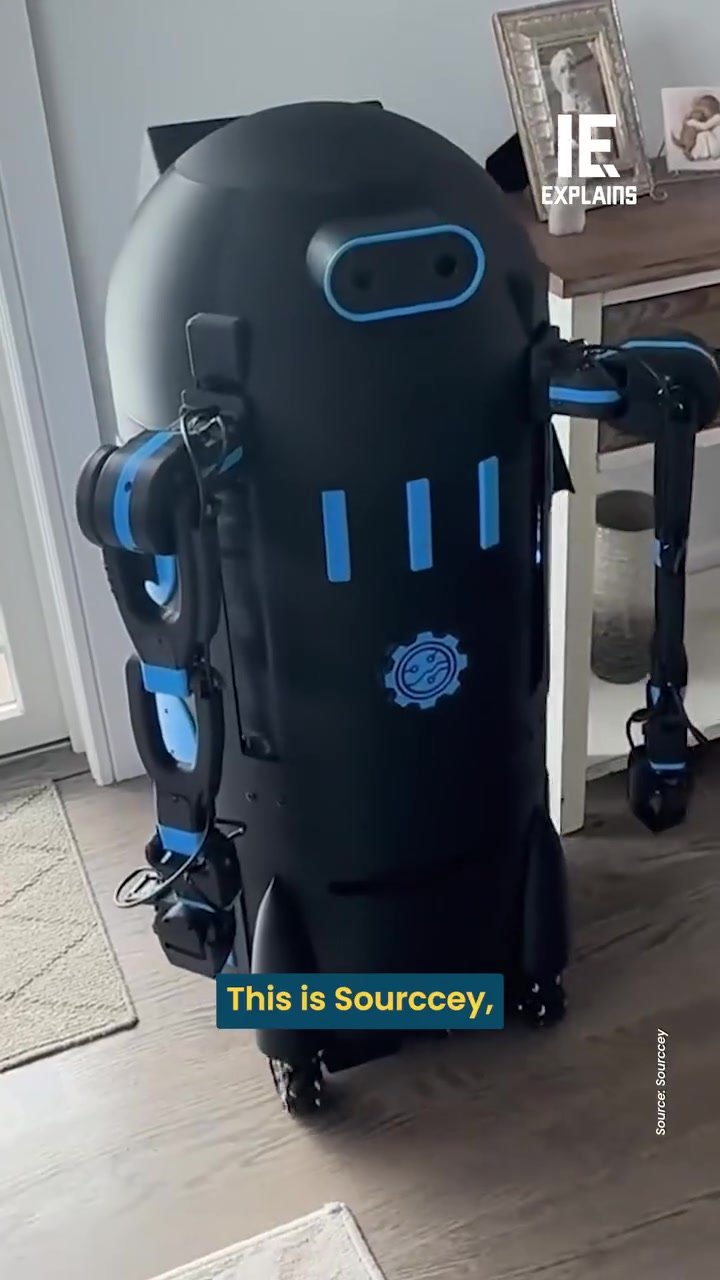
Meet Saucy, the open-source robot from Vulcan Robotics designed to revolutionize home chore with laundry folding automation. Though the video doesn't spell out exactly why, the enthusiasm of the demo suggests that the Sourcy build shines in its unique gripper and mecanum wheels proportions, weighing only under 16kg with a height of 1,030mm, for an affordable bulk production process. At its core, Saucy appears focused on a single task—folding laundry—allowing you to download blueprints and print components in PLA.
The Assembly and Mechanics of the Open-Source Laundry Robot
The open-source nature of Saucy, unfortunately, doesn't mean you can simply purchase the robot. Instead, Saucy is a robot kit that requires building from scratch, which lowers costs and offers a personal assembly to download the blueprints from GitHub, get the STL files, and print the necessary parts. The robot’s undercarriage includes four mecanum wheels, which allow it to move in any direction. The robot's arms, equipped with a gripper, have five degrees of freedom each, enabling precise and flexible movements. Saucy's control systems are equally sophisticated. The robot's sensors include a 360-degree LIDAR and a 12-volt LiFePO4 battery, rated for about 5,000 cycles. These components power the robot’s brain, enabling it to perceive its environment and respond accordingly. The exact nature of this system isn't detailed, but the inclusion of both onboard and offboard brains suggest some level of AI, which might control its behaviour and operations. But the meats of the device lies in its Plug and Play nature—allowing you to control it with a pair of matching control arms or an Oculus Quest. As a result, users can teleoperate Saucy and record their actions. This data can then be used to train a model, allowing the robot to learn and improve over time. Saucy comes with four built-in folding programs for T-shirts, shorts, denim, and long shirts, each of which is refined to help navigate the chores at hand. Saucy represents a significant step forward in home automation, offering a unique blend of affordability, customizability, and functionality. If you are longing for a more automated household, Saucy may prove to be a promising innovation.
A growing trend and culture of home robotics
Saucy stands at the intersection of several key trends in home robotics. First, there's the rise of open-source hardware and software, which allows for greater customization and innovation. By making the blueprints and code freely available, Saucy enables users to modify and improve the robot to suit their specific needs. For instance, users can tweak the code to better handle different types of clothing or integrate new features. Second, there's a growing interest in home automation and smart devices. As more and more people seek to automate their homes, Saucy offers a practical solution for a common chore—folding laundry. The robot's ability to learn and improve over time also aligns with the trend towards more intelligent and adaptive home devices. You can share your experiences, as user comments suggest, although the feedback is not detailed enough to evaluate experiences. It may help spurring a deeper cultural shift in our relationship with household tasks—from viewing them as drudgery to embracing them as opportunities for innovation and learning. Third, there's the trend towards more sustainable and eco-friendly products, as seen in the analogous aesthetic of Sourcecey. By using 3D-printed PLA parts and a rechargeable battery, Saucy reduces waste and promotes sustainability.
The Choosing How to Automate Code for Machine
On its own, Saucy is impressive with its automation in folding clothes. There is around 5,000 cycles for each component in the robot, making it a durable machine. Moreover, its mecanum wheels and body mechanics are built to function in household settings, including the difficult task of folding in spaces that are not large with high levels of precision. The STLs and Blue Prints available on GitHub allow for customizing the build, and the use of a bamboo printer also allows you to follow your style.
Living With Laundry Automation
Building Saucy promises a hands-on experience, but you need some DIY experience to use a 3D printer and follow the blueprints. The robot's modular design allows for easy customization and upgrades, and its open-source nature means that a community of users can contribute to its development. One potential downside is the need for a 3D printer and some basic electronics knowledge to assemble and maintain the robot. However, for those willing to invest the time and effort, Saucy offers a unique and rewarding way to automate a common household chore. Furthermore, you may need to invest in a bamboo printer to print your Sourcy robot.
The Open-Source Build
The robot is built around 3D parts printed in PLA and a frame with mecanum wheels. In order to control the operation and movement of the robot parts, the code can be controlled via the Oculus Quest or a matching control arm. This builds a semi-automated process which is guided through teleoperation. However, it is important to note that the teleoperation requires some DIY knowledge and effort. However, once you get the robot up and running, it can provide a unique and rewarding way to automate a common household chore.
Laundry Automation with Saucy
Although the video did not reach a clear and concise point on how to build the robot, one can infer that the automation is achieved by following a series of instructions and blueprints available on GitHub. It would be helpful for users to have a guide to the process of automating laundry folding with Saucy, it may be important to have some experience with 3D printers and some DIY skill to be able to build, tweak and operate the machine with proficiency.
Watch the Reel
Questions readers ask
What exactly is Saucy, and how does it work?
Saucy is an open-source robot designed to automate the task of folding laundry. It uses a combination of mecanum wheels for omnidirectional movement and a gripper with five degrees of freedom for precise handling of clothes. The robot is controlled via a pair of matching control arms or an Oculus Quest, allowing users to teleoperate it and record actions to train and improve its performance over time.
Can I purchase Saucy ready-made, or do I have to build it myself?
Saucy is not available for purchase as a ready-made product. Instead, it comes as a kit that you need to build from scratch. This involves downloading blueprints from GitHub, obtaining the STL files, and printing the necessary parts, which helps lower the overall cost and offers a personalized assembly experience.
How does Saucy's open-source nature benefit users?
The open-source nature of Saucy allows users to customize and modify the robot to better suit their needs. By making the blueprints and code freely available, users can tweak the robot to handle different types of clothing or integrate new features, fostering a community of innovation and improvement.
What kind of control systems does Saucy use, and how does it learn?
Saucy is equipped with a 360-degree LIDAR for environmental perception and a 12-volt LiFePO4 battery. Its control systems include both onboard and offboard brains, suggesting some level of AI. Users can teleoperate Saucy and record their actions, which can then be used to train models, allowing the robot to learn and improve over time.
What are the built-in folding programs in Saucy, and can they be customized?
Saucy comes with four built-in folding programs designed for T-shirts, shorts, denim, and long shirts. These programs are refined to handle specific types of clothing effectively. Since Saucy is open-source, users can modify these programs to better suit their needs or add new folding routines.
How does Saucy compare to other home automation devices?
Saucy stands out by focusing on a single task—folding laundry—with a high degree of precision and customization. Unlike many home automation devices, Saucy's open-source nature allows for significant user modification and improvement, making it a unique and adaptable solution for a common household chore.
Related deep dives
Similar reads based on topic and creator.



Recent articles
Fresh deep dives from the latest Reels we unpacked.




Comments
Be the first to comment.