Satellite Growth: From Sputnik to a Crowded Orbit
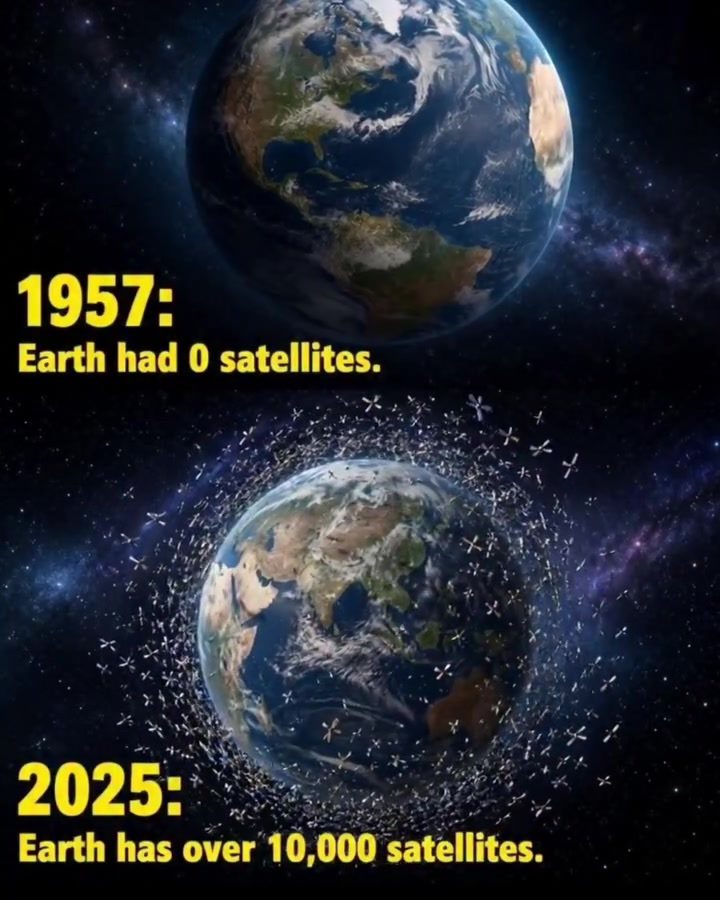
The number of satellites orbiting Earth has grown exponentially, from zero in 1957 to over 10,000 by 2025. This remarkable increase has revolutionized global communication, navigation, and weather forecasting, but it also raises questions about space sustainability.
Why This Matters
Satellites have become integral to modern life. They enable GPS navigation, provide global internet connectivity, and support weather forecasting systems. The launch of Sputnik in 1957 marked the beginning of the space age, and since then, satellites have evolved from simple beacons to complex systems supporting daily activities.
The Evolution of Satellites
Early Days and the Space Race
The first satellite, Sputnik 1, launched by the Soviet Union in 1957, marked a pivotal moment in space exploration. This event triggered the Space Race, a period of intense competition between the United States and the Soviet Union to achieve superiority in spaceflight capability. Within a few years, both countries had launched several satellites, each with increasing capabilities.
Satellites in the 21st Century
Today, satellites are more advanced than ever, with constellations of thousands of devices orbiting Earth. These constellations provide global internet coverage, enabling connectivity in remote and underserved areas. Companies have invested heavily in satellite technology, leading to a significant increase in the number of satellites in orbit.
Companies like SpaceX and OneWeb have launched hundreds of satellites to provide global internet access, especially in regions where traditional internet infrastructure is lacking. These low Earth orbit (LEO) satellites operate at lower altitudes, reducing signal latency and improving internet speeds. In contrast, geostationary satellites, which orbit at higher altitudes, are used for communication and broadcasting services.
The Impact on Daily Life
Satellites have transformed various sectors, including:
- Navigation: Global Positioning System (GPS) satellites enable precise location tracking and navigation services, used in cars, smartphones, and various other devices.
- Internet and Communication: Satellites facilitate global internet connectivity, including broadband services, and support telecommunication networks, enabling voice and data transmission over long distances.
- Weather Forecasting: Meteorological satellites monitor weather patterns and provide data for accurate weather forecasting, helping in disaster management and agricultural planning.
- Earth Observation: Satellites capture high-resolution images of Earth's surface, aiding in environmental monitoring, urban planning, and resource management.
- Scientific Research: Space-based observatories and telescopes, like the Hubble Space Telescope, have expanded our understanding of the universe, leading to groundbreaking discoveries in astrophysics and cosmology.
Practical Tips for Understanding Satellite Technology
Staying informed about satellite technology can be both fascinating and practical. Here are some tips to help you understand and benefit from this technology:
- Follow Space News: Keep up with the latest developments in space exploration and satellite technology through reliable news sources and space agencies like NASA.
- Explore Satellite Apps: Use apps that leverage satellite data for navigation, weather updates, and Earth observation. Many of these apps are user-friendly and provide real-time information.
- Learn Basic Concepts: Familiarize yourself with basic satellite terminology and concepts, such as orbits, launch vehicles, and satellite constellations. Online courses and educational resources can be very helpful.
- Engage with the Community: Join online forums and communities where space enthusiasts and professionals discuss the latest advancements and share knowledge.
Important Takeaways
- Rapid Growth: The number of satellites has increased dramatically in just a few decades, from zero in 1957 to over 10,000 by 2025.
- Everyday Dependence: Satellites support crucial services like GPS, internet, and weather forecasting, making them essential to daily life.
- Future Challenges: While satellites offer immense benefits, the increasing number of orbiting devices raises concerns about space debris and sustainable space management.
Conclusion
The journey from zero to over 10,000 satellites in just a few decades highlights the rapid advancement of space technology. Satellites have become indispensable, powering navigation, communication, and scientific research. However, as we continue to launch more satellites, it's crucial to address the challenges of space sustainability and ensure that this technology benefits future generations without compromising the space environment.
Watch the Reel
Questions readers ask
How many satellites are expected to be in orbit by 2025?
By 2025, the number of satellites in orbit is projected to exceed 10,000. This significant increase is due to advancements in technology and increased investment, which have made satellite launches more accessible and affordable.
What are some key milestones in the history of satellites?
The launch of Sputnik 1 in 1957 marked the beginning of the space age. Since then, milestones include the first weather forecasting satellites in 1960, the first GPS satellite in 1978, and the rapid growth of satellite internet services in the 21st century.
How do satellites support modern communication?
Satellites enable global communication by transmitting signals over long distances. They support activities such as international phone calls, global internet connectivity, and television broadcasting, making communication possible even in remote areas.
What is the impact of satellites on navigation technology?
Satellites have revolutionized navigation through systems like GPS. These systems provide real-time location and time information, enabling precise navigation for various applications, including automotive, aerospace, and maritime industries.
What challenges does the growth of satellites pose to space sustainability?
The rapid increase in satellites raises concerns about space debris and orbital congestion. Efficient space traffic management and the development of technologies for space debris mitigation are crucial to ensure the long-term sustainability of space activities.
What are some emerging technologies in satellite development?
Emerging technologies include quantum satellite technology, which promises enhanced communication security, and advancements in propulsion and materials science, which aim to improve satellite efficiency and lifespan. These innovations are set to further revolutionize global communication and navigation.
Recent articles
Fresh deep dives from the latest Reels we unpacked.




Comments
Be the first to comment.