Salivary Glands: The Unsung Heroes of Oral Health
Salivary glands play a crucial role in maintaining oral health and facilitating various bodily functions. These small but mighty glands are responsible for producing saliva, a fluid that does much more than just keep your mouth wet. Let's dive into the fascinating world of salivary glands, their types, functions, and the remarkable journey of saliva through the body.
Why This Matters
Understanding the functions and importance of salivary glands is essential for appreciating the complexity of the human body. Saliva is not just a lubricant; it is a critical component in digestion, oral health, and overall well-being. By exploring the roles of different types of salivary glands and the process of saliva production, we can gain a deeper appreciation for the intricate mechanisms that keep us healthy.
The Anatomy of Salivary Glands
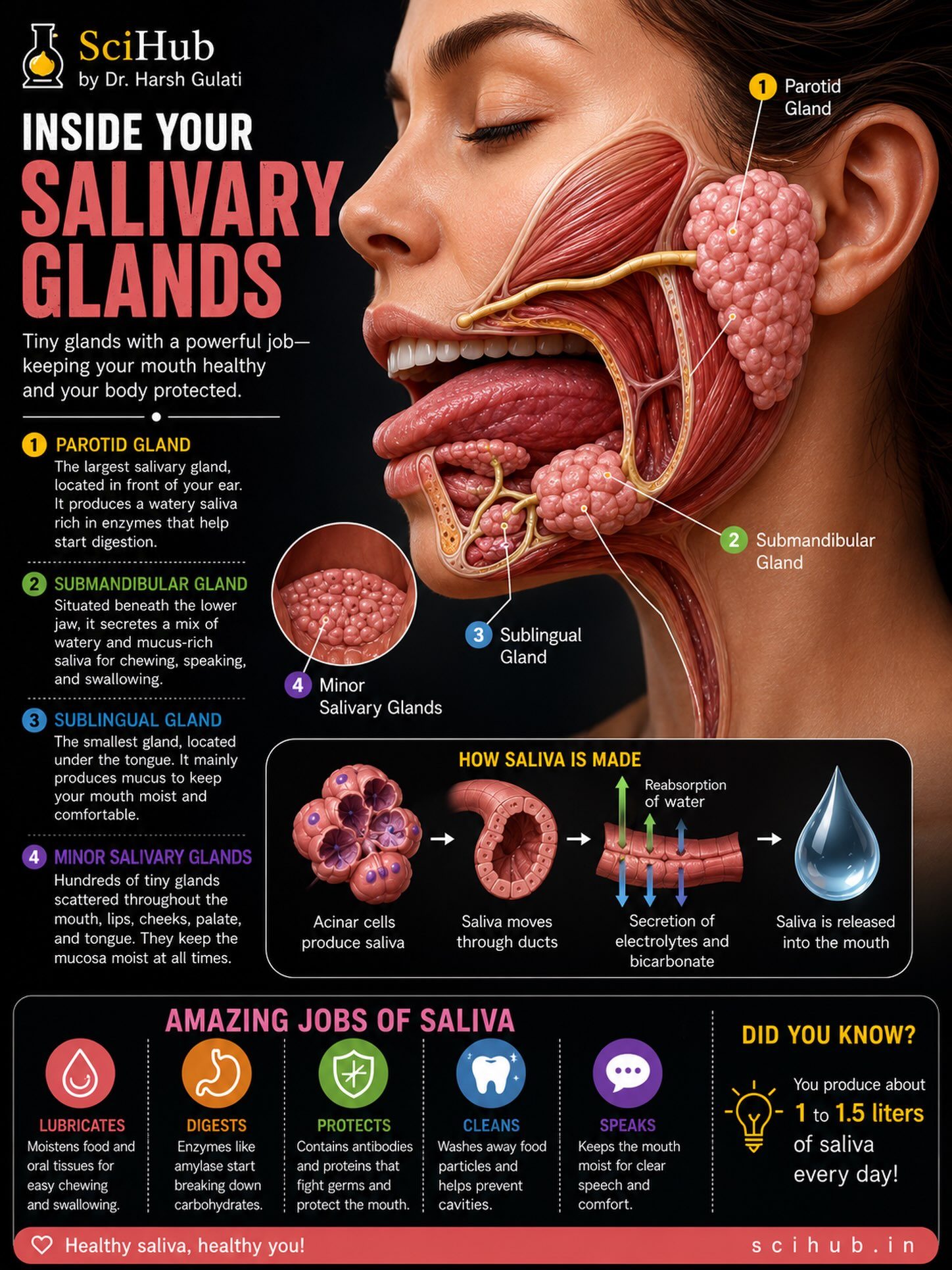
Salivary glands are classified into four main types: parotid, submandibular, sublingual, and minor salivary glands. Each type has a unique function and location within the mouth.
Parotid Glands
The parotid glands are the largest salivary glands, located in front of the ears. They produce a watery, enzyme-rich saliva that is crucial for the initial stages of digestion. This saliva contains enzymes like amylase, which begin breaking down carbohydrates as soon as food enters the mouth. The parotid glands are essential for lubricating food, making it easier to chew and swallow.
Submandibular Glands
Situated beneath the jaw, the submandibular glands produce a significant portion of the daily saliva. This saliva is thicker and more mucus-like, which helps in chewing and swallowing by providing lubrication. The submandibular glands contribute to the production of enzymes and other components that aid in digestion and oral health.
Sublingual Glands
Found under the tongue, the sublingual glands release a mucus-rich saliva that keeps the mouth moist. This type of saliva is thinner and helps in forming a protective layer over the oral tissues, preventing dryness and discomfort.
Minor Salivary Glands
Scattered throughout the oral cavity, minor salivary glands provide continuous moisture and protection. These glands are smaller and less well-known but play a vital role in maintaining oral health by secreting saliva that lubricates the mouth and helps in the protection against germs and bacteria.
The Journey of Saliva
Saliva production is a complex process that involves several stages, from the formation in specialized acinar cells to its release into the mouth.
Acinar Cells
Saliva production begins in specialized cells called acinar cells. These cells are found in the salivary glands and are responsible for secreting the initial components of saliva. The saliva produced by these cells is then modified as it travels through the ducts.
Ductal Modification
As saliva moves through the ducts, its composition is fine-tuned. Water and electrolytes are added or removed to meet the body's needs. This process ensures that the saliva has the right balance of components to perform its various functions effectively.
Secretion and Release
The modified saliva is then released into the mouth, where it performs a variety of essential tasks. This includes lubricating food for easy chewing and swallowing, starting the digestive process, and protecting the mouth by washing away food particles and fighting germs.
The Amazing Jobs of Saliva
Saliva is a versatile fluid with multiple functions that are crucial for oral health and overall well-being. Some of its key roles include:
- Lubrication: Saliva moistens food, making it easier to chew and swallow. It also keeps the mouth moist, which is essential for clear speech and comfort.
- Digestion: Enzymes in saliva, such as amylase, begin breaking down carbohydrates as soon as food enters the mouth, initiating the digestive process.
- Protection: Saliva washes away food particles and fights harmful bacteria, protecting the mouth and teeth from infection and decay.
- Cleaning: By continuously washing the mouth, saliva helps remove food particles and bacteria, maintaining oral hygiene and fresh breath.
- Taste: Saliva is essential for the taste sensation, as it helps dissolve food particles, allowing taste buds to detect flavors.
Practical Tips for Maintaining Oral Health
Maintaining healthy salivary glands and saliva production is vital for overall oral health. Here are some practical tips to help keep your salivary glands in top condition:
Hydration
Drinking plenty of water throughout the day helps maintain adequate saliva production. Dehydration can lead to a dry mouth, which can affect saliva flow and oral health.
Oral Hygiene
Regular brushing, flossing, and using mouthwash can help remove bacteria and food particles, reducing the risk of oral infections and promoting healthy saliva production.
Healthy Diet
A balanced diet rich in vitamins and minerals supports overall health, including the functioning of salivary glands. Avoiding sugary and acidic foods can also help maintain optimal oral health.
Regular Check-ups
Regular dental check-ups can help identify any issues with saliva production or oral health. Early detection and treatment of problems can prevent more significant issues down the line.
Important Takeaways
Salivary glands play a vital role in maintaining oral health and overall well-being. Understanding the functions and importance of these glands can help appreciate the complexity of the human body and the intricate mechanisms that keep us healthy.
By taking care of your salivary glands and maintaining good oral hygiene, you can ensure that your body remains in top condition, ready to face the challenges of daily life.
Conclusion
Salivary glands are the unsung heroes of oral health, working tirelessly to produce saliva, a remarkable fluid with multiple functions. From lubricating food to starting digestion and protecting the mouth, saliva is essential for maintaining overall health. By understanding the different types of salivary glands, their functions, and the process of saliva production, you can gain a deeper appreciation for the intricate mechanisms that keep us healthy and well.
Taking care of your salivary glands through proper hydration, oral hygiene, a healthy diet, and regular check-ups can help ensure that your body remains in top condition, ready to face the challenges of daily life and maintain optimal oral health.
Watch the Reel
Questions readers ask
What are the main types of salivary glands and their locations?
The main types of salivary glands are the parotid, submandibular, and sublingual glands. The parotid glands are located in front of each ear, the submandibular glands are found beneath the jaw, and the sublingual glands are positioned beneath the tongue. Each type produces a different composition of saliva with unique properties.
How does saliva aid in digestion?
Saliva contains enzymes, such as amylase, which begin the breakdown of carbohydrates in the mouth. This process helps to initiate digestion before food even reaches the stomach, making the digestive process more efficient.
What role does saliva play in oral health?
Saliva helps to maintain oral health by lubricating the mouth, aiding in chewing and swallowing, and washing away food particles. It also contains antibodies and proteins that protect against oral infections and help to remineralize teeth, preventing cavities.
Can salivary gland issues affect overall health?
Yes, issues with salivary glands, such as reduced saliva production (xerostomia) or infections, can lead to problems like dry mouth, difficulty swallowing, and an increased risk of dental decay. These issues can also affect taste perception and make it harder to digest food.
What can cause a decrease in saliva production?
A decrease in saliva production can be caused by various factors, including medications (such as antidepressants or antihistamines), dehydration, certain medical conditions (like Sjögren's syndrome or diabetes), and radiation therapy for head and neck cancers.
How can someone maintain healthy salivary glands?
Maintaining a balanced diet, staying hydrated, and practicing good oral hygiene can help keep salivary glands healthy. Regular dental check-ups can also help detect any issues early. If you experience persistent dry mouth or other symptoms, consult a healthcare provider for proper evaluation and treatment.
What are the symptoms of salivary gland problems?
Symptoms of salivary gland problems can include a dry or sticky mouth, difficulty swallowing, a change in taste, or a noticeable lump or swelling in the mouth, jaw, or neck areas. If you experience any of these symptoms, it's important to consult a healthcare professional for a thorough examination and appropriate care.
Related deep dives
Similar reads based on topic and creator.


Recent articles
Fresh deep dives from the latest Reels we unpacked.




Comments
Be the first to comment.