Understanding the Salary Needed to Buy a Home in 50 U.S. Cities by 2025
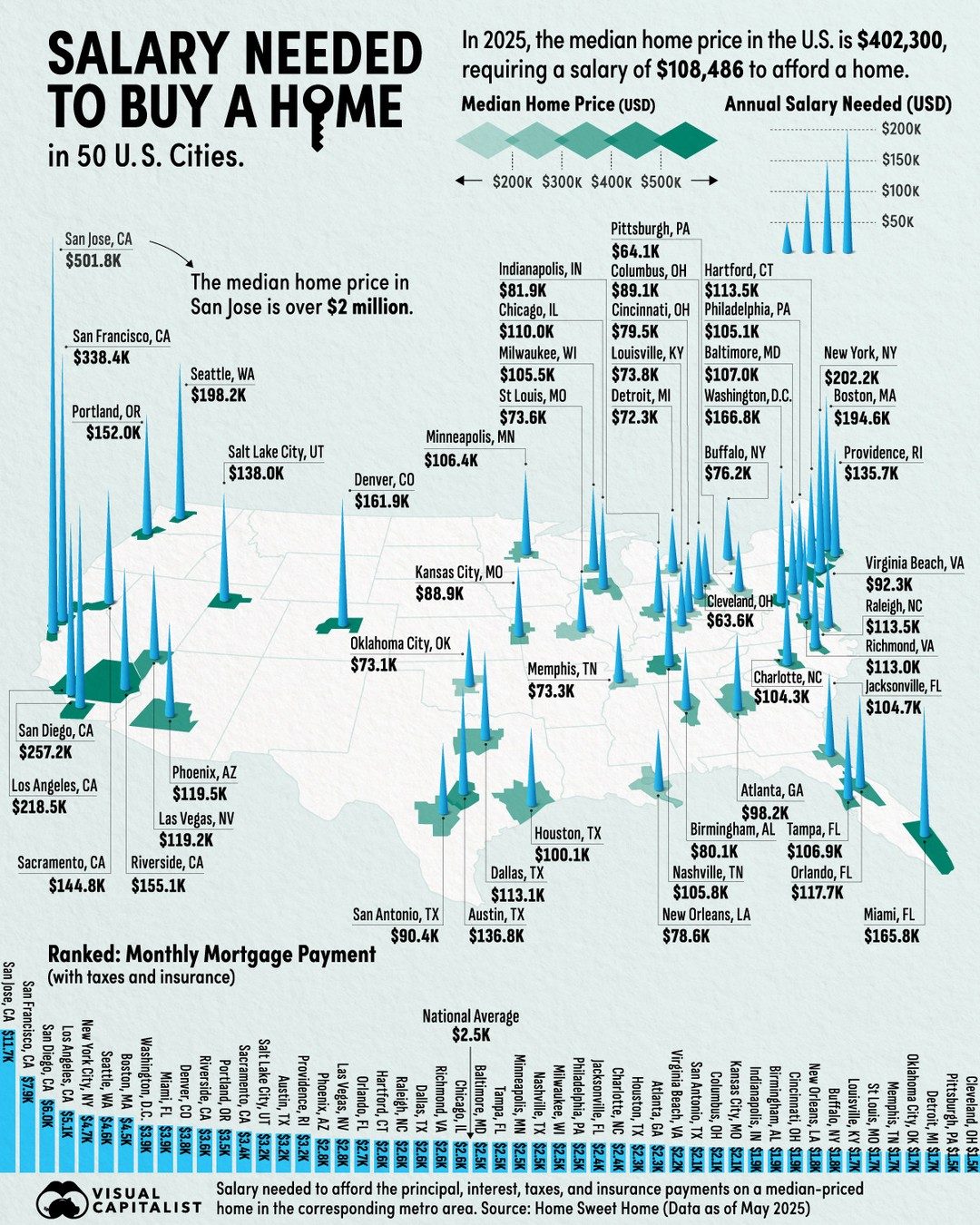
The housing market is a dynamic landscape, and the financial requirements to purchase a home vary significantly across different regions in the United States. By 2025, the median home price in the U.S. is projected to be $402,300. This rising cost has substantial implications for potential homebuyers, as the income needed to afford a median-priced home also increases. In San Jose, California, for example, the required income to afford a median-priced home is anticipated to be $501,760, making it the highest among major U.S. cities. This article delves into the salary requirements for homeownership in 50 major U.S. cities, highlighting the disparities and trends that shape the housing market.
Context: Why This Matters
The disparity in housing affordability across the U.S. is a critical issue for many prospective homeowners. Understanding the income requirements for buying a home can help individuals make informed decisions about where to live and work. This data also provides valuable insights for policymakers, real estate developers, and financial advisors who are navigating the intricacies of the housing market. As the cost of living continues to rise, it's essential to have a clear understanding of how much income is needed to afford a home in different cities.
Median Home Prices and Required Incomes
Let's explore the median home prices and the corresponding incomes required to afford them in various cities across the United States.
High-Income Requirements
Certain cities stand out for their high income requirements to afford a median-priced home. These cities are often characterized by robust job markets, high demand for housing, and/or limited supply.
-
San Jose, CA: With a required income of $501,760, San Jose has the highest income requirement in the nation. This is largely due to the city's thriving tech industry and limited housing stock.
-
San Francisco, CA: Closely following San Jose, San Francisco requires an annual income of $367,276 to afford a median-priced home. The city's high cost of living and strong tech and finance sectors contribute to these high requirements.
-
Los Angeles, CA: In Los Angeles, the required income is $344,300. The city's diverse economy and growing population drive up housing costs, making it one of the most expensive markets in the country.
-
San Diego, CA: San Diego requires an annual income of $297,910 to afford a median-priced home. The city's desirable climate, strong military presence, and limited housing supply all contribute to its high housing costs.
Moderate-Income Requirements
Some cities offer more affordable housing options, but the required incomes are still substantial.
-
Pittsburgh, PA: Pittsburgh has the lowest income requirement among the cities surveyed, at $64,100. This relatively affordable market is due to factors such as lower demand and a more stable housing supply.
-
Indianapolis, IN: With an income requirement of $81,900, Indianapolis offers a more affordable housing market compared to other major cities. The city's stable job market and lower cost of living contribute to this affordability.
Variability Across the Country
The required incomes to afford a median-priced home vary greatly across different regions. For example, in the Midwest and South, housing costs tend to be lower compared to the West Coast, where tech and finance industries drive up prices.
-
Detroit, MI: Detroit has an income requirement of $202,200, reflecting its ongoing economic recovery and housing market fluctuations.
-
Portland, OR: Portland requires an annual income of $198,200 to afford a median-priced home. The city's growing population and increasing demand for housing contribute to its high-income requirement.
Key Cities and Their Income Requirements
Here are some additional cities and their corresponding income requirements:
- Chicago, IL: $202,200
- Cleveland, OH: $113,500
- Milwaukee, WI: $79,500
- Louisville, KY: $107,000
- Seattle, WA: $105,500
- St. Louis, MO: $73,300
- Kansas City, MO: $92,300
- Richmond, VA: $113,000
- Jacksonville, FL: $104,700
- Fort Worth, TX: $98,400
Practical Tips for Prospective Homebuyers
Navigating the housing market requires careful planning and consideration. Here are some practical tips for prospective homebuyers:
-
Assess Your Financial Situation: Understand your current income, expenses, and savings. This will help you determine how much you can afford for a down payment and monthly mortgage payments.
-
Research Local Markets: Look into the housing market trends in the cities you're interested in. Understand the average home prices, mortgage rates, and employment opportunities.
-
Consider Long-Term Goals: Think about your long-term goals, such as family planning, career advancement, and lifestyle preferences. These factors can influence where you decide to buy a home.
-
Work with Professionals: Consult with real estate agents, financial advisors, and mortgage lenders. They can provide valuable insights and assistance in navigating the homebuying process.
-
Explore Affordable Options: Consider alternative housing options, such as starter homes, condos, or fixer-uppers. These can offer more affordable entry points into the housing market.
Important Takeaways
-
Income Requirements Vary Widely: The income required to afford a median-priced home can vary significantly from city to city. Understanding these differences is crucial for making informed decisions.
-
Market Trends Matter: Stay updated on local housing market trends, as they can impact the affordability of homes in a given area.
-
Financial Preparedness: Being financially prepared is essential for homebuying. This includes understanding your budget, saving for a down payment, and considering long-term financial goals.
Conclusion
The salary needed to afford a median-priced home in 2025 varies widely across the United States, with cities like San Jose and San Francisco requiring significantly higher incomes compared to others. By understanding these disparities and preparing financially, prospective homebuyers can make informed decisions and navigate the complex housing market more effectively. Whether you're looking to buy a home in a high-demand city or a more affordable market, being aware of the income requirements and local trends will help you achieve your homeownership goals.
Watch the Reel
Questions readers ask
Which cities require the highest salaries to buy a home by 2025?
By 2025, San Jose, California, will top the list with a required salary of $501,760 to afford a median-priced home. Other high-demand cities include San Francisco, Boston, and New York, where the necessary salaries are also projected to be quite high, though not as much as San Jose.
What factors influence the salary needed to buy a home in a given city?
Several factors contribute to the salary needed to purchase a home, including the median home price, local property taxes, and mortgage interest rates. Additionally, the cost of living and local economic conditions in a city can significantly impact affordability.
How does the required salary to buy a home in 2025 compare to current requirements?
The required salary to buy a home in 2025 is expected to be higher than current requirements due to projected increases in median home prices and other associated costs. This trend reflects the overall upward pressure on housing prices across many U.S. cities.
Are there cities where the salary needed to buy a home is more affordable by 2025?
Yes, cities in the Midwest and South, such as Indianapolis, Indianapolis and Oklahoma City, are expected to have lower salary requirements for homeownership. In these areas, the median home prices and overall cost of living are generally lower, making homeownership more accessible.
What types of buyers should be most concerned about these salary requirements?
First-time homebuyers, young professionals, and those with limited savings are most likely to be impacted by these salary requirements. Understanding the financial demands of the housing market can help these buyers make informed decisions about where and when to purchase a home.
How do policymakers and real estate professionals benefit from this information?
Policymakers can use this information to develop strategies that support affordable housing initiatives and economic growth. Real estate professionals gain insights into market trends, enabling them to better serve clients and navigate the dynamic housing landscape.
Should potential homebuyers consider job market trends when evaluating these salary requirements?
Yes, considering job market trends is crucial. Cities with strong job growth and economic opportunities may offer better prospects for long-term financial stability, even if the initial salary requirements for homeownership are high. This can help buyers assess their future earning potential and home affordability.
Recent articles
Fresh deep dives from the latest Reels we unpacked.




Comments
Be the first to comment.