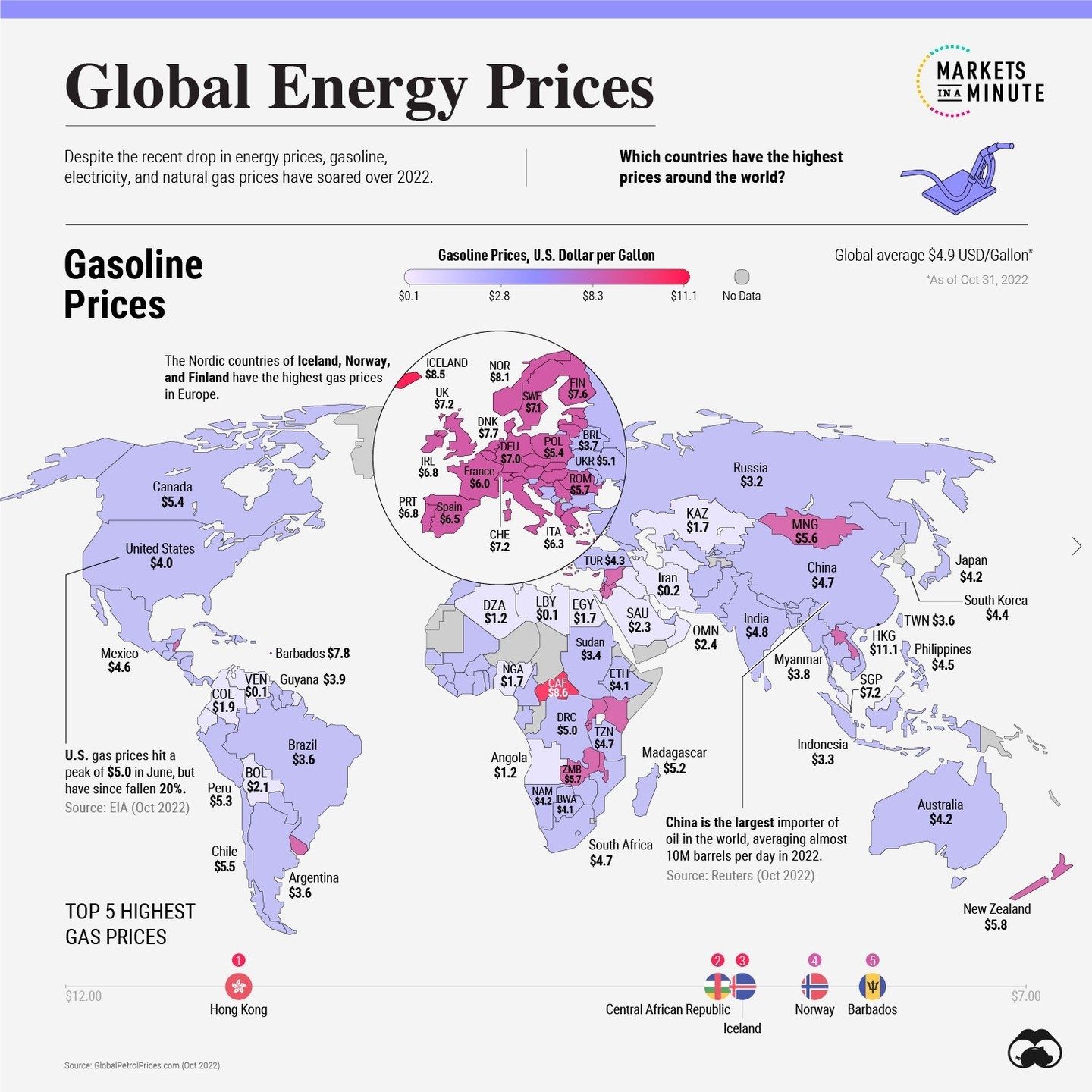
Energy prices have been a hot topic in 2022, with gasoline, electricity, and natural gas costs soaring due to Russia's invasion of Ukraine. This global disruption has led to price volatility and increased energy bills for households and businesses.
Context / Why this matters
Understanding the current state of global energy prices is crucial for making informed decisions about energy usage and planning for future costs. The energy crisis has far-reaching consequences, affecting everything from household budgets to industrial operations.
Main discussion
Global Energy Price Trends
Gasoline, electricity, and natural gas prices have seen significant fluctuations. Despite recent drops, the overall trend for 2022 shows a substantial increase in these energy costs. The global average price for gasoline stood at $4.9 per gallon, with Iceland, Norway, and Finland topping the list for the highest prices. This has a direct impact on American households, where fuel costs are a significant expense.
The global average price for electricity is $0.14 per kilowatt-hour (kWh). This figure is particularly relevant for households as electricity is a staple for daily living. The cost of electricity has been volatile, influenced by factors such as supply chain disruptions and increased demand.
Natural gas prices for households have also been affected, with European storage capacities facing a potential drop to just 2% by February 2023 if supplies from Russia are completely cut and demand remains unchanged. This scenario highlights the vulnerability of European energy infrastructure and the need for alternative energy sources or improved storage solutions.
Regional Impacts
The United Kingdom
The United Kingdom is a prime example of how regional energy prices are impacted. This winter, UK heating costs are projected to rise by 300% compared to last year. This dramatic increase is due to a combination of factors, including higher global energy prices and the need to secure alternative energy sources. Households in the UK are bracing for a challenging winter as they navigate increased energy bills and the potential for supply shortages.
China
China, the largest importer of oil in the world, imports 20% of the global total. This dependency on imported oil makes China particularly vulnerable to global price fluctuations. As oil prices rise, China's energy costs increase, affecting both industrial operations and household budgets. The country's reliance on imported oil highlights the need for diversification in energy sources and potential investments in domestic energy production.
Europe
European countries are also grappling with the energy crisis, particularly in relation to natural gas. European storage capacities for natural gas could fall to 2% by February 2023 if Russia completely cuts supplies and demand is not reduced. This situation underscores the urgency for European nations to find alternative energy sources and improve energy storage capabilities.
Factors Influencing Energy Prices
The energy crisis is influenced by several factors, including geopolitical tensions, supply chain disruptions, and increased demand. The invasion of Ukraine by Russia has disrupted global energy supply chains, leading to significant price volatility. This disruption has affected the supply of oil, natural gas, and electricity, driving up costs for households and businesses.
Practical tips
Managing Energy Costs
For households and businesses, managing energy costs is crucial during this period of high volatility. Here are some practical tips:
- Energy Audits - Conduct an energy audit to identify areas where energy usage can be reduced. This can help in optimizing energy consumption and reducing costs.
- Renewable Energy Sources - Consider investing in renewable energy sources such as solar or wind power. While the initial investment may be high, long-term savings can be significant.
- Energy-Efficient Appliances - Upgrade to energy-efficient appliances and equipment. These appliances use less energy and can help in reducing energy bills.
- Energy Management Systems - Implement energy management systems to monitor and control energy usage. These systems can provide insights into energy consumption patterns and help in identifying areas for improvement.
- Hedging Strategies - For businesses, hedging strategies can help in managing energy price risks. This involves using financial instruments to lock in energy prices for future periods, protecting against price volatility.
Planning for Winter
With winter heating costs projected to rise, planning ahead is essential. Here are some tips for preparing for the winter season:
- Insulation - Ensure that your home is properly insulated. This can help in reducing heat loss and lowering energy bills.
- Energy-Efficient Heating Systems - Invest in energy-efficient heating systems. These systems use less energy and can help in reducing heating costs.
- Regular Maintenance - Regularly maintain your heating system to ensure it is running efficiently. This can help in preventing breakdowns and reducing energy costs.
Important takeaways
- Energy Prices: Global energy prices for gasoline, electricity, and natural gas have soared in 2022, driven by geopolitical tensions and supply chain disruptions.
- Regional Impacts: The energy crisis affects different regions differently, with the UK facing a 300% increase in heating costs and Europe's natural gas storage capacities at risk.
- Managing Costs: Implementing energy management strategies, such as energy audits, renewable energy sources, and energy-efficient appliances, can help households and businesses manage rising energy costs.
- Winter Preparedness: Planning ahead for the winter season, including insulation and regular maintenance of heating systems, is crucial for managing heating costs.
Conclusion
The global energy crisis, fueled by the war in Ukraine and supply chain disruptions, has led to significant price volatility and increased energy bills for households and businesses. Understanding the current state of global energy prices and their regional impacts is crucial for making informed decisions about energy usage and planning for future costs. By implementing energy management strategies and planning ahead, households and businesses can navigate the challenges posed by the energy crisis and reduce their energy costs.
Watch the Reel
Questions readers ask
How has the Russia-Ukraine conflict specifically impacted global gas prices in 2022?
The Russia-Ukraine conflict has led to significant disruptions in global gas supplies, with Russia being one of the world's largest gas producers. This has caused global gas prices to surge, as countries scramble to secure alternative supplies. The volatility in the global energy market has led to unpredictable price swings, making it challenging for consumers and businesses to plan for future costs.
What factors contribute to the increase in household energy bills due to the conflict?
The increase in household energy bills can be attributed to the rise in the cost of gasoline, electricity, and natural gas. These increases are a direct result of the disruptions in global energy supplies caused by the conflict. Additionally, the volatility in the energy market has led to unpredictable price fluctuations, making it difficult for households to budget for energy costs.
How do businesses cope with the rising energy costs resulting from the conflict?
Businesses are finding ways to mitigate the impact of rising energy costs by implementing energy-efficient practices, diversifying their energy sources, and exploring renewable energy options. Some businesses may also be passing on the increased costs to consumers through higher prices. To navigate these challenges, many businesses are closely monitoring energy price projections and adjusting their strategies accordingly.
What are the winter heating costs? Is that related to the Russia-Ukraine war?
Winter heating costs have significantly increased due to the Russia-Ukraine war. Russia is a major supplier of natural gas, which is a primary source of heating for many countries. The disruption in supplies, as well as the associated price volatility, has led to higher costs for households and businesses alike. As a result, consumers are facing increased expenses to stay warm during the winter months.
What is the significance of the USD energy prices in the context of the global energy market?
The USD energy prices play a crucial role in the global energy market, as they influence the cost of energy for countries worldwide. The Russia-Ukraine conflict has led to fluctuations in energy prices, making it difficult for consumers and businesses to predict future costs. Additionally, the USD energy prices can affect a country's overall budget and economic stability, particularly if the country relies on energy imports.
How can individuals and businesses plan for future energy costs in light of the current global energy market?
To plan for future energy costs, individuals and businesses should closely monitor global energy market trends, track energy price projections, and consider implementing energy-saving measures. Diversifying energy sources and exploring renewable energy options can also help mitigate the impact of future price fluctuations. Additionally, maintaining a flexible budget that can adapt to changing energy costs is essential.
Are there any resources or infographics available to help understand the impact of the Russia-Ukraine conflict on energy prices?
Yes, there are various resources and infographics available that provide insights into the impact of the Russia-Ukraine conflict on energy prices. These resources can help individuals and businesses stay informed about the latest trends and developments in the global energy market. By using these tools, consumers can better understand the factors driving energy price increases and make informed decisions about their energy usage and budget planning.
Recent articles
Fresh deep dives from the latest Reels we unpacked.




Comments
Be the first to comment.