Russian Fossil Fuel Imports in 2023
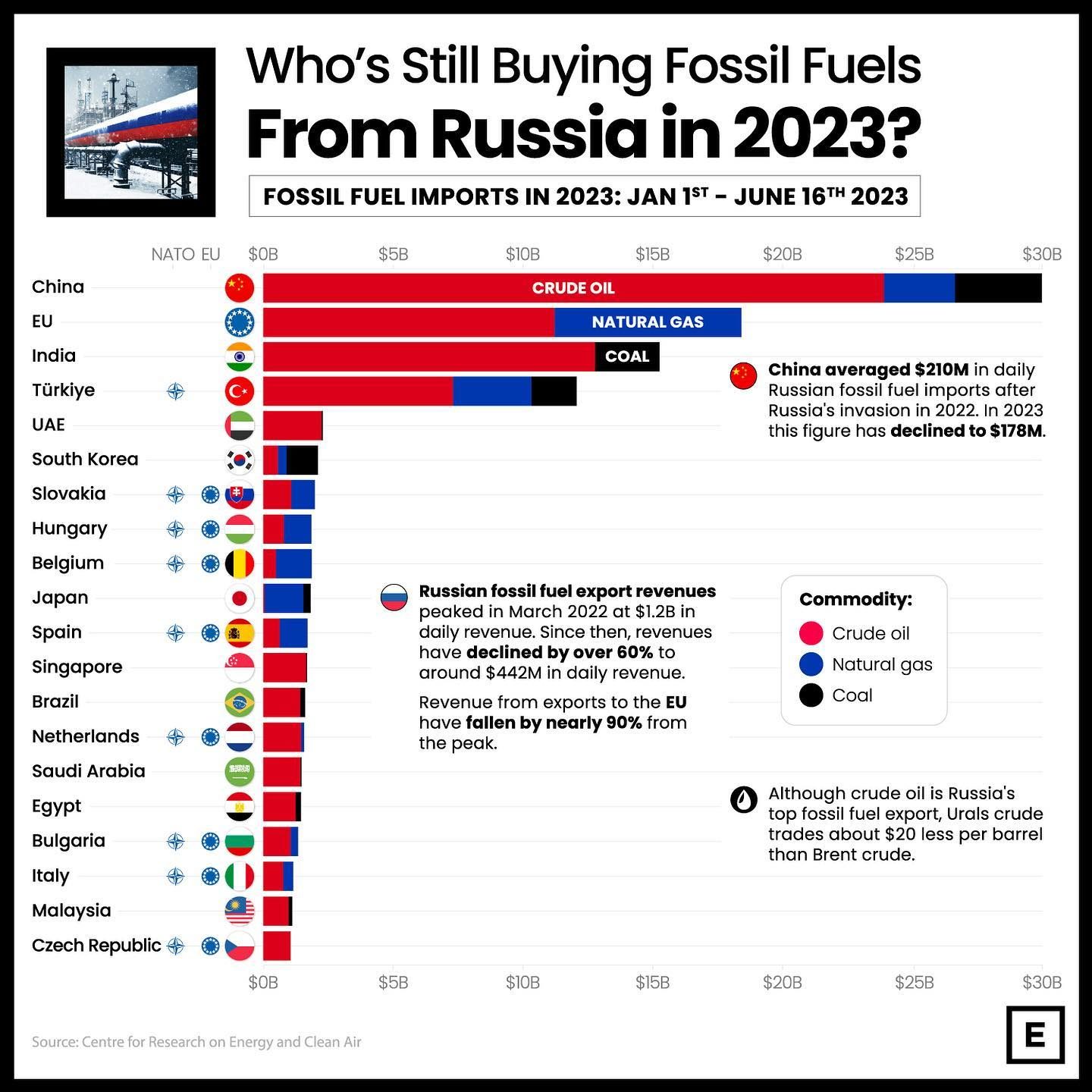
Russia's revenues from fossil fuel exports have seen a significant decline since their peak in March 2022, but many countries continue to import millions of dollars worth of fossil fuels from Russia daily. In 2023 alone, the European Union (EU) has imported over $18 billion of crude oil and natural gas. This article explores the current state of Russian fossil fuel imports, highlighting the top importing countries and the financial implications of these transactions.
Why This Matters
The decline in Russian fossil fuel exports is a critical aspect of global energy dynamics, affecting everything from international relations to energy prices and environmental policies. Understanding the current landscape of these imports is essential for grasping the broader geopolitical and economic implications of fossil fuel reliance.
The Decline in Revenues
The revenues from Russian fossil fuel exports have peaked in March 2022, reaching over $1.2 billion in daily revenue. However, this figure has dropped significantly, with the EU's imports falling by nearly 90%. This decline can be attributed to various factors, including international sanctions and global efforts to reduce dependence on Russian energy sources.
The Top Importers
The top-importers of Russian fossil fuels in 2023 include:
- China: China has significantly increased its imports, averaging $210 million in daily revenue from Russian fossil fuel imports after the invasion in 2022. However, this figure has declined to $78 million.
- EU: Despite a 90% decline in revenues, the EU remains a significant importer of Russian fossil fuels, having imported over $18 billion of crude oil and natural gas from January 1st to June 16th, 2023.
- India: India has also increased its imports, driven by economic necessity and geopolitical considerations.
- Türkiye, UAE, and South Korea: These countries have maintained steady imports, influenced by their energy needs and economic strategies.
The Dynamics of Russian Fossil Fuel Exports
Crude Oil
Although crude oil remains Russia’s top fossil fuel export, Urals crude trades at about $20 less per barrel than Brent crude. This price difference reflects the global market's perception of Russian oil and the impact of sanctions. Countries like China and India have taken advantage of these lower prices to secure their energy needs.
Natural Gas
Natural gas is another critical component of Russian fossil fuel exports. The decline in natural gas imports from Russia has been more pronounced in Europe, which is actively seeking alternatives. However, countries like Türkiye and South Korea continue to import significant volumes.
Coal
Coal exports from Russia have also seen fluctuations, with countries like India and China increasing their imports. The demand for coal remains robust due to its role in industrial processes and power generation.
Practical Tips for Navigating the Russian Fossil Fuel Market
For Consumers
- Diversify Energy Sources: Consumers and businesses should consider diversifying their energy sources to reduce reliance on a single supplier. This can help mitigate the risks associated with supply disruptions and price volatility.
- Invest in Renewables: Investing in renewable energy sources can provide long-term stability and reduce dependence on fossil fuels.
For Governments
- Promote Energy Independence: Governments can promote energy independence by investing in domestic energy production and infrastructure.
- Encourage International Cooperation: Collaboration with other countries can help create a more resilient and flexible energy market.
For Companies
- Risk Management: Companies should implement robust risk management strategies to navigate the uncertainties in the energy market. This includes diversifying supply chains and hedging against price fluctuations.
- Sustainability Goals: Companies should align their energy strategies with sustainability goals to ensure long-term viability and reduce environmental impact.
Important Takeaways
The current state of Russian fossil fuel imports highlights several key points:
- Global Dependence: Despite efforts to reduce reliance, many countries remain dependent on Russian fossil fuels, particularly for coal and natural gas.
- Economic Implications: The decline in revenues has significant economic implications for Russia and the importing countries, affecting everything from trade balances to energy prices.
- Geopolitical Factors: Geopolitical considerations play a crucial role in global energy dynamics, influencing import decisions and market trends.
- Market Adjustments: Countries are actively seeking alternatives and diversifying their energy sources in response to the decline in Russian fossil fuel exports.
Conclusion
Russia’s fossil fuel exports continue to be a significant aspect of global energy dynamics, with many countries still importing millions of dollars worth of fossil fuels daily. The decline in revenues and the top importing countries highlight the complex interplay of economic, geopolitical, and environmental factors shaping the global energy market. By understanding these dynamics, countries, businesses, and consumers can make informed decisions to navigate the evolving landscape of fossil fuel imports and energy reliance.
Watch the Reel
Questions readers ask
Which countries are the primary importers of Russian fossil fuels in 2023?
The top importers of Russian fossil fuels in 2023 are the European Union, China, and India. These countries have continued to purchase significant amounts of crude oil and natural gas, contributing to Russia's fossil fuel export revenue, despite a decline since March 2022.
How much revenue has the EU generated for Russia through fossil fuel imports in 2023?
In 2023, the European Union has imported over $18 billion worth of crude oil and natural gas from Russia. This substantial figure underscores the EU's continued dependence on Russian fossil fuels, despite global efforts to reduce reliance on Russian energy sources.
What has been the trend in Russia's fossil fuel export revenue since March 2022?
Since March 2022, Russia's revenues from fossil fuel exports have experienced a notable decline. This trend is influenced by various factors, including global efforts to reduce reliance on Russian energy and changes in international trade dynamics.
What is the significance of Chinese and Indian imports on the Russian fossil fuel industry?
China and India have emerged as key players in the Russian fossil fuel market. Their imports help stabilize Russia's revenue despite the decline in European imports, illustrating how these countries factor into the global energy landscape.
How does the continued import of Russian fossil fuels impact global energy dynamics?
The continued import of Russian fossil fuels influences global energy dynamics through its effect on regional energy security, its impact on international relations, and its role in shaping environmental policies. The financial implications of these imports are significant, influencing global energy prices and market stability.
What are the primary fossil fuels imported from Russia by the EU in 2023?
The primary fossil fuels imported from Russia by the EU in 2023 are crude oil and natural gas. These imports have significant financial implications for both Russia and the EU, affecting energy security and economic stability in the region.
How have Russia's fossil fuel exports to China and India influenced global energy trade?
Russia's fossil fuel exports to China and India have become increasingly important as traditional European markets have begun to shift. These exports are a critical component of global energy trade, influencing supply chains, energy policies, and international trade agreements.
Recent articles
Fresh deep dives from the latest Reels we unpacked.




Comments
Be the first to comment.