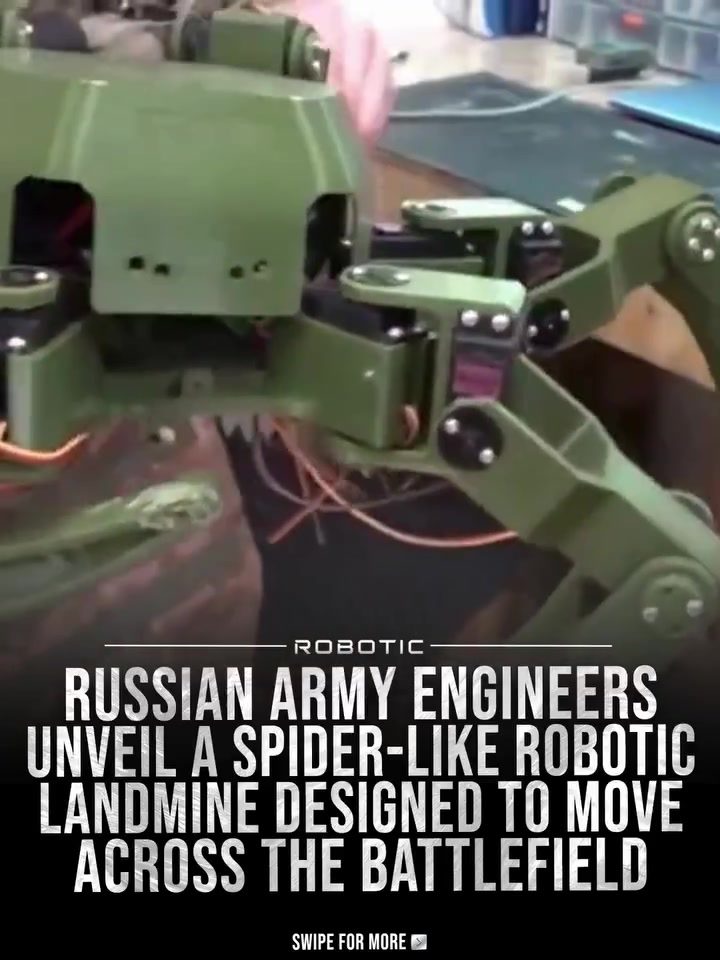
Robotic Landmines: The Future of Battlefield Mobility
Robotic landmines represent a revolutionary advancement in military technology, designed to adapt to the dynamic nature of modern battlefields. Unlike traditional landmines, which remain stationary until triggered, these robotic devices are engineered to move autonomously, enhancing their effectiveness and versatility.
Context / Why this matters
The introduction of robotic landmines by Russian army engineers signifies a shift towards more adaptive and autonomous military systems. The spider-like design, with multiple articulated legs, allows these devices to reposition themselves towards potential targets, adapting to the ever-changing conditions of a battlefield. This mobility is a game-changer, providing a level of flexibility that traditional landmines simply cannot match.
Moreover, the integration of such advanced technology into landmines is a clear indication of the broader trend in military innovation. The incorporation of AI and autonomous systems into military equipment is not just a theoretical concept; it is a tangible reality that is already being explored and implemented. This shift has the potential to revolutionize military strategies, tactics, and overall effectiveness on the battlefield.
Main Discussion
The Design and Functionality
The robotic landmine, designed to resemble a spider, is a testament to the ingenuity of modern engineering. Its multiple articulated legs allow it to navigate various terrains, making it a versatile tool in different combat scenarios. This design is not just about aesthetics; it serves a practical purpose by enabling the landmine to move across the battlefield, adapting to different conditions and repositioning itself towards potential targets.
The system is engineered to be more than just a stationary explosive device. By integrating mobility, the robotic landmine can relocate to areas of higher strategic importance, increasing its lethality and effectiveness. This adaptability is a significant departure from traditional landmines, which are fixed in place until they are triggered, making them vulnerable to being disarmed or avoided.
Autonomous Capabilities
One of the most notable features of this robotic landmine is its autonomous capabilities. The system is designed to operate independently, using advanced algorithms and sensors to navigate the battlefield. This autonomy is crucial in modern combat, where the environment can change rapidly, and traditional communication methods may be compromised. By relying on AI and machine learning, the landmine can make real-time decisions, repositioning itself as needed without the need for constant human intervention.
This level of autonomy is a significant advancement in military technology. It allows for more flexible and responsive operations, reducing the reliance on human operators and minimizing the risk of human error. The autonomous capabilities of the robotic landmine also mean that it can operate in environments where human presence would be dangerous, such as in mines or in areas with high levels of enemy activity.
Tactical Implications
The mobility and autonomy of the robotic landmine have significant tactical implications. By being able to reposition itself, the landmine can adapt to changing battlefield conditions, making it a more versatile and effective weapon. This adaptability allows for a more dynamic approach to combat, where the landmine can be used in a variety of scenarios, from defensive positions to offensive maneuvers.
Additionally, the robotic landmine's ability to move across the battlefield means that it can be deployed in areas that were previously inaccessible to conventional landmines. This increases the range of possible strategic options, allowing for more creative and effective military strategies. The mobility of the robotic landmine also means that it can be redeployed quickly, providing a strategic advantage in fluid combat situations.
Ethical and Safety Considerations
While the technological advancements in robotic landmines are impressive, they also raise important ethical and safety considerations. The autonomous nature of these devices means that they can operate without direct human control, which raises questions about accountability and the potential for unintended consequences.
The mobility of the robotic landmine also means that it can be more difficult to detect and disarm, posing a risk to both combatants and civilians. It is crucial to balance the benefits of this technology with the need for safety and ethical considerations, ensuring that it is used in a responsible and controlled manner.
Practical Tips
When considering the integration of robotic landmines into military strategies, it is important to keep several practical tips in mind:
-
Training and Preparedness: Ensure that military personnel are adequately trained to understand and operate these advanced systems. This includes not only the technical aspects but also the tactical and strategic implications of using robotic landmines.
-
Ethical Guidelines: Develop clear ethical guidelines and protocols for the deployment and use of robotic landmines. This includes considerations for civilian safety, the avoidance of unintended harm, and the accountability of autonomous systems.
-
Continuous Monitoring: Implement robust monitoring and control systems to oversee the operation of robotic landmines. This ensures that any issues can be quickly identified and addressed, minimizing the risk of unintended consequences.
-
Adaptive Strategies: Develop adaptive military strategies that take full advantage of the mobility and autonomy of robotic landmines. This includes planning for various scenarios and ensuring that the landmines can be deployed effectively in different combat situations.
Safety and Ethical Considerations
Given the potential risks associated with robotic landmines, it is essential to prioritize safety and ethical considerations. Here are some key points to keep in mind:
-
Civilian Safety: Ensure that civilian populations are protected from the potential risks posed by robotic landmines. This includes clear demarcation of areas where landmines are deployed and effective communication with local populations.
-
Accountability: Establish clear accountability mechanisms for the deployment and operation of robotic landmines. This includes identifying who is responsible for their use and ensuring that there are mechanisms in place to address any issues that arise.
-
Public Awareness: Raise public awareness about the use of robotic landmines and their potential impacts. This includes educating both military personnel and civilian populations about the risks and benefits of this technology.
Important Takeaways
The introduction of robotic landmines represents a significant advancement in military technology, offering enhanced mobility and autonomy. These devices have the potential to revolutionize battlefield strategies, providing greater flexibility and adaptability.
However, it is crucial to balance the benefits of this technology with the need for safety and ethical considerations. This includes ensuring that military personnel are adequately trained, that ethical guidelines are in place, and that there are robust monitoring and control systems.
The future of military technology is rapidly evolving, and the integration of AI and autonomous systems into battlefield strategies is a tangible reality. By embracing these advancements while prioritizing safety and ethical considerations, it is possible to achieve a more effective and responsible military strategy.
Conclusion
Robotic landmines are a testament to the ingenuity and innovation of modern military technology. By incorporating mobility and autonomy, these devices offer a level of adaptability and effectiveness that traditional landmines simply cannot match. As military strategies continue to evolve, the integration of such advanced systems will play a crucial role in shaping the future of combat.
The success of this technology relies not only on its technical capabilities but also on the responsible and ethical use of these systems. By prioritizing safety, accountability, and continuous monitoring, it is possible to harness the full potential of robotic landmines while minimizing the risks associated with their use.
Watch the Reel
Questions readers ask
How do the Russian Army's spider-like robotic landmines differ from traditional landmines?
Unlike traditional landmines, the Russian Army's spider-like robotic landmines are designed to move autonomously. This mobility allows them to navigate various terrains and reposition themselves towards potential targets, enhancing their effectiveness in dynamic combat scenarios.
What advantages does the spider-like design offer in battlefield mobility?
The spider-like design features multiple articulated legs, enabling these robotic landmines to adapt to different types of terrain. This design allows them to navigate complex environments and reposition themselves effectively, making them more versatile in ever-changing battlefield conditions.
How do autonomous landmines enhance battlefield effectiveness?
Autonomous movement allows these landmines to adapt to the dynamic nature of modern battlefields. By moving towards potential targets, they can respond to changing situations more effectively, providing a higher level of flexibility and making them a more formidable obstacle for enemy forces.
What kind of terrain can these robotic landmines navigate?
The spider-like design of these robotic landmines enables them to traverse a variety of terrains, including rough and uneven surfaces. Their articulated legs allow them to adapt to different landscapes, making them highly effective in diverse battlefield environments.
Are there any concept videos available for the Russian Army's robotic landmines?
While specific concept videos might not be widely available to the public, the Russian Army has showcased their robotic landmine technology in various military demonstrations. These demonstrations highlight the mobility and adaptability of the spider-like design, providing insights into their operational capabilities.
Recent articles
Fresh deep dives from the latest Reels we unpacked.




Comments
Be the first to comment.