Russian Fossil Fuel Imports
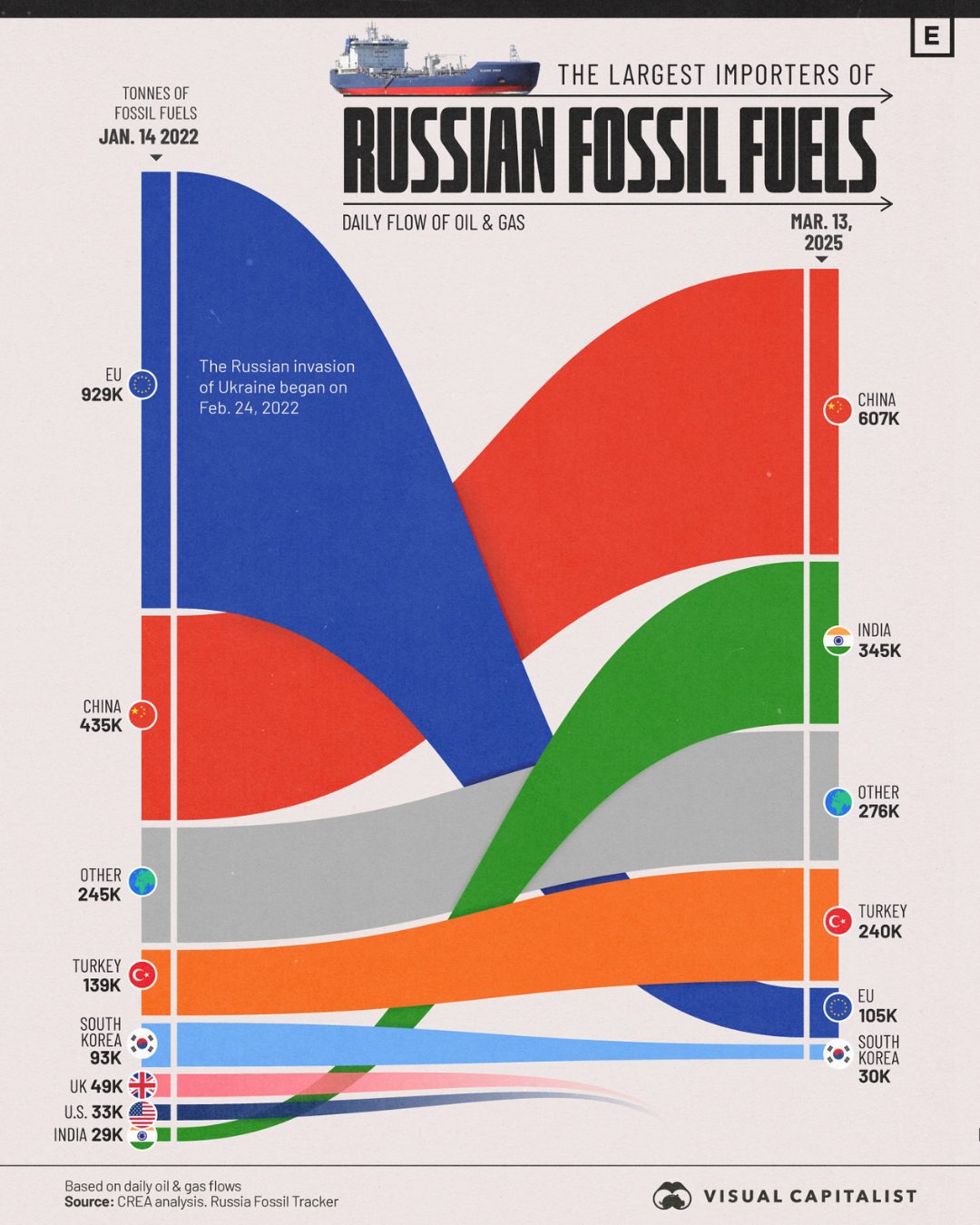
The global landscape of Russian fossil fuel imports has undergone significant shifts in recent years, with China now leading the way as the top importer. This change highlights the complex dynamics of energy trade and geopolitical influences. The data, analyzed from January 2022 to March 2025, reveals how various countries have adjusted their fossil fuel imports from Russia, reflecting broader trends in global energy markets.
Context / Why this matters
The shift in Russian fossil fuel imports is not just a matter of economic transactions; it has profound geopolitical implications. For many countries, fossil fuels are a critical component of their energy mix, and changes in supply can affect economic stability, environmental policies, and diplomatic relations. Understanding these shifts is crucial for policymakers, energy analysts, and businesses looking to navigate the evolving energy landscape.
Main discussion
The Rise of China as the Top Importer
China's surge to the top of the list of Russian fossil fuel importers is a notable development. Over the years, China’s demand for energy has grown steadily, driven by its rapid industrialization and urbanization. The country's import of 607,000 thousand barrels per day (Kbpd) of Russian fossil fuels underscores its increasing reliance on foreign energy sources to meet its domestic needs.
The EU's Role in Russian Fossil Fuel Imports
Previously, the European Union (EU) was the largest importer of Russian fossil fuels. However, recent geopolitical events have led to a significant reduction in imports from the EU. By March 2025, the EU's imports had decreased but remained substantial at 929,000 thousand barrels per day. This shift reflects the EU's efforts to diversify its energy sources and reduce dependence on Russian supplies.
The Impact of Geopolitical Tensions
The invasion of Ukraine in February 2022 had a profound impact on global energy markets. As a result, imports from the United States and the United Kingdom, which were already minimal, fell to zero. This drastic change highlights the sensitivity of energy trade to geopolitical tensions and the importance of diplomatic relations in maintaining stable energy supplies. The U.S. and UK’s zero imports indicate a strategic move to support international sanctions and reduce reliance on Russian energy sources.
Shifts in Other Major Importers
Turkey
Turkey continues to be a significant importer of Russian fossil fuels, with 435,000 thousand barrels per day. Turkey’s energy needs and strategic location make it a critical player in the energy market. The country's reliance on Russian fossil fuels is influenced by its energy security concerns and economic relations with Russia.
India
India’s import of 345,000 thousand barrels per day highlights its growing energy demand. As one of the world's fastest-growing economies, India requires substantial energy supplies to fuel its industries and support its population. Russian fossil fuels play a crucial role in meeting these needs, providing a stable and cost-effective energy source.
Other Regions
The 'Other' category, totaling 276,000 thousand barrels per day, includes various countries and regions that rely on Russian fossil fuels. This diverse group of importers reflects the broad reach of Russian energy exports and the global demand for reliable energy sources.
South Korea, the UK, and the U.S. in the Equation
South Korea imports 93,000 thousand barrels per day, underscoring its dependence on fossil fuels for industrial and domestic use. South Korea, like other major economies, seeks to balance its energy needs with strategic considerations. The UK and the U.S., with imports of 49,000 and 33,000 thousand barrels per day respectively, show a distinct reduction in their reliance on Russian fossil fuels, reflecting their geopolitical stances.
Practical tips
For Energy Analysts
For energy analysts, these shifts highlight the importance of staying informed about geopolitical developments and their impact on global energy markets. Keeping track of changes in import patterns can provide valuable insights into future trends and potential disruptions.
For Policymakers
Policymakers need to consider the long-term implications of energy dependency and diversify their energy sources. This may involve investing in renewable energy, enhancing energy efficiency, and fostering international cooperation to secure stable energy supplies.
For Businesses
Businesses operating in energy-intensive sectors should closely monitor these trends to anticipate potential disruptions in energy supply. Developing contingency plans and diversifying energy sources can help mitigate risks and ensure business continuity.
Important takeaways
The shift in Russian fossil fuel imports from the EU to China underscores the dynamic nature of global energy markets. Geopolitical tensions, energy security concerns, and economic growth are key drivers of these changes. Understanding these trends is crucial for policymakers, businesses, and energy analysts looking to navigate the complex energy landscape.
Conclusion
The evolving landscape of Russian fossil fuel imports reflects the intricate interplay between economic needs, geopolitical considerations, and energy security. As countries adjust their energy strategies, the global energy market will continue to experience significant changes. By staying informed and proactive, stakeholders can prepare for these shifts and ensure a stable energy future. The data from these shifts provides a roadmap for future energy policies and highlights the importance of diversification and international cooperation in energy trade.
Watch the Reel
Questions readers ask
Why did China become the top importer of Russian fossil fuels?
China's rise to the top importer of Russian fossil fuels is driven by multiple factors. These include China's increasing energy demand, strategic partnerships with Russia, and China's diversification of energy sources to ensure its energy security. Additionally, geopolitical factors and the global energy market trends have played a significant role in this shift.
How have EU imports of Russian fossil fuels changed recently?
The European Union (EU) has seen a significant decrease in its imports of Russian fossil fuels. This reduction is largely due to geopolitical tensions and the EU's efforts to diversify its energy sources. The EU is actively seeking alternatives to reduce its reliance on Russian energy supplies.
What is the significance of the Russia to China gas pipeline?
The Russia to China gas pipeline is a crucial infrastructure project that supports China's growing energy needs and Russia's export strategy. This pipeline enhances energy security for both countries, fosters closer economic ties, and helps China diversify its energy sources.
Which other countries have increased their imports of Russian fossil fuels?
Apart from China, countries like India and Turkey have also increased their imports of Russian fossil fuels. These countries are taking advantage of market dynamics and geopolitical shifts to secure energy supplies, often at competitive prices. This trend is part of a broader global energy market adjustment.
What trends have emerged in the Russian energy market since 2022?
Since 2022, the Russian energy market has experienced notable changes. These include increased exports to Asia, particularly China and India, and a reduction in exports to traditional European markets. Additionally, Russia has been focusing on expanding its energy infrastructure to support these new export routes.
How do geopolitical factors influence Russian fossil fuel exports?
Geopolitical factors significantly impact Russian fossil fuel exports by affecting trade relations and market dynamics. For instance, sanctions and diplomatic tensions can disrupt traditional export routes, forcing Russia to seek new markets. Conversely, strategic partnerships and trade agreements can open new opportunities for Russian energy exports.
What role does China's fossil fuel demand play in this shift?
China's substantial and growing demand for fossil fuels is a key driver behind its increased imports from Russia. This demand is fueled by China's industrial growth and urbanization. By securing reliable energy supplies from Russia, China can support its economic development while also enhancing its energy security.
Related deep dives
Similar reads based on topic and creator.

Recent articles
Fresh deep dives from the latest Reels we unpacked.




Comments
Be the first to comment.