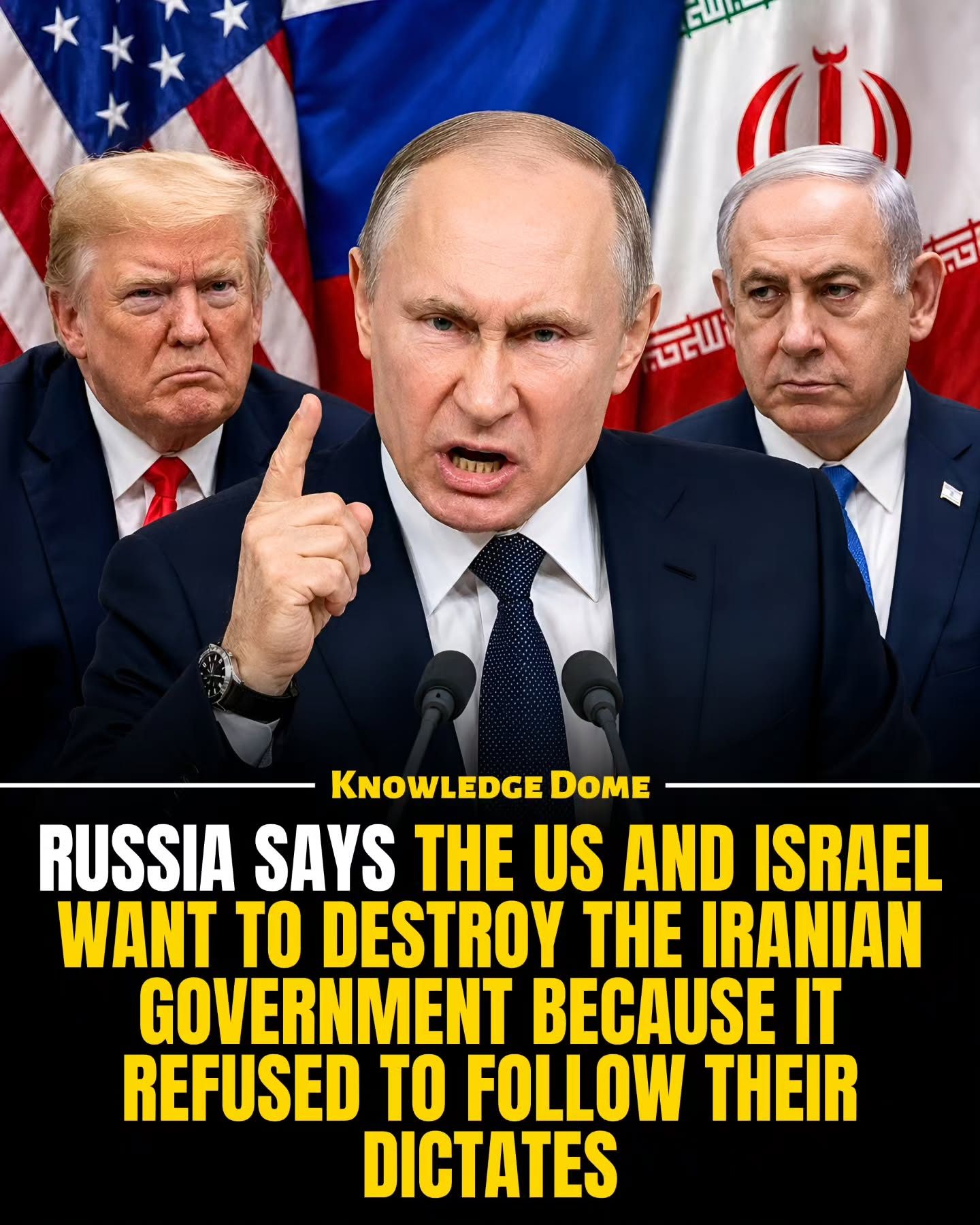
Russia's Stance on US and Israeli Actions in Iran
Russia alleges that the United States and Israel are involved in a covert operation to overthrow the Iranian government. Russia claims this move is not solely about containing Iranian military power, but about Iran's independence and refusal to follow foreign dictates. The tension in the Middle East has escalated dramatically due to these geopolitical dynamics.
Why This Matters
The ongoing geopolitical tensions in the Middle East have far-reaching implications for global security and international relations. Understanding the nuances of these complex dynamics is crucial for interpreting events and predicting future developments.
The Core of the Conflict
Iranian Sovereignty and Foreign Orders
Russia has vocally asserted that the United States and Israel aim to destabilize Iran because of its independent stance and refusal to comply with external orders. This perspective suggests a deeper struggle over sovereignty and control. Russia has framed its position as a defense of Iran's right to make its own decisions, which contrasts sharply with the perceived US-Israeli attempts to impose their agenda on Tehran.
The Nuclear and Missile Threat
Russia dismisses the notion that the US and Israeli actions are solely about halting Iran's nuclear program and missile developments. According to Moscow, these supposed threats are merely a pretext. The real intention, Russia alleges, is to break down Iran's independence and bring about a regime change.
International Law and Aggression
Russian Foreign Minister Sergey Lavrov has labeled the actions of the US and Israel as "unprovoked aggression," accusing them of violating international law. This claim underscores the broader context of international law and the use of force in global politics. Russia's assertion is part of a broader trend of questioning the legitimacy of unilateral actions by major powers.
The US and Israeli Response
The United States and Israel have rejected Russia's allegations, asserting that their actions are aimed at curbing genuine threats from Iran. These threats include Iran's missile capabilities, support for regional militant groups, and potential nuclear weapons development. They maintain that their measures are necessary to safeguard regional stability and security.
The Geopolitical Fallout
Impact on Iran's Regional Relations
Russia has cautioned that the ongoing conflict could jeopardize Iran's strengthening ties with Arab Gulf countries. This warning highlights the delicate balance of power in the Middle East, where alliances can shift rapidly based on geopolitical interests.
International Diplomacy
Moscow has engaged in diplomatic discussions with other countries, including China, and has urged the United Nations Security Council to call for an immediate end to the hostilities. These diplomatic efforts underscore the global significance of the conflict and the need for a coordinated international response.
Practical Tips for Understanding the Conflict
Stay Informed
Follow reliable news sources and expert analyses to stay updated on the latest developments and nuances of the conflict.
Critical Thinking
Analyze statements from different countries critically, considering their national interests and geopolitical motivations.
Broader Context
Understand the broader context of Middle Eastern politics and the historical tensions between these nations. This context can provide valuable insights into current events.
Important Takeaways
Russia's allegations regarding US and Israeli intentions in Iran highlight a complex web of geopolitical dynamics, including issues of sovereignty, international law, and regional security. The conflict has significant implications for the Middle East and global politics. Understanding the multiple perspectives and the broader context is essential for navigating this intricate landscape.
Conclusion
The geopolitical strife between the United States, Israel, and Iran, as viewed through the lens of Russian allegations, is a multifaceted issue. It involves questions of sovereignty, regional security, and international law. To grasp the full picture, it is crucial to consider the various perspectives and the broader context of Middle Eastern politics.
Watch the Reel
Questions readers ask
What specific actions are the US and Israel accused of by Russia in relation to Iran?
Russia accuses the US and Israel of covert operations aimed at overthrowing Iran's government. These accusations center around Iranian independence and resistance to foreign dictates, rather than purely military concerns.
How does Russia's perspective on Iran differ from that of the US and Israel?
Russia's stance emphasizes Iran's sovereignty and defiance of foreign orders, while the US and Israel are seen as attempting to undermine Iran's government through covert means.
Why does Russia believe that the US and Israel are targeting Iran's government?
Russia argues that the US and Israel are motivated by Iran's refusal to comply with foreign directives, not just by military power. This reflects a broader struggle for sovereignty in the Middle East and the need for Iran to maintain independence.
How are geopolitical tensions in the Middle East influenced by the US, Israel, and Iran?
The geopolitical tensions in the Middle East are exacerbated by the complex dynamics between the US, Israel, and Iran. Russia's accusations highlight the struggle for sovereignty and the broader geopolitical goals of the US and Israel in the region.
What role does Iranian sovereignty play in the current geopolitical landscape?
Iranian sovereignty is central to the current geopolitical landscape, as Russia's accusations underscore Iran's independence and resistance to foreign control. This is a key factor in the broader conflict and the stability of the Iranian government.
How do US and Israeli actions impact global security according to Russia?
According to Russia, US and Israeli actions aimed at regime change in Iran have far-reaching implications for global security, contributing to heightened tensions and instability in the Middle East. This is part of a larger geopolitical struggle.
Recent articles
Fresh deep dives from the latest Reels we unpacked.




Comments
Be the first to comment.