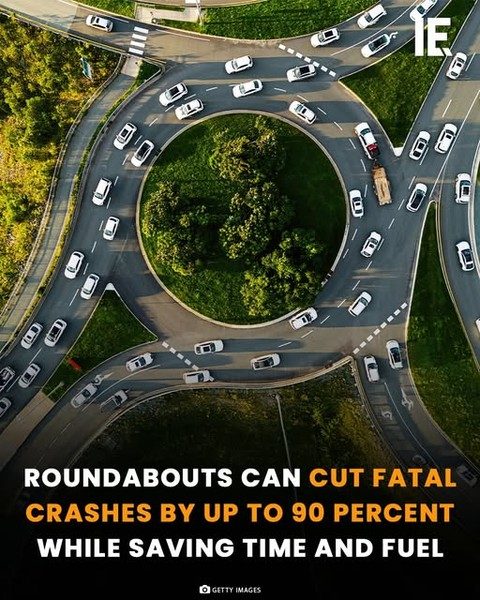
Roundabouts and Their Role in Traffic Safety and Efficiency
Roundabouts have become an increasingly popular alternative to traditional traffic intersections due to their significant safety and efficiency benefits. Data from the U.S. Federal Highway Administration (FHWA) shows that roundabouts can reduce fatal crashes by up to 90%, injury crashes by 76%, and cut wait times by up to 89%. Additionally, they lower fuel use by around 30% thanks to smoother traffic flow. This makes roundabouts an attractive option for urban planning and civil engineering projects.
Context: Why this Matters for Urban Planning
Improving traffic safety and efficiency is a critical aspect of urban planning. Traditional intersections often lead to high incidences of accidents, longer wait times, and increased fuel consumption. Roundabouts address these issues by forcing drivers to slow down and navigate through a single lane of traffic, which significantly reduces the likelihood of high-speed, head-on collisions. They also provide a more continuous flow of traffic, reducing the need for frequent stops and starts, which in turn lowers fuel use and emissions.
Main Discussion
Safety Benefits
Roundabouts are designed to minimize the most severe types of crashes. At a typical intersection, vehicles can collide head-on, which often results in fatal or serious injuries. In contrast, roundabouts force vehicles to merge in a circular pattern, reducing the possibility of high-impact collisions. The FHWA data highlights that roundabouts can cut fatal crashes by up to 90%, a stark improvement over traditional intersections. This reduction is largely attributed to the lower speeds and the elimination of left turns, which are often involved in severe accidents.
Efficiency in Traffic Flow
Efficiency is another major advantage of roundabouts. The continuous flow of traffic through a roundabout allows vehicles to move through the intersection without the need for multiple stops and starts. This not only saves time but also reduces fuel consumption. According to the FHWA, roundabouts can cut wait times by up to 89%, making them an efficient solution for busy urban areas.
Environmental Impact
The environmental benefits of roundabouts are substantial. By reducing the need for idling and frequent braking, roundabouts can lower fuel use by around 30%. This reduction in fuel consumption translates to lower emissions, contributing to cleaner air and a smaller carbon footprint. As urban areas continue to grow and traffic congestion becomes more prevalent, the environmental benefits of roundabouts cannot be overlooked.
Design Considerations
When incorporating roundabouts into infrastructure designs, several factors must be considered. The size of the traffic interchange and the volume of traffic are crucial in determining the appropriate design. Larger roundabouts may be necessary for high-volume intersections, while smaller roundabouts can be sufficient for low-traffic areas. Additionally, the placement of signage and road markings is essential for ensuring that drivers understand how to navigate the roundabout safely. Proper design and clear instructions can significantly enhance the safety and efficiency of roundabouts.
Practical Tips
Public Acceptance and Education
One of the challenges in implementing roundabouts is public acceptance. Drivers who are unfamiliar with roundabouts may find them confusing and intimidating. Public education campaigns can help alleviate these concerns by providing clear instructions on how to navigate roundabouts safely. Signage and road markings that are easily visible and understandable can also make a significant difference in public acceptance.
Design Guidelines
When designing a roundabout, it is essential to follow established guidelines. The FHWA provides detailed guidelines for roundabout design, including specifications for lane width, island size, and approach geometry. These guidelines ensure that the roundabout is safe and efficient for all users. Additionally, incorporating pedestrian and bicycle routes can make the roundabout more inclusive and accessible.
Maintenance and Monitoring
Regular maintenance and monitoring are crucial for ensuring that roundabouts remain safe and efficient. This includes inspecting the condition of the pavement, signs, and road markings, as well as monitoring traffic flow to identify any potential issues. Addressing maintenance needs promptly can prevent minor problems from becoming major safety hazards.
Important Takeaways
Roundabouts offer a compelling solution for improving traffic safety and efficiency. The data from the FHWA underscores the significant reduction in fatal and injury crashes, as well as the substantial benefits in terms of time and fuel savings. By understanding the design considerations, public acceptance, and maintenance needs, urban planners and civil engineers can effectively incorporate roundabouts into infrastructure designs. This not only enhances safety and efficiency but also contributes to a cleaner and more sustainable environment.
Conclusion
In summary, roundabouts provide a host of benefits that make them a valuable addition to urban planning and civil engineering projects. Their ability to reduce fatal crashes, improve traffic flow, and lower fuel consumption makes them an attractive option for modern infrastructure. As urban areas continue to grow, the importance of incorporating roundabouts into traffic design will only increase. By following best practices in design, public education, and maintenance, urban planners can maximize the benefits of roundabouts, creating safer, more efficient, and environmentally friendly communities.
Watch the Reel
Questions readers ask
How do roundabouts contribute to saving lives?
Roundabouts significantly enhance safety by reducing the severity and frequency of crashes. According to the U.S. Federal Highway Administration (FHWA), roundabouts can decrease severe crashes by up to 90% and injury crashes by 76%. This is mainly due to the design that eliminates high-speed, right-angle collisions that are common at traditional intersections.
In what way do roundabouts improve fuel efficiency?
Roundabouts enhance fuel efficiency by promoting smoother traffic flow. Vehicles can maintain consistent speeds without frequent stops and starts, which are common at traditional intersections with traffic lights or stop signs. This reduction in idling and braking can lower fuel consumption by around 30%, making them an economically and environmentally beneficial choice.
What are the main advantages of roundabouts over traditional intersections?
Roundabouts offer multiple benefits over traditional intersections, including reduced crash rates, improved traffic flow, and lower fuel consumption. They also decrease wait times by up to 89%, making them more efficient for urban traffic management. Additionally, roundabouts are often more cost-effective in the long run due to lower maintenance costs and reduced need for signalization.
How do roundabouts compare to stop signs in terms of safety and traffic flow?
Roundabouts generally outperform stop signs in both safety and traffic flow. Unlike stop signs, roundabouts require vehicles to slow down but not come to a complete stop, which helps maintain a steady flow of traffic. This design also minimizes the risk of T-bone collisions, making roundabouts a safer option for drivers, passengers, and pedestrians.
Why are roundabouts increasingly favored in urban planning?
Roundabouts are favored in urban planning due to their ability to alleviate traffic congestion and enhance safety. Their design improves traffic flow by reducing delays and the need for frequent stops, which is especially beneficial in densely populated areas. Additionally, their aesthetic appeal and ability to reduce noise pollution make them a popular choice among urban planners.
What data supports the effectiveness of roundabouts in reducing crashes?
Data from the U.S. Federal Highway Administration (FHWA) provides compelling evidence of roundabouts' effectiveness. Studies show that roundabouts can significantly reduce injury crashes and severe crashes, particularly those involving pedestrians, making them a proven solution for improving traffic safety in urban and suburban environments.
Related deep dives
Similar reads based on topic and creator.

Recent articles
Fresh deep dives from the latest Reels we unpacked.




Comments
Be the first to comment.