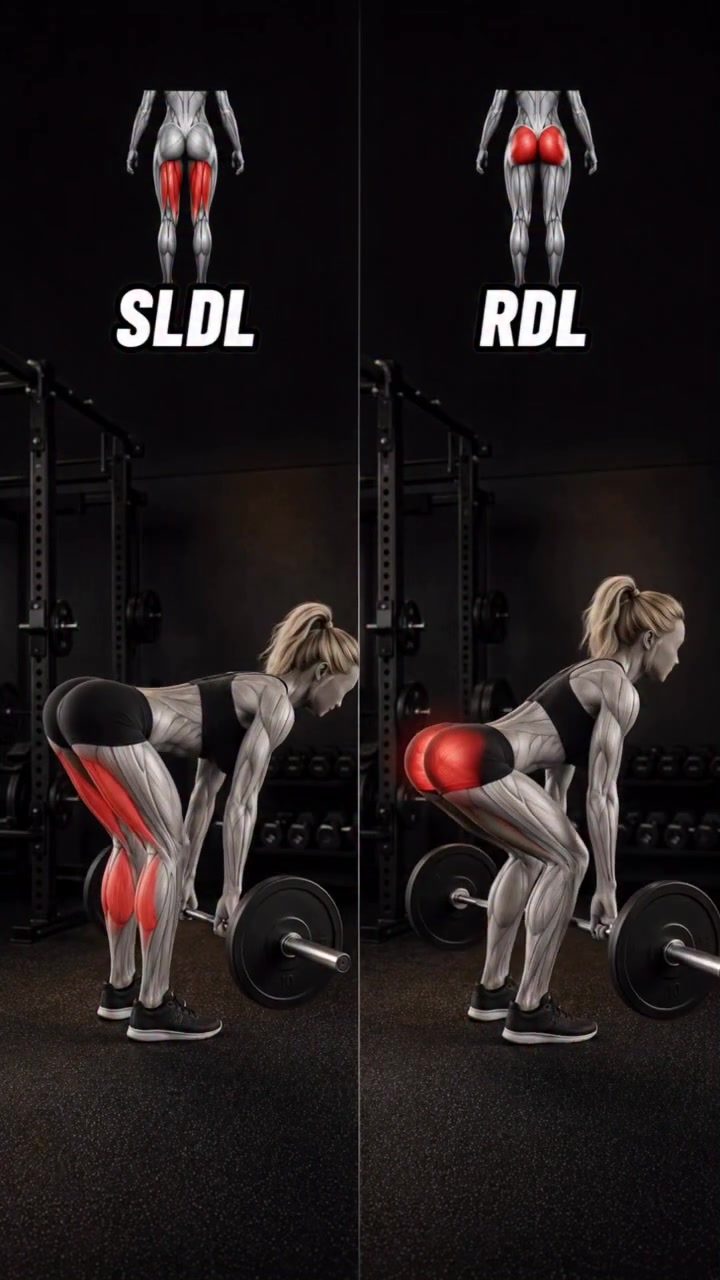
Romanian Deadlift vs. Single Leg Deadlift: Choosing the Right Exercise for Your Goals
When it comes to strengthening the lower body, both Romanian Deadlifts (RDL) and Single Leg Deadlifts (SLDL) are go-to exercises. Each offers unique benefits and caters to different fitness goals. Understanding these differences can help you decide when and how to incorporate these exercises into your workout routine.
Why This Matters for Your Workout
Lower body strength is crucial for overall fitness, athletic performance, and daily activities. Both RDL and SLDL target key muscle groups in the lower body, but they do so in slightly different ways. Choosing the right exercise—or combining them effectively—can help you achieve specific fitness goals more efficiently.
Main Discussion
Understanding SLDL and RDL
What is a Single Leg Deadlift?
Single Leg Deadlift (SLDL) is a unilateral exercise that focuses on one leg at a time. It requires significant balance and stability, making it an excellent choice for those looking to improve these aspects alongside strength.
Benefits of SLDL
- Hamstring Emphasis: SLDL places more tension directly on the hamstrings, making it ideal for those seeking maximum hamstring development.
- Posterior Chain Flexibility: This exercise is great for improving overall posterior chain flexibility and mobility.
- Hamstring Stretch: The SLDL provides a deeper stretch on the hamstrings, which can help improve range of motion.
What is a Romanian Deadlift?
A Romanian Deadlift (RDL) is a bilateral exercise that involves bending at the hips while keeping a slight bend in the knees. This movement places more emphasis on the glutes and hamstrings.
Benefits of RDL
- Glute Activation: RDLs are excellent for activating the glutes, making them a go-to exercise for improving posterior muscle development.
- Hip Hinge Movement: The slight bend in the knees makes it a more natural and beginner-friendly hip hinge movement.
- Progressive Overload: RDLs are easier to progressively overload, allowing you to increase the weight over time and challenge your muscles more effectively.
Practical Tips
Choosing the Right Exercise
Choosing between SLDL and RDL depends on your specific fitness goals.
When to Choose SLDL
- Maximum Hamstring Stretch: If your goal is to achieve a deeper stretch and more flexibility in the hamstrings, SLDL is the better choice.
- Hamstring-Focused Training: For those looking to prioritize hamstring development and strength, SLDL is ideal.
- Improving Posterior Chain Mobility: If improving overall posterior chain mobility is your aim, SLDL can be more beneficial.
When to Choose RDL
- Glute Involution: If you want to involve more glute muscles and achieve better overall lower body development, RDL is the way to go.
- Beginner-Friendly: For beginners looking to master the hip hinge movement, RDL is more straightforward and easier to perform correctly.
- Progressive Overload: If you prefer an exercise that allows you to progressively overload and continue challenging your muscles over time, opt for RDL.
Important Takeaways
Both Single Leg Deadlifts and Romanian Deadlifts offer unique benefits and can be integrated into a well-rounded lower body workout routine. Consistently performing these exercises with good technique will yield the best results. Remember, quality repetitions are more important than lifting heavier weights. Focus on proper form and progressive overload to see consistent improvements in your strength and muscle development.
Conclusion
Incorporating both SLDL and RDL into your training program can provide a comprehensive approach to lower body development. The key is to understand the specific benefits of each exercise and tailor your routine accordingly. Whether your goal is to improve hamstring flexibility, activate the glutes, or enhance overall lower body strength, including both exercises in your workout routine will help you achieve a well-rounded and stronger lower body.
Watch the Reel
Questions readers ask
What are the primary muscles worked by the Romanian Deadlift and Single Leg Deadlift?
The Romanian Deadlift primarily targets the hamstrings, glutes, and lower back, with secondary engagement of the core and upper back. In contrast, the Single Leg Deadlift also emphasizes the hamstrings and glutes but places more focus on the stabilizer muscles of the hips, core, and the standing leg.
Which deadlift variation is better for improving balance and stability?
The Single Leg Deadlift is superior for enhancing balance and stability. This exercise challenges your body to maintain equilibrium on one leg, engaging core muscles and stabilizing muscles in the hips and legs more than the Romanian Deadlift.
Can I use both exercises in my workout routine, and if so, how?
Yes, you can incorporate both exercises into your routine to target different aspects of your lower body strength. For example, you might perform Romanian Deadlifts on one day to focus on overall lower body strength and Single Leg Deadlifts on another day to work on balance and unilateral strength.
Which deadlift is more suitable for improving athletic performance?
The Single Leg Deadlift is often more beneficial for athletes, as it mimics many single-leg movements in sports and improves unilateral strength and stability. However, the Romanian Deadlift can also be beneficial for building overall lower body power and strength.
How can I progress in each of these exercises?
To progress in Romanian Deadlifts, gradually increase the weight while maintaining proper form. For Single Leg Deadlifts, start with bodyweight or light dumbbells, and then progress to heavier weights or more challenging variations like holding a kettlebell in the opposite hand.
I have lower back issues. Which deadlift should I choose?
If you have lower back issues, it's generally safer to start with Romanian Deadlifts, as they allow for a more controlled movement and can be done with lighter weights. However, always consult with a fitness professional or healthcare provider before starting any new exercise program, especially if you have pre-existing conditions.
How do these exercises benefit daily activities?
Both exercises improve lower body strength and stability, making daily activities like lifting objects, climbing stairs, and maintaining proper posture easier. The Single Leg Deadlift, in particular, can help improve balance, which is crucial for preventing falls and enhancing overall mobility.
Recent articles
Fresh deep dives from the latest Reels we unpacked.




Comments
Be the first to comment.