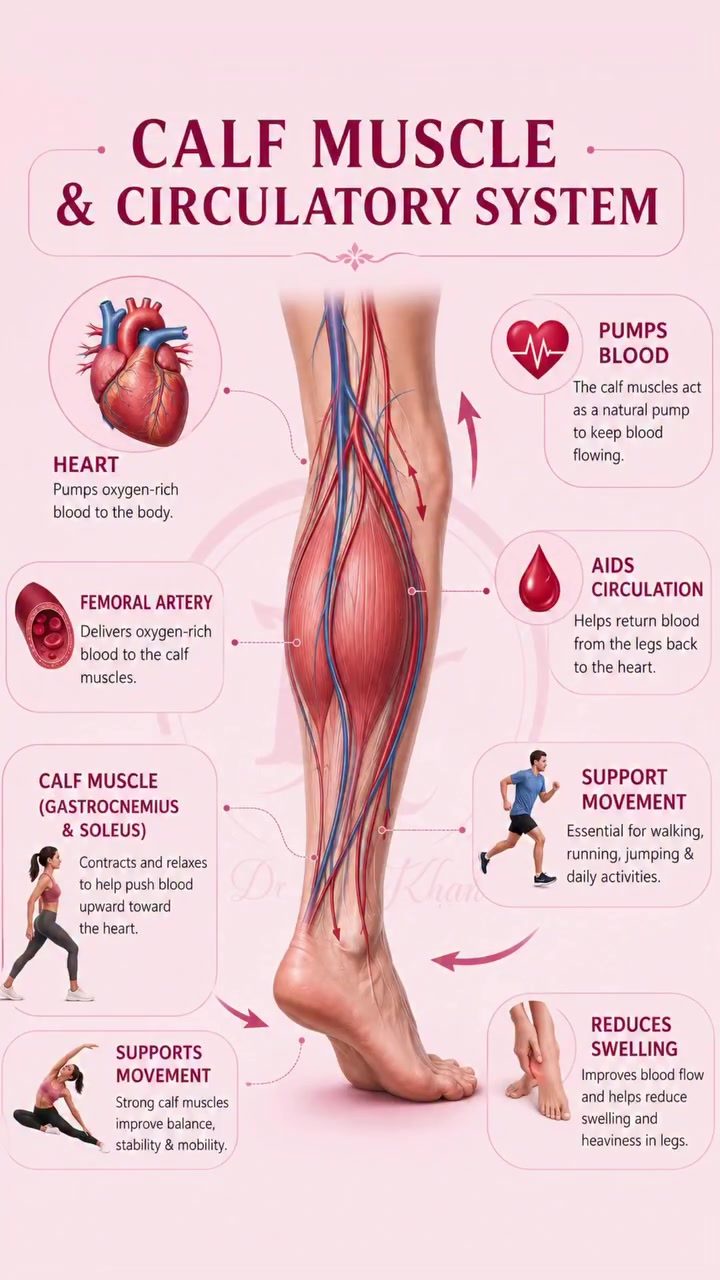
Calf Muscles and the Circulatory System
The calf muscles, specifically the gastrocnemius and soleus, play a critical role in the body's circulatory system. Acting as a natural pump, these muscles help move blood from the legs back to the heart, which is vital for maintaining healthy blood flow and overall well-being.
Why This Matters
Understanding the role of calf muscles in circulation can significantly impact daily life, particularly for those who stand or sit for extended periods. Strengthening these muscles can improve blood circulation, reduce swelling, and support overall mobility and stability. Regular calf exercises are essential for maintaining cardiovascular health and can be beneficial for individuals dealing with circulatory issues.
Main Discussion
The Role of Calf Muscles in Circulation
The calf muscles, or gastrocnemius and soleus, are responsible for pumping blood from the legs back to the heart. When these muscles contract and relax during movement, they act as a secondary heart, aiding in the circulation of blood. This mechanism is crucial for delivering oxygen-rich blood to tissues and organs, ensuring that the body functions efficiently.
The heart pumps blood through the circulatory system, which is then delivered to the legs via the femoral artery. The calf muscles contract and relax, pushing the blood back up to the heart. This continuous cycle of contraction and relaxation helps maintain a steady flow of blood, making the calf muscles an integral part of the circulatory process. The calf muscles essentially help the heart by improving the return of blood from the legs.
Benefits of Strong Calf Muscles
Strong calf muscles offer numerous benefits, making them essential for overall health and mobility. Here are some key advantages:
Improve Venous Blood Circulation
Sturdy calf muscles help enhance venous blood circulation, ensuring that blood flows back to the heart efficiently. By supporting the circulatory process, strong calf muscles contribute to better cardiovascular health, making it easier for the heart to pump blood through the body.
Support Daily Movement
Calf muscles are essential for daily activities such as walking and running. They aid in maintaining balance and stability, making movement smoother and more efficient. Regular calf exercises, along with other physical activities, can significantly improve mobility and prevent injuries.
Enhance Balance and Stability
Strong calf muscles play a crucial role in enhancing balance and stability. They help in maintaining posture and provide support during various activities, reducing the risk of falls and injuries. This is particularly beneficial for older adults and individuals with mobility issues.
Reduce Leg Swelling and Heaviness
One of the lesser-known benefits of strong calf muscles is their ability to reduce leg swelling and heaviness. By aiding in the circulation of blood, they help alleviate symptoms associated with conditions like varicose veins and poor circulation.
Assist the Heart
The calf muscles assist the heart by improving blood return from the legs. This reduces the workload on the heart, ensuring that it functions more efficiently. By supporting cardiovascular health, calf muscles contribute to overall well-being and reduce the risk of heart-related issues.
How Calf Muscles Work
The calf muscles enhance circulation through a process of contraction and relaxation. When you walk, run, or engage in physical activities, the calf muscles contract and then relax, pushing blood back up to the heart. This natural pumping action is vital for maintaining healthy blood flow and preventing issues like blood clots and swelling.
The process can be broken down into several steps:
- Blood Delivery: The heart pumps oxygen-rich blood through the femoral artery, delivering it to the calf muscles and surrounding tissues.
- Muscle Contraction: During physical activity, the calf muscles contract, squeezing the veins and pushing blood back up toward the heart.
- Muscle Relaxation: As the muscles relax, they fill with blood, preparing for the next contraction cycle.
The Circulatory System and Mobility
Strong calf muscles are crucial for maintaining mobility and preventing issues related to poor circulation. By aiding in the return of blood to the heart, they contribute to a healthy circulatory system, ensuring that the body receives the necessary oxygen and nutrients.
Conditions and Calf Muscles
Calf muscles play a vital role in managing and preventing various conditions. Here are a few examples:
Deep Vein Thrombosis (DVT)
Deep vein thrombosis (DVT) occurs when a blood clot forms in a deep vein, often in the leg. Strong calf muscles can help prevent DVT by improving blood circulation and reducing the risk of clot formation. Physical activities that engage the calf muscles, such as walking and calf raises, are recommended for individuals at risk of DVT.
Varicose Veins
Varicose veins are enlarged, twisted veins that often appear on the legs and feet. Weak calf muscles can exacerbate varicose veins by hindering blood flow. Strengthening the calf muscles can help alleviate symptoms and prevent the progression of varicose veins.
Peripheral Artery Disease (PAD)
Peripheral artery disease (PAD) is a condition that affects the blood vessels, typically in the legs, reducing blood flow. Regular calf exercises can improve circulation and alleviate symptoms associated with PAD, helping manage the condition effectively.
Practical Tips
Maintaining strong and healthy calf muscles is essential for overall well-being. Here are some practical tips to keep your calf muscles in top condition:
Regular Exercise
Incorporate regular calf exercises into your routine to maintain strong and healthy muscles. Here are a few exercises to consider:
Calf Raises
Calf raises are a simple yet effective exercise for strengthening the calf muscles. Stand on the edge of a step, lowering your heels below the step and then rising onto your toes. Repeat this movement for 15-20 reps, aiming for 2-3 sets per day.
Ankle Pumps
Ankle pumps involve moving your ankles up and down, which helps improve circulation and strengthens the calf muscles. Sit or lie down, extend your legs, and pump your ankles up and down for 15-20 reps, aiming for 2-3 sets per day.
Walking
Regular walking is an excellent way to engage the calf muscles and improve circulation. Aim for at least 30 minutes of walking per day, and gradually increase the intensity as your fitness level improves.
Proper Footwear
Wearing the right shoes can support your calf muscles and improve overall foot health. Opt for shoes with good arch support and cushioning, which can help reduce strain on the calf muscles and prevent injuries.
Stretching
Regular stretching is essential for maintaining flexibility and preventing injuries. Incorporate calf stretches into your daily routine, especially after physical activities. Hold each stretch for 20-30 seconds, aiming for 2-3 reps per leg.
Healthy Lifestyle
Maintaining a healthy lifestyle is crucial for overall well-being, including the health of your calf muscles. Regular exercise, a balanced diet, and adequate hydration can support muscle health and improve circulation.
Important Takeaways
Calf muscles play a vital role in the circulatory system, aiding in the return of blood to the heart and maintaining healthy blood flow. Strong calf muscles offer numerous benefits, including improved circulation, enhanced mobility, and reduced risk of conditions like varicose veins and DVT.
Regular calf exercises, proper footwear, and a healthy lifestyle are essential for maintaining strong and healthy calf muscles. Incorporate these tips into your daily routine to support your overall well-being and ensure that your calf muscles function optimally.
Conclusion
The role of calf muscles in the circulatory system is often overlooked, but understanding their significance can greatly improve overall health and mobility. By strengthening these muscles, you can enhance your circulatory system, reduce the risk of various conditions, and support overall well-being. Invest in your calf muscles today for a healthier, more active tomorrow.
Watch the Reel
Questions readers ask
How do calf muscles contribute to circulatory health?
Calf muscles, particularly the gastrocnemius and soleus, act as a natural pump, contracting and relaxing to move blood from the legs back to the heart. This action aids in maintaining healthy blood flow and helps prevent circulatory issues.
What are the benefits of calf exercises for circulation?
Regular calf exercises can help improve blood circulation, reduce swelling in the legs, and enhance overall mobility. They are especially beneficial for those who stand or sit for extended periods, as they support the calf muscle pump which is crucial for leg muscle health.
How can I improve leg circulation through calf muscle support?
To improve leg circulation, focus on exercises that strengthen the soleus muscle function and promote calf muscle support. Activities like walking and specific calf exercises can effectively enhance circulation and support cardiovascular health.
What are some effective calf exercises for circulation?
Exercises like calf raises, walking uphill, and cycling can significantly improve circulation. These activities help strengthen the calf muscles, promoting better blood flow from the legs back to the heart and reducing leg swelling.
Why is calf muscle health important for overall well-being?
Calf muscle health is vital for overall well-being as it supports the calf muscle pump, which is essential for maintaining healthy blood flow. Strong calf muscles help reduce the risk of circulatory issues and support mobility and stability in daily activities.
How does walking contribute to calf muscle health and circulation improvement?
Walking is an excellent way to improve calf muscle health and circulation. It engages the calf muscles, enhancing the calf muscle pump and promoting better blood flow from the legs to the heart, which can help reduce leg swelling and support overall cardiovascular health.
What tips can help improve circulation through calf muscle support?
To improve circulation, incorporate regular calf exercises into your routine, such as calf raises and walking. Maintaining healthy calf muscles can enhance the calf muscle pump, which is crucial for preventing leg swelling and supporting cardiovascular health.
Recent articles
Fresh deep dives from the latest Reels we unpacked.




Comments
Be the first to comment.