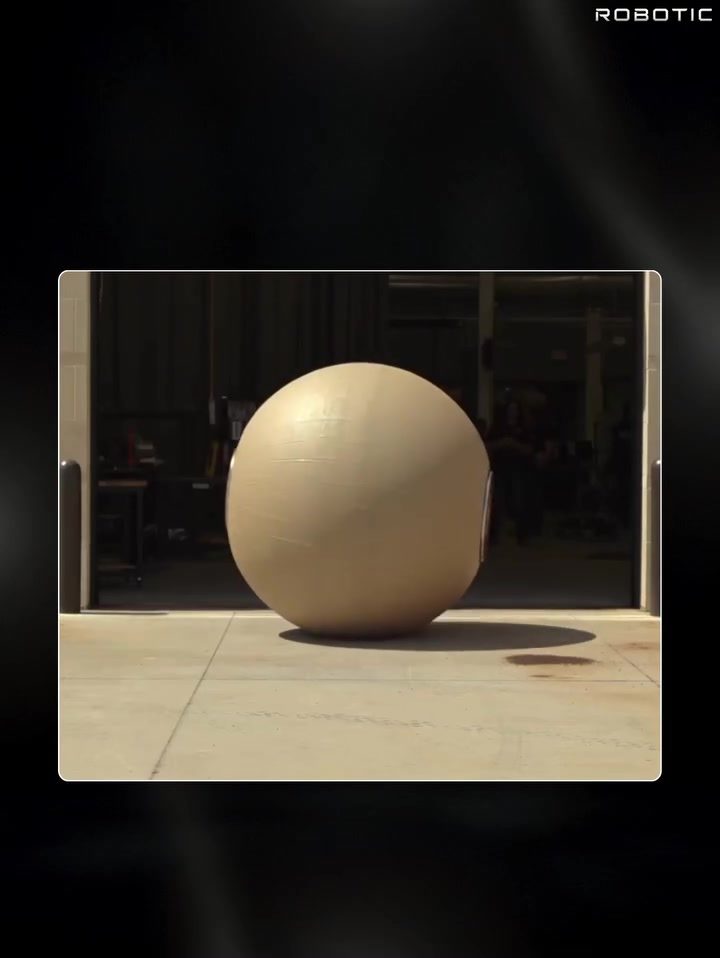
Exploring the Moon with RoboBall: The Spherical Lunar Explorer
Some regions of the Moon are too steep and treacherous for traditional rovers. That's where RoboBall, a revolutionary spherical robot, comes into play. Developed by a team at Texas A&M University, RoboBall is designed to navigate the challenging terrain of deep lunar craters, areas that wheeled rovers struggle to access.
The concept behind RoboBall is simple yet ingenious: instead of wheels or legs, it uses an internal pendulum system. This pendulum shifts the robot's weight, allowing it to roll forward, backward, and steer in any direction. This unique design enables RoboBall to maneuver across rugged and uneven surfaces with ease, making it an ideal candidate for lunar exploration.
RoboBall's Design and Functionality
RoboBall's spherical shape and internal pendulum system are its standout features. The pendulum allows the robot to change direction instantaneously, providing unparalleled agility in navigation. This capability is particularly useful in the unpredictable terrain of lunar craters, where sudden changes in direction can be crucial.
Moreover, RoboBall's design allows it to reach speeds of up to 20 miles per hour. While this might not sound impressive on Earth, the lack of atmospheric resistance on the Moon means that RoboBall can cover significant distances quickly and efficiently. The development team is continually working to improve the robot's speed, smoothness, and autonomy, aiming to make it even more effective for future space missions.
The Importance of Autonomous Exploration
One of the key advantages of RoboBall is its potential for autonomous operation. As space agencies push deeper into lunar exploration, the need for robots that can operate independently becomes paramount. RoboBall's design lends itself well to autonomous functions, reducing the need for constant human oversight and intervention. This is especially important given the communication delays between Earth and the Moon, which can make real-time control impractical.
Why RoboBall Matters for Lunar Exploration
RoboBall represents a significant advancement in lunar exploration technology. Its ability to navigate steep and dangerous terrains makes it an invaluable tool for accessing regions of the Moon that have remained largely unexplored. By unlocking these inaccessible areas, RoboBall could provide scientists with new insights into the Moon's geology, resources, and potential for future human habitation.
Additionally, the technology behind RoboBall has broader applications beyond lunar exploration. The internal pendulum system and spherical design could be adapted for use in other challenging environments on Earth, such as underwater exploration or disaster response scenarios.
Practical Tips for Building and Operating Spherical Robots
For those interested in building or operating spherical robots, several key considerations are important. First, the internal mechanics, such as the pendulum system, need to be finely tuned to ensure smooth and precise movement. This requires a deep understanding of physics and engineering principles. Additionally, the robot's materials must be durable and lightweight to withstand the harsh conditions of space and the Moon.
Autonomous operation is another critical aspect. Incorporating advanced sensors and AI algorithms can enhance the robot's ability to navigate and make decisions independently. Regular testing and adjustments are also essential to refine the robot's performance and address any issues that arise during operation.
Important Takeaways
RoboBall is more than just a novel idea; it's a practical solution to one of the biggest challenges in lunar exploration. Its unique design and advanced capabilities make it a game-changer in the field of robotics. By enabling access to previously inaccessible regions of the Moon, RoboBall could revolutionize our understanding of lunar geology and pave the way for future human exploration and habitation.
As space agencies and researchers continue to push the boundaries of lunar exploration, RoboBall stands out as a beacon of innovation. Its development and potential applications highlight the importance of continuous advancement in robotics technology. The future of lunar research and exploration looks brighter with RoboBall leading the way.
Conclusion
The Moon's steep and dangerous terrains present unique challenges for traditional rovers. RoboBall, with its spherical design and internal pendulum system, offers a groundbreaking solution to these challenges. Its ability to navigate rugged terrain and operate autonomously makes it an invaluable tool for lunar exploration. As space agencies and researchers continue to explore the Moon, RoboBall's contributions to this field will be crucial in unlocking new discoveries and advancing our understanding of the lunar environment.
Watch the Reel
Questions readers ask
How does RoboBall's design differ from traditional lunar rovers?
RoboBall is a spherical robot that uses an internal pendulum system for navigation, unlike traditional rovers that rely on wheels or legs. This design allows RoboBall to traverse steep and uneven lunar terrain with greater agility and ease.
What makes RoboBall suitable for exploring lunar craters?
RoboBall's unique spherical design and pendulum-based navigation system enable it to roll and steer in any direction, making it ideal for navigating the deep and treacherous craters on the Moon's surface.
Who developed the RoboBall robot?
RoboBall was developed by a team of researchers at Texas A&M University, known for their innovative work in robotics and space exploration technology.
Can RoboBall move in all directions?
Yes, RoboBall can roll forward, backward, and steer in any direction thanks to its internal pendulum system, which shifts the robot's weight to facilitate multi-directional movement.
What are the advantages of using a spherical robot like RoboBall for lunar exploration?
A spherical robot like RoboBall can access areas that are inaccessible to traditional rovers, such as steep craters, and can navigate uneven terrain with greater agility. This makes RoboBall a valuable tool for exploring the Moon's challenging landscape.
How does RoboBall's navigation system work?
RoboBall's navigation system utilizes an internal pendulum that shifts the robot's center of gravity, allowing it to roll and change direction smoothly. This pendulum-based system enables RoboBall to maintain stability and control while traversing the Moon's rough terrain.
Related deep dives
Similar reads based on topic and creator.


Recent articles
Fresh deep dives from the latest Reels we unpacked.




Comments
Be the first to comment.