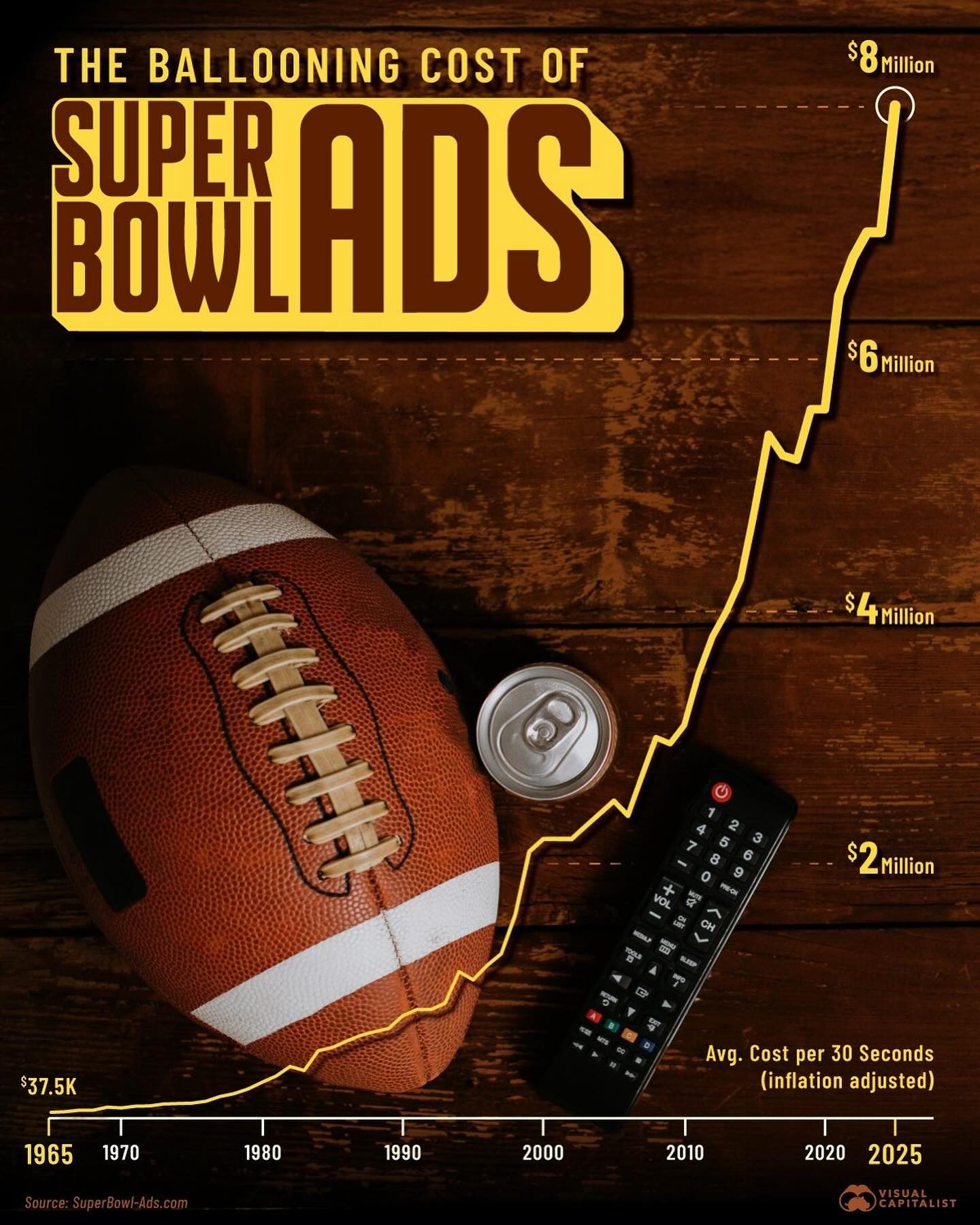
Super Bowl Ad Costs
Super Bowl advertisements are renowned for their high costs, making them one of the most expensive advertising spaces in the world. The commercials' costs have dramatically increased over the decades, reflecting the massive audience and the cultural significance of the event.
Why This Matters
Brands invest heavily in Super Bowl commercials for their unsurpassable reach and cultural impact. With millions of viewers tuning in, these ads create more than just sales opportunities; they become cultural touchpoints that resonate long after the game ends. Understanding the trajectory of these costs provides valuable insights into the advertising market and the evolving dynamics of the Super Bowl's influence on American culture.
The Rising Cost of Super Bowl Ads
The Early Days: 1965 to 1990
In 1965, the first Super Bowl ad cost an inflation-adjusted $37,500 for a 30-second spot. This period saw the beginning of the Super Bowl's rise to prominence, with brands starting to recognize the event's potential for mass exposure. By 1990, the cost had risen to approximately $805,000 for a 30-second ad, reflecting the growing competition for airtime and the increasing value of television advertising.
The Boom Years: 1990 to 2020
The 1990s and 2000s were a boom period for Super Bowl advertising. The cost of a 30-second spot reached $2.2 million by 2000, marking a significant leap. This period saw the development of iconic campaigns that are still remembered today. By 2020, the cost had skyrocketed to $5.6 million, driven by the ever-increasing demand for ad slots and the event's unmatched viewership.
The Modern Era: 2020 to 2025
The most recent data shows a steep climb in ad costs. By 2025, a 30-second Super Bowl ad is projected to cost a record-breaking $8 million. The modern era has seen brands push the boundaries of creativity, using the Super Bowl platform to launch groundbreaking campaigns that often become cultural phenomena.
Factors Driving the Increase
Inflation and Media Costs
Inflation is a significant factor in the rising costs of Super Bowl ads. As the general cost of goods and services increases, so does the cost of media. The price of a 30-second ad spot in 1965, when adjusted for inflation, would be much higher than the original $37,500. This illustrates how the cost of media has kept pace with broader economic trends.
Audience and Reach
The Super Bowl remains one of the most-watched television events in the United States. This massive reach makes it an attractive platform for advertisers. Brands are willing to pay a premium for the opportunity to showcase their products or services to such a large and diverse audience.
Cultural Impact
Super Bowl ads often transcend their initial broadcast, becoming cultural touchstones that are discussed and shared long after the game ends. This enduring impact adds immense value for brands, making the investment worthwhile despite the high costs.
The Role of Advertising Agencies
Advertising agencies play a crucial role in shaping Super Bowl commercials. They work closely with brands to create campaigns designed to capture the audience's attention and leave a lasting impression. These agencies often leverage the unique context of the Super Bowl to craft ads that are both entertaining and memorable.
Practical Tips for Brands
Plan Ahead
Given the high cost and fierce competition for ad slots, planning well in advance is essential. Brands should start strategizing their Super Bowl campaigns early to secure the best opportunities and ensure their ads stand out.
Invest in Creativity
The Super Bowl audience has high expectations for the ads they watch. Brands should prioritize creativity and innovation to capture attention and create a lasting impact. This could mean experimenting with new formats, storytelling techniques, or incorporating cutting-edge technology.
Leverage Social Media
Super Bowl commercials have a life beyond the game itself, often becoming viral sensations on social media. Brands should plan for post-game engagement by creating content that encourages sharing and discussion on platforms like Twitter, Instagram, and TikTok.
Important Takeaways
The cost of a 30-second Super Bowl ad has risen dramatically from $37,500 in 1965 to a projected $8 million in 2025. This trend reflects the event's enduring popularity, cultural significance, and the value that brands place on reaching a massive, engaged audience.
Conclusion
Super Bowl ads represent a unique opportunity for brands to reach millions of viewers and create lasting cultural impact. The rising cost reflects the event's enduring appeal and the value that advertisers place on this platform. Understanding the dynamics behind these costs provides valuable insights into the advertising landscape and the role of the Super Bowl in modern culture. Whether you're a brand looking to make a splash or a viewer tuning in for the ads, the Super Bowl remains a cultural phenomenon that continues to captivate audiences year after year.
Watch the Reel
Questions readers ask
Why have Super Bowl ad prices increased so dramatically over the years?
The surge in Super Bowl ad prices is primarily due to the event's massive and consistent viewership. The Super Bowl remains one of the most-watched television events globally, making it an attractive platform for brands to reach a vast audience. Additionally, the cultural significance and historical impact of Super Bowl ads contribute to their high cost.
What is the projected cost of a Super Bowl ad in 2025?
By 2025, the cost of a 30-second Super Bowl ad is projected to reach approximately $8 million. This estimate is based on the historical trend of increasing prices, which have risen from $37,500 in 1965 to their current highs.
Which Super Bowl ads are considered the most expensive in history?
The most expensive Super Bowl ads are typically those aired in the most recent years, reflecting the current high demand. For example, in 2023, a 30-second ad cost around $7 million, and this trend is expected to continue, making future ads even more costly. Some of the most expensive ads historically have also included those by high-profile brands such as Google, Coca-Cola, and Pepsi.
How does Super Bowl viewership impact ad pricing?
Super Bowl viewership significantly impacts ad pricing due to the massive audience it attracts. With millions of viewers tuning in each year, brands are willing to invest heavily to reach this large and diverse demographic. The high viewership ensures that these ads have a broad impact, making them valuable for both immediate sales and long-term brand recognition.
What are some of the most iconic Super Bowl ads?
Iconic Super Bowl ads are those that have left a lasting cultural impact. Examples include Apple's 1984 commercial, which introduced the Macintosh computer, and Coca-Cola's 1993 ad featuring Mean Joe Greene. These ads are remembered for their creativity, emotional resonance, and innovative storytelling, making them standout moments in Super Bowl history.
How can brands benefit from the cultural impact of Super Bowl ads?
The cultural impact of Super Bowl ads means that successful campaigns can create memorable moments that resonate with viewers long after the game. This can lead to increased brand awareness and loyalty, as well as potential long-term sales. For brands, the Super Bowl provides a unique opportunity to create a lasting impression, making it worth the high cost of advertising.
What can the trajectory of Super Bowl ad costs tell us about future advertising trends?
The steady increase in Super Bowl ad costs suggests that high-impact, high-visibility advertising spaces will continue to command premium prices. This trend indicates a broader shift in the advertising market, where popular, high-engagement events and platforms are likely to see rising costs as brands compete for consumer attention.
Recent articles
Fresh deep dives from the latest Reels we unpacked.




Comments
Be the first to comment.